Key Takeaways
-
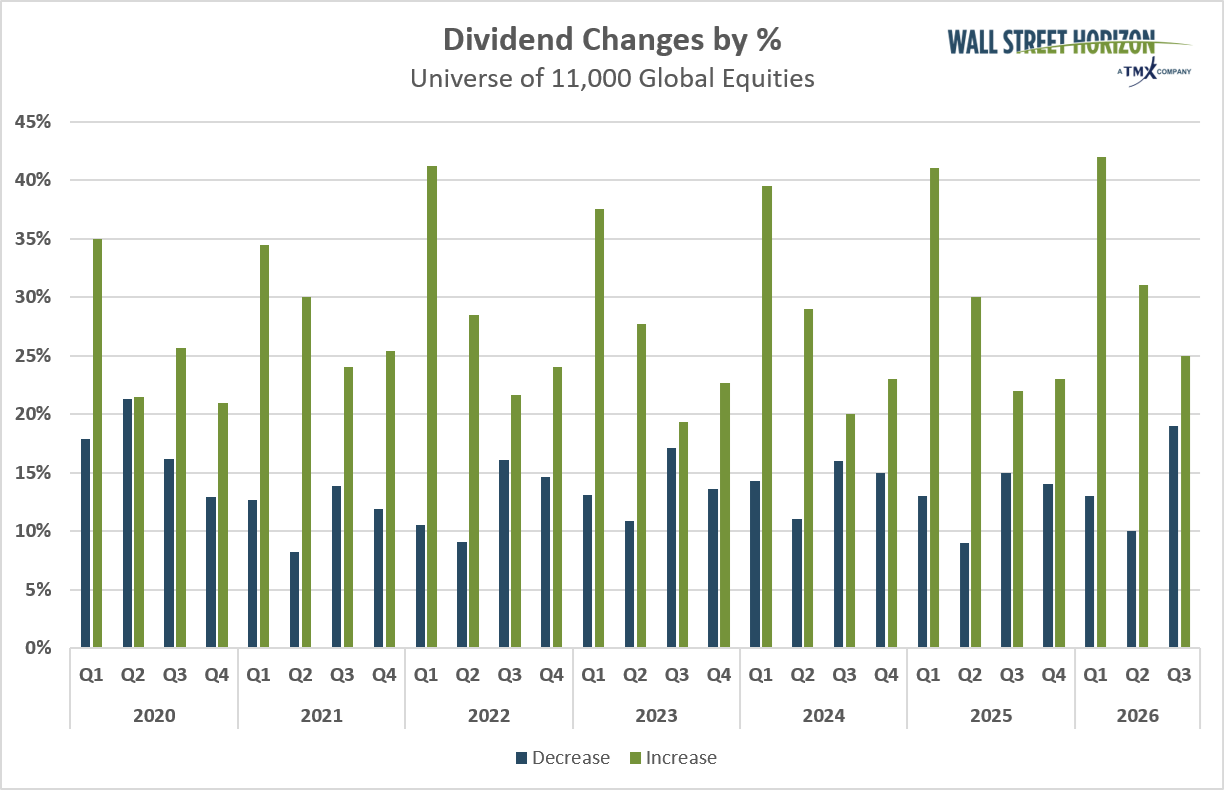
Dividend reductions hit 19% of total announcements thus far in Q3 2026, the highest proportion of dividend cuts since the peak of Covid-19 in Q2 2020
-
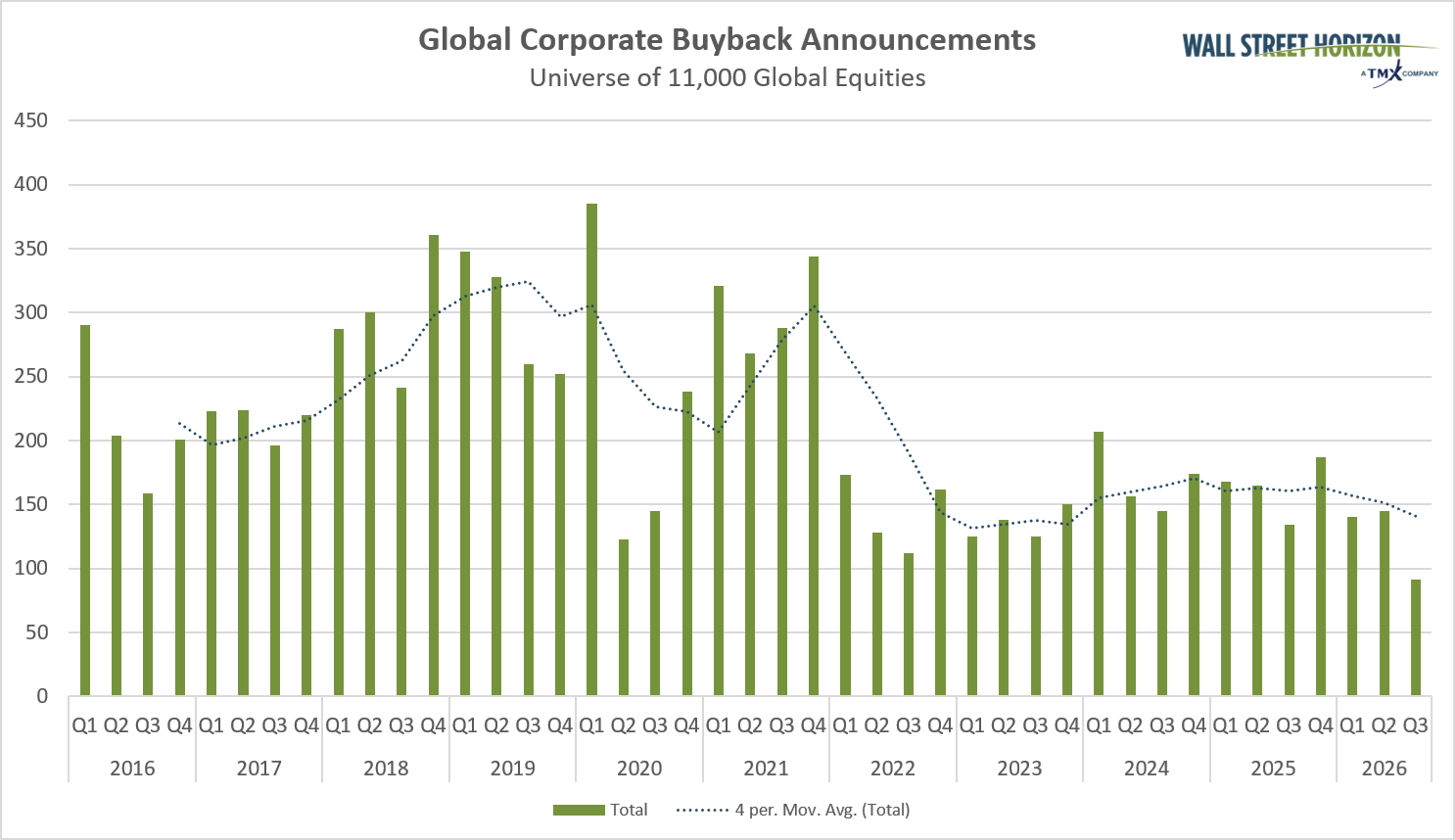
Buyback volume seems to be trending lower with only 91 authorizations tracked so far, pacing toward a 10-year historic low
-
Massive AI infrastructure capital commitments, escalating Middle East conflicts, and tariff pressures force C-suites into cash-preservation mode
The Main Line of Defense Begins to Falter
For decades, equity investors have relied on a foundational promise from Corporate America: the continuous return of surplus cash. Dividends and share repurchases represent the two primary ways by which companies deliver tangible value back to shareholders. Yet as we navigate the final stretch of the third quarter of 2026, both channels are signaling a distinct shift toward restraint. Rather than expanding payouts in tandem with market valuations, boardrooms across sectors are quietly tapping the brakes on capital returns.
Understanding this pivot requires stepping back to how these two mechanisms operate within corporate strategy. Dividends serve as the direct, cash-in-hand reward, a regular commitment of capital that signals stable cash flows and balance sheet strength. Share buybacks, on the other hand, act as a dynamic flexible valve: by reducing total outstanding shares, they boost earnings per share (EPS) and signal management's belief that their stock is undervalued. Together, they constitute the lifeblood of total shareholder yield. When both mechanisms trend downward simultaneously, it provides a potential signal that management teams are either prioritizing cash preservation over short-term distribution, or using that cash for something else.
Dividend Decreases Reach Post-Pandemic Highs
With only two weeks left in the third quarter, the dividend landscape paints a sobering picture. Among companies issuing payout announcements so far in Q3 2026, a striking 19% have declared dividend reductions from prior levels. To put this in perspective, this represents the highest percentage of dividend decreases observed in a single quarter since Q2 2020’s 21%, when the global economy was paralyzed by the Covid-19 pandemic. Unlike that time, there have not been any dividend suspensions in Q3.
Source: Wall Street Horizon
See more: The Impact of U.S. Stock Buybacks: Theory vs Practice
Buybacks Pace Toward a Decade Low
The pull-back is even more pronounced when examining share repurchase activity. Buyback announcements currently stand at just 91 for Q3 2026 (as of September 14, 2026). If activity stays around this level through month-end, it will mark the lowest single-quarter buyback count in the entire 10-year history of this dataset.
To contextualize how subdued this activity is, the next lowest number of buyback announcements was seen in Q3 2022 at 112 authorizations, a period marked by heavy Fed tightening and heightened recession fears. Falling below that benchmark underscores a broad institutional reluctance to commit balance sheet reserves to stock repurchases in the current environment.
Source: Wall Street Horizon
What is Gobbling Up Corporate Cash?
Why are executives pulling back on shareholder returns precisely when equity markets demand strong fundamentals? Two primary forces are likely driving this capital reallocation:
First, cash is being consumed by the relentless AI build-out. Aggressive capital expenditure commitments are no longer limited to megacap tech giants; companies across industrials, energy, logistics, and corporate services are sinking substantial capital into AI infrastructure, software integrations, and power grid upgrades just to remain competitive. Cash that previously funded discretionary repurchases is now earmarked for multi-year technology builds.
Second, macro uncertainty and geopolitical tensions are forcing CFOs to build protective cash cushions. Worries over tariff costs and surging oil prices stemming from the Iran war have pushed risk management to the forefront. Combined with persistent input inflation, corporate treasury desks may be prioritizing liquidity over payouts.
The Bottom Line
It is easy for investors to stay fixated on daily market fluctuations and high-level macroeconomic headlines. However, corporate capital allocation decisions often reveal the true temperature of executive sentiment. The simultaneous spike in dividend cuts and historical drop in buyback authorizations signal that management teams are shifting toward balance sheet defense and long-term capital investments over immediate payouts. As quarter-end approaches, monitoring these capital return trends will be vital for understanding how Corporate America views the road ahead.
Copyright © 2026 Wall Street Horizon, Inc. All rights reserved. Do not copy, distribute, sell or modify this document without Wall Street Horizon's prior written consent. This information is provided for information purposes only. Neither TMX Group Limited nor any of its affiliated companies guarantees the completeness of the information contained in this publication, and we are not responsible for any errors or omissions in or your use of, or reliance on, the information. This publication is not intended to provide legal, accounting, tax, investment, financial or other advice and should not be relied upon for such advice. The information provided is not an invitation to purchase securities, including any listed on Toronto Stock Exchange and/or TSX Venture Exchange. TMX Group and its affiliated companies do not endorse or recommend any securities referenced in this publication. This publication shall not constitute an offer to sell or the solicitation of an offer to buy, nor may there be any sale of any securities in any state or jurisdiction in which such offer, solicitation or sale would be unlawful prior to registration or qualification under the securities laws of any such state or jurisdiction. TMX, the TMX design, TMX Group, Toronto Stock Exchange, TSX, and TSX Venture Exchange are the trademarks of TSX Inc. and are used under license. Wall Street Horizon is the trademark of Wall Street Horizon, Inc. All other trademarks used in this publication are the property of their respective owners.
A message from Advisor Perspectives and VettaFi: Discover something new! Click here to register for our upcoming webcasts.
© Wall Street Horizon
Read more commentaries by Wall Street Horizon