The Consumer Price Index (CPI) data for August was generally in line with expectations. However, a slightly hotter-than-expected core CPI reading buoyed expectations of a rate hike at the Federal Reserve meeting in September.
Meanwhile, there is a lot more to the inflation story than the CPI.
Each month, the Bureau of Labor Statistics releases the Consumer Price Index (CPI) report. Policymakers, pundits, and economists use this data to gauge the current inflation situation.
See more: What Is the PCE and Why Is It the Fed's Favorite Inflation Gauge?
But relying solely on CPI data to gauge inflation is a little like looking at just the temperature and claiming you know the weather.
CPI tracks price inflation – more specifically, the change in the price of a basket of goods. But historically, inflation was defined as an increase in the supply of money and credit. Rising consumer prices are one impact of this monetary inflation. In other words, the CPI measures a symptom of monetary inflation.
The CPI reveals past monetary inflation showing up in the economy, but it can’t predict the trajectory of inflation. That means we need to look at money supply metrics to understand the complete inflation story.
With this in mind, when CPI data comes out each month, I create a more comprehensive inflation report using four metrics – CPI, changes in the M2 money supply, changes in the Federal Reserve balance sheet, and the Chicago Fed National Financial Conditions Index.
August CPI
After a rather sanguine CPI report in July, August came in a bit hotter.
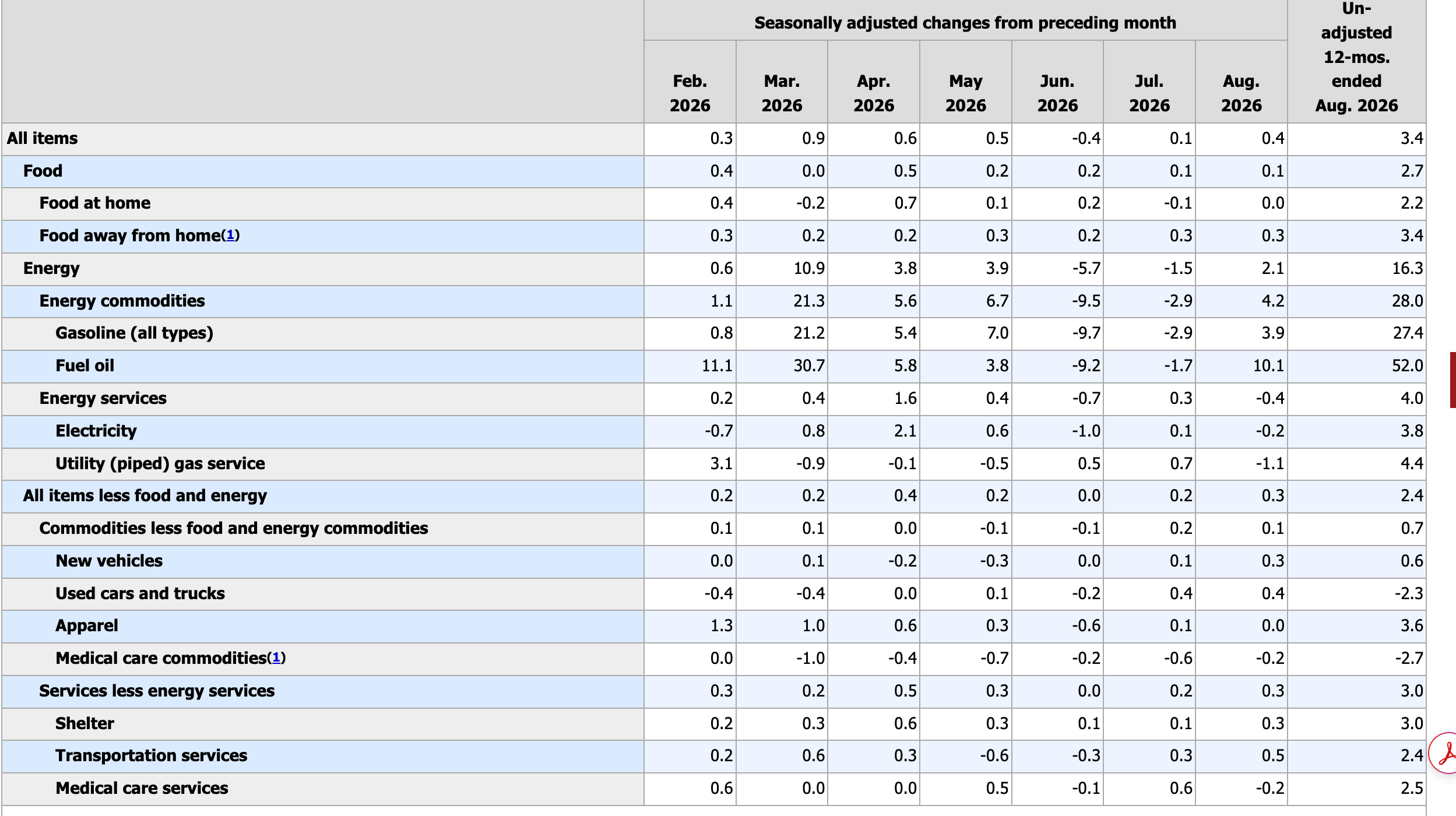
Prices rose 0.4 percent month-on-month, according to the latest BLS data. Despite the rise, the data came in within expectations.
However, a 0.4 percent jump in one month isn’t insignificant. That annualizes to 4.8 percent.
On an annual basis, the headline CPI remained steady at 3.4 percent last month.
Stripping out more volatile food and energy prices, core CPI increased by 0.3 percent, with the annual rise ticking down from 2.5 to 2.4 percent. The forecast was for a 0.2 percent uptick in core CPI and a 2.4 percent annual rise.
The month-on-month jump in core CPI was enough to boost expectations for a Fed rate hike next week. According to the CME Group’s FedWatch tracker, investors now put the odds of a hike at 90 percent.
Northlight Asset Management CIO Chris Zaccarelli reflected this consensus, telling CNBC that while there is no guarantee the central bank will bump rates higher, “It’s hard to see how the central bank can justify leaving rates on hold.”
Higher gasoline prices drove the CPI higher, surging by 3.9 percent in August. That pushed the energy index higher by 2.1 percent.
The 0.3 percent increase in shelter costs on the month was also notable.
Service prices rose by 0.3 percent month-on-month, pushing the annual service price increase to 3 percent.
While most analysts seem resigned to a rate hike, not everyone agrees it's the right move. Economist Daniel Lacalle argued that even with the slightly hotter CPI data, a hike isn’t warranted.
“Markets price a 90 percent probability of a Fed hike, but the data do not justify monetary panic. August CPI was lifted by energy. Rate hikes do not drill a single well, build a pipeline, or lower gasoline prices. What they do is raise mortgage, credit card, and business-financing costs, hurting families, investment, and small firms. The entire burden of higher rates falls on the shoulders of job creators and families, while government spending and energy prices will not be affected.”
Lacalle went on to say he thinks a hike would likely kick off a “private sector recession.”
Based purely on the CPI data, it’s hard to argue with Lacalle’s analysis. However, other inflation metrics reveal plenty of inflationary pressure in the pipeline.
M2 Money Supply
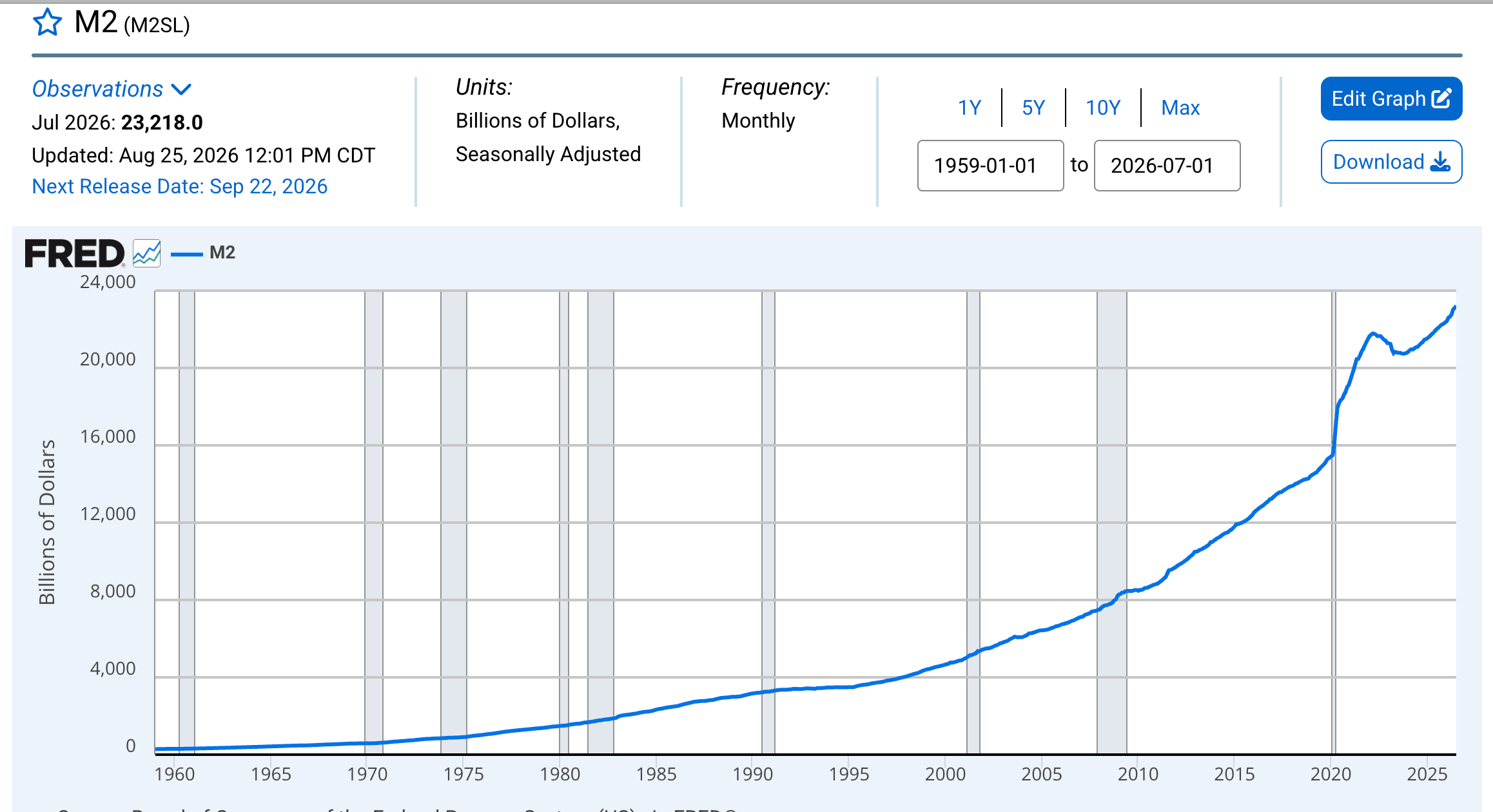
While prices are cooling, the money supply is increasing rapidly. That is, by definition, inflation. However, we won’t see its impact on the general price level for months.
Between July 2025 and July 2026, the money supply surged from $22.94 billion to $23.22 billion, a 1.22 percent increase.
In other words, we have an actual inflation rate of 5.4 percent.
The M2 money supply increased by $10 billion in July alone.
This monetary inflation will eventually find its way into consumer prices. (It could also manifest in rising asset prices such as real estate and equities.)
While Warsh & Co. talk tough on inflation, the Fed is running quantitative easing (QE) operations to create artificial demand for Treasuries and hold yields lower than they otherwise would be. That means the central bank is buying U.S. Treasuries and holding them on its balance sheet. To run this operation, the Fed creates money out of thin air to pay for these bonds, and it is injected into the economy. Again, this is, by definition, inflation.
The Fed will never admit to running QE. It will tell you it is just a technical operation to keep the financial system’s plumbing clear. But no matter what you call it, the practical impact is the same. The Fed’s balance sheet expands, and new money flows into the economy.
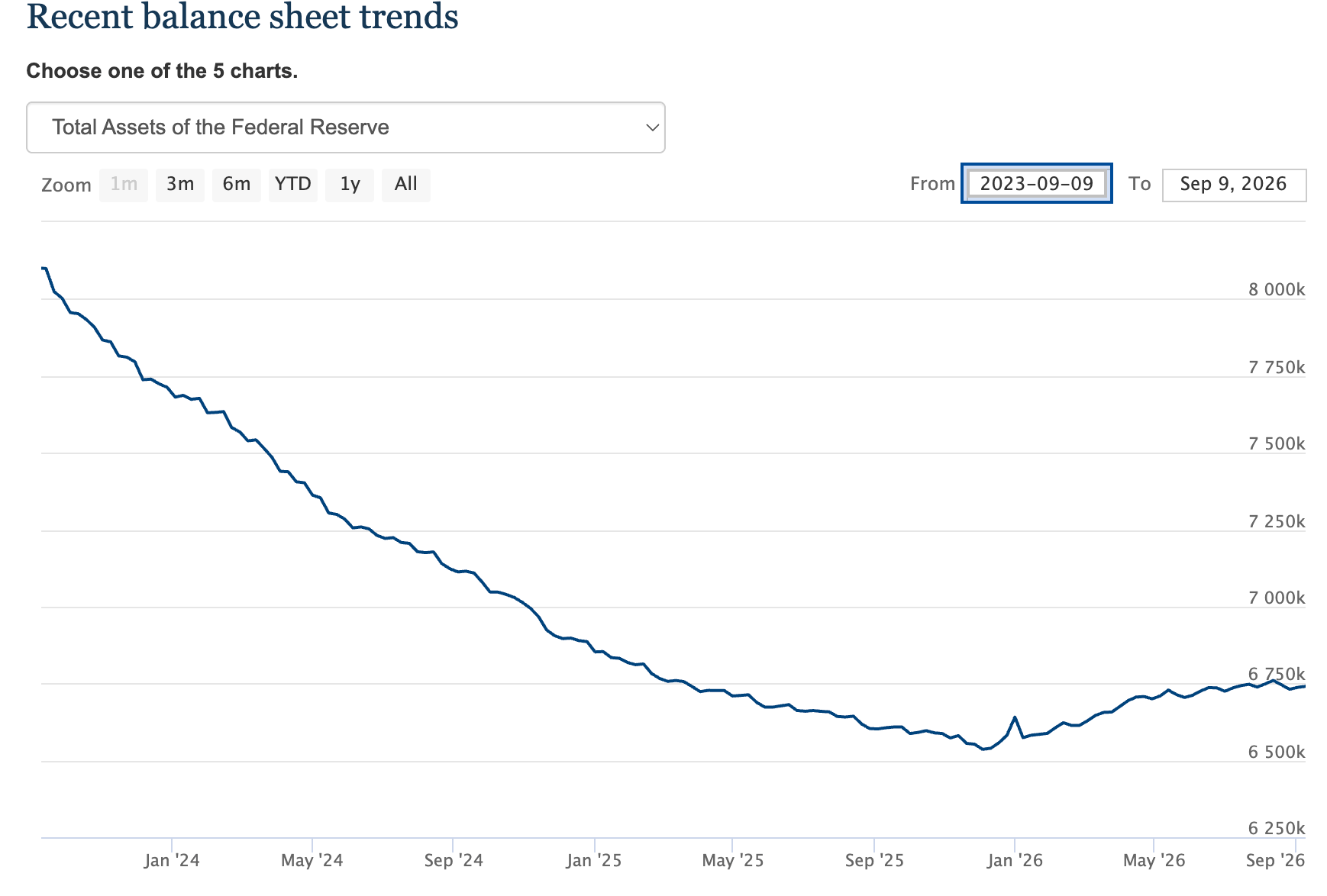
The central bank’s balance sheet began ticking higher in December, and the upward trend continues today. In August, the balance sheet was steady, but it has increased from $6.57 trillion to $6.74 trillion since January.
I can’t overstate the fact that the Fed is easing monetary policy through its balance sheet operations, even as it claims to be fighting inflation. Sure, the balance sheet increase is modest. But if you’re serious about an inflation fight, why isn’t the balance sheet shrinking?
The answer is the evolving bond bear market. With yields rising and pushing up the federal government’s interest costs, the Fed has no choice but to step in and support the Treasury market.
With the Treasury Department trying and failing to drive long-term rates lower with its bond buyback, it’s only a matter of time before the Fed has to engage in more aggressive QE to control the Treasury market and facilitate U.S. government borrowing and spending.
National Financial Conditions Index
While everybody imagines monetary policy is tight, with the federal funds rate set between 3.5 and 3.75 percent, it is loose from a historical perspective.
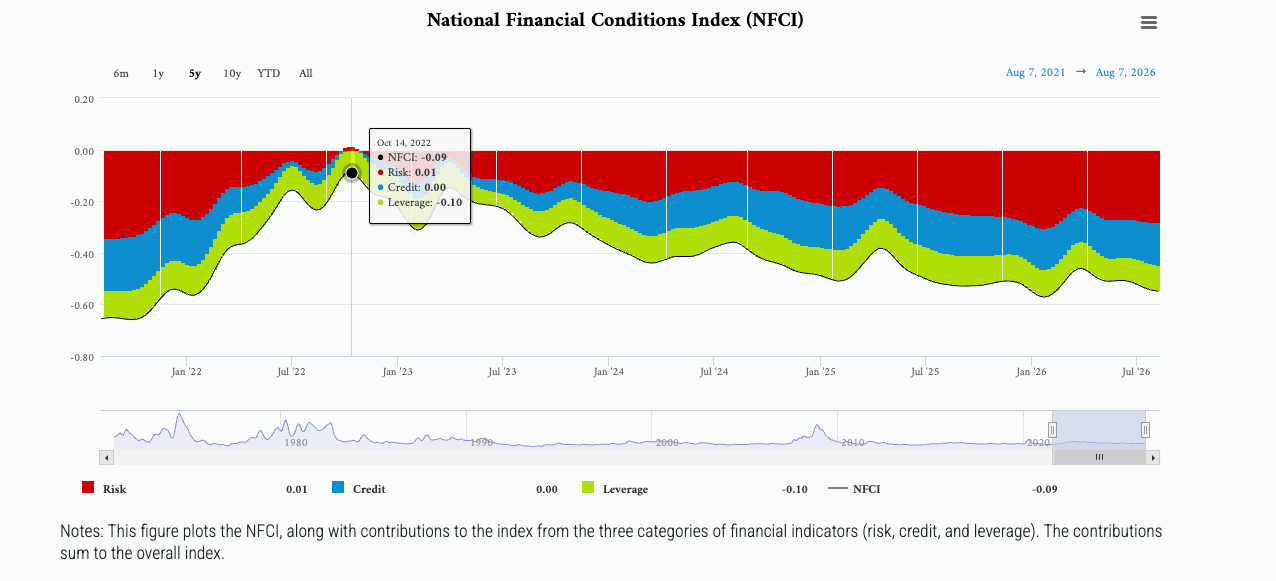
The Chicago Fed’s own National Financial Conditions Index (NFCI) reveals this.
As of the week ending September 4, the NFCI stood at -0.56. The minus sign indicates financial conditions remain historically loose.
Surprisingly, the NFCI never went positive, even during the height of the Fed’s tightening cycle. The highest it got was -0.09 in October 2022.
Again, this reveals the Federal Reserve inflation fight wasn’t nearly as aggressive as advertised. It maintained a historically loose monetary policy through the entirety of this inflation cycle.
It also reveals that the economy is addicted to easy money. The fact that the central bank never drove financial conditions tight for fear of collapsing the debt-riddled bubble economy is telling. It certainly wasn’t because inflation was under control.
Conclusion
When you put all the data together, the inflation picture looks much more concerning than the sketch drawn by the CPI data alone. Clearly, inflation is far from "under control." It is on the upswing.
While CPI has generally been trending lower (August’s uptick notwithstanding), the growing money supply means there's undoubtedly more price pressure in the pipeline. Whether it manifests in consumer prices, asset prices, or both remains to be seen.
The bottom line is it’s not the time to celebrate inflation’s demise. One thing you can count on: the powers-that-be will relentlessly devalue your money – at least by the planned 10-plus percent every five years.
A message from Advisor Perspectives and VettaFi: Discover something new! Click here to register for our upcoming webcasts.
Our Service, Use, and Transaction Terms (“Terms”) and Privacy Policy (collectively, the “Policies”) govern your access to and use of this Website. By using the Website or engaging in transactions with Money Metals, you acknowledge that you have read and agree to be bound by the Policies, which are incorporated herein by reference. NOTICE REGARDING MARKET RISKS, ORDER ACCEPTANCE, AND CANCELATIONS: By placing an order online or over the phone with Money Money Metals Exchange, you agree to be bound by our Terms and liable for any and all losses in value of the items you ordered. You may not cancel any order after you place it with Money Metals. If you fail to follow through with timely payment on an order, you are responsible to Money Metals for any monetary damages (including, but not limited to, market losses, collection fees, setoffs, etc).
More Alternative Investments Topics >