Occasionally, we are confronted with decisions where there are no easy options. The prevailing circumstances bound our choices, and we may face criticism no matter what we do. Collectively, the Federal Open Market Committee (FOMC) finds itself in just such a situation as it prepares for its upcoming meeting. The economics and the politics surrounding their deliberations are complicated, and there are no easy options. Following are the cases to be made for and against raising interest rates.
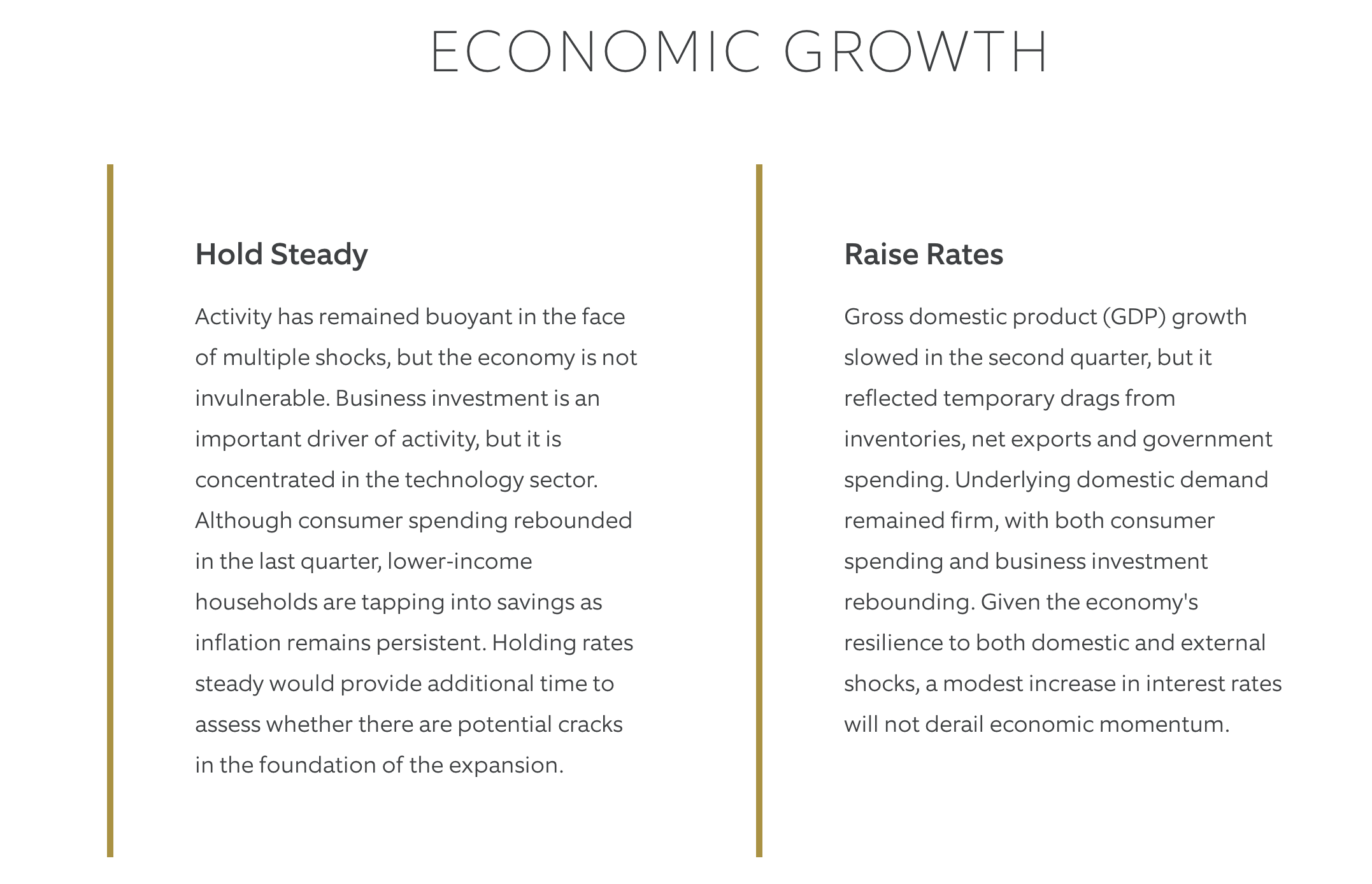
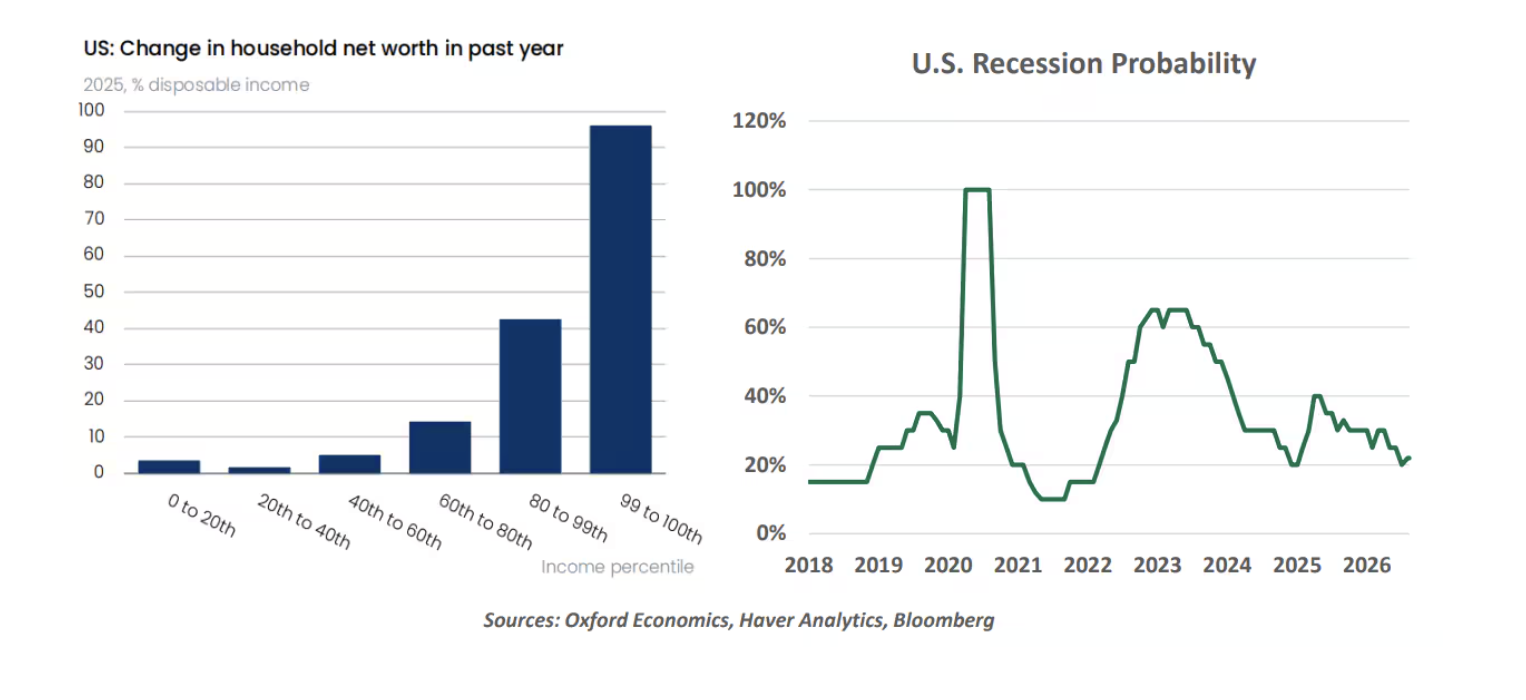
The economy's resilience has not been experienced evenly. Rising equity prices and firm home values have boosted household wealth, but the benefits have accrued disproportionately to the top of the income distribution. For many others, the picture is less favorable. While overall inflation remains contained, food and energy costs are elevated. And because these essentials account for a larger share of spending for lowerincome households, the squeeze on their real incomes has persisted.
Businesses are also experiencing a more uneven environment, with firms tied to artificial intelligence continuing to invest aggressively while more interest rate-sensitive sectors remain cautious.
But while we see elements of a “K-shaped” expansion, aggregate demand is still strong and recession risks are low. Growth has been very resilient in the face of external challenges up until now, and our forecast suggests that it will continue on at a healthy pace.
See more: We’re Asking the Wrong Question About the Great Wealth Transfer
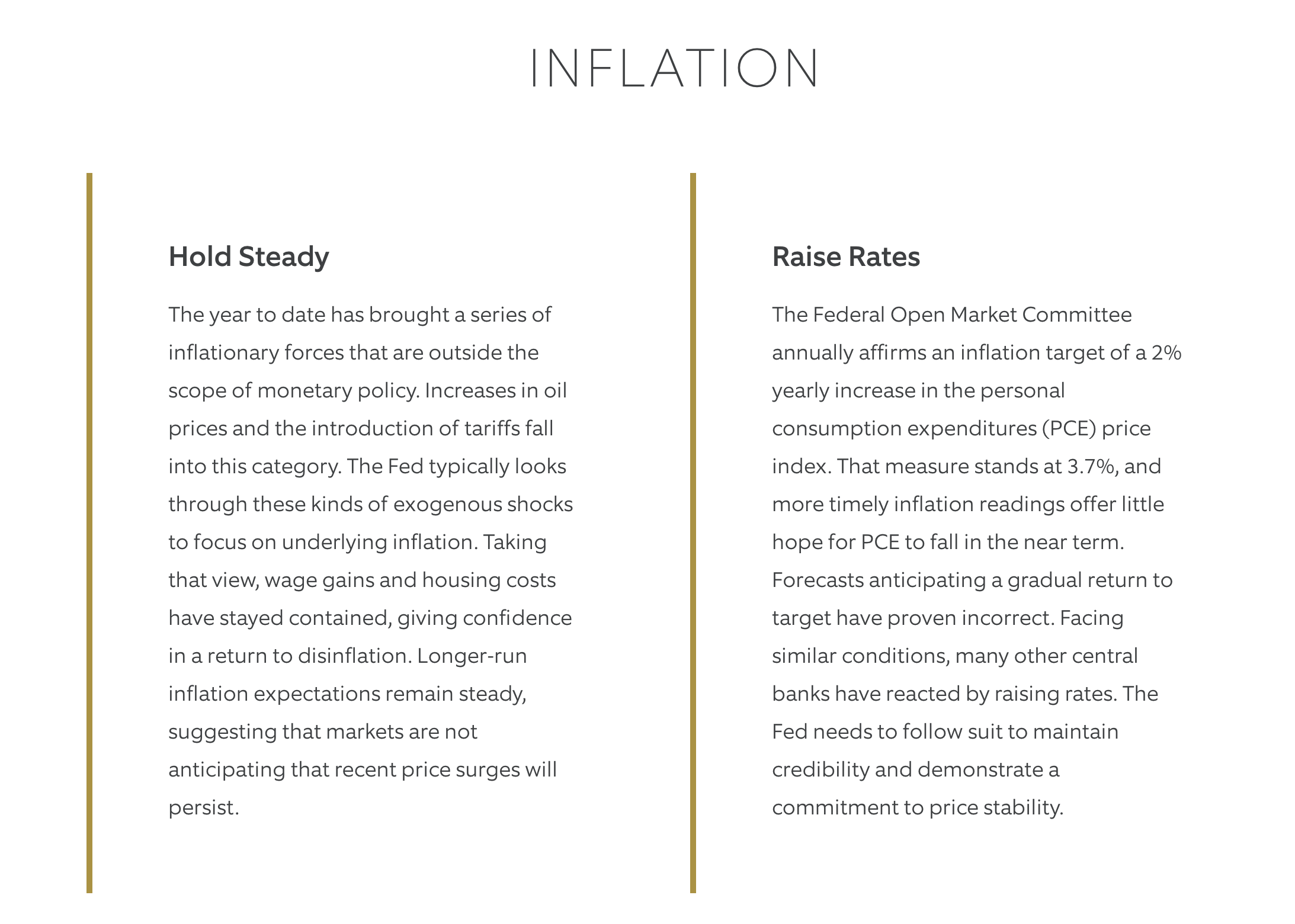
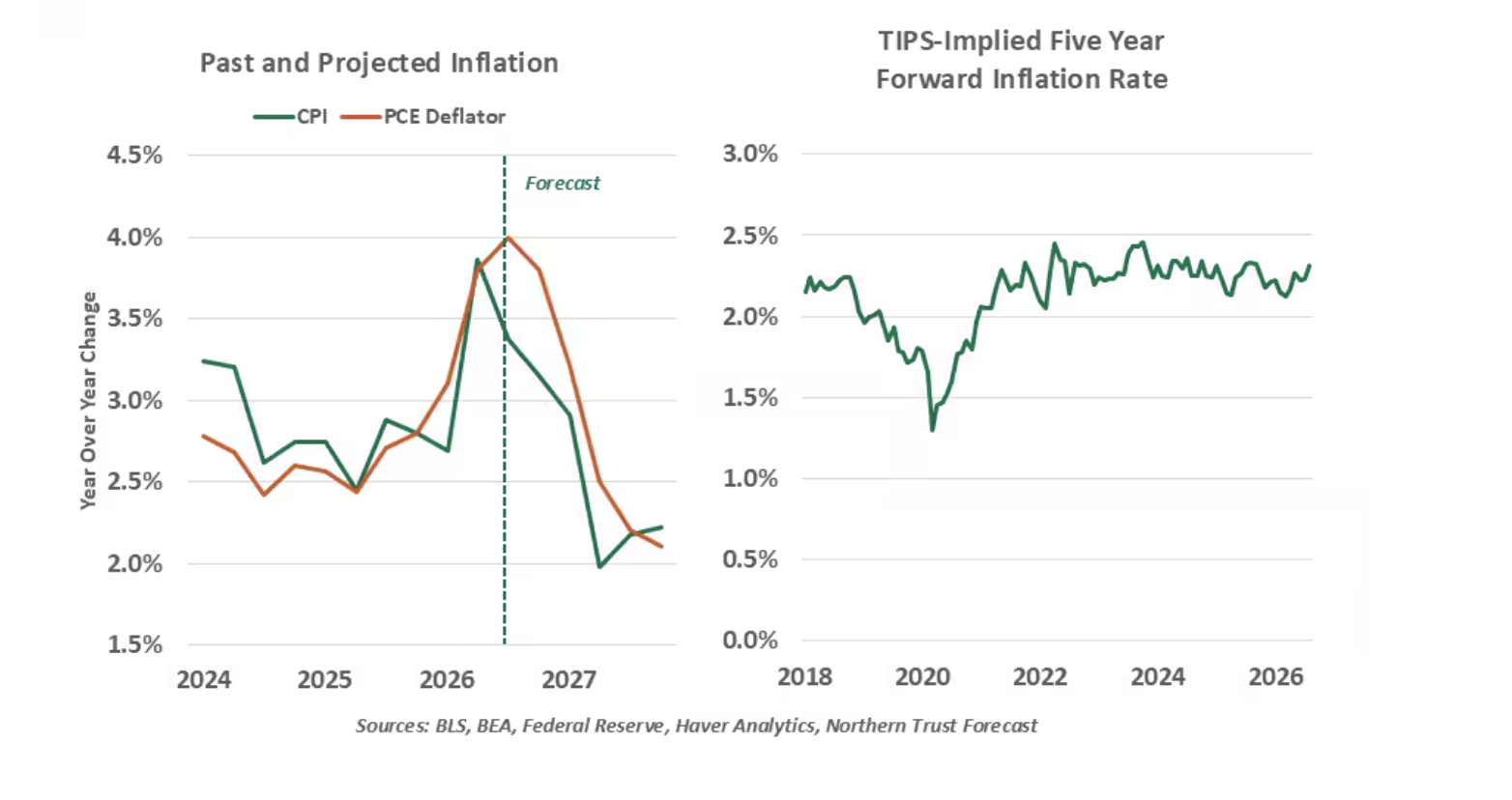
In the initial months of his tenure, Chairman Kevin Warsh has expressed openness to rethinking most aspects of the Fed’s approach to monetary policy. But he has adamantly affirmed the 2.0% inflation mandate, and he has made a point of noting just how long it has been since the target has been satisfied (65 months and counting).
It might be fair to say the worst of energy- and tariff-related inflation is likely in the past. But risks remain in both areas, stacked on the upside. And the impact of the AI buildout on inflation has the potential to be more persistent.
What seem like temporary price shocks can hang around longer than anticipated. Prior Fed leadership has been criticized for dismissing them as transitory or outside the scope of monetary policy. (Prior to taking the Chaiman’s role, Kevin Warsh was among the more vocal of these critics.) The FOMC may need to act to maintain credibility.
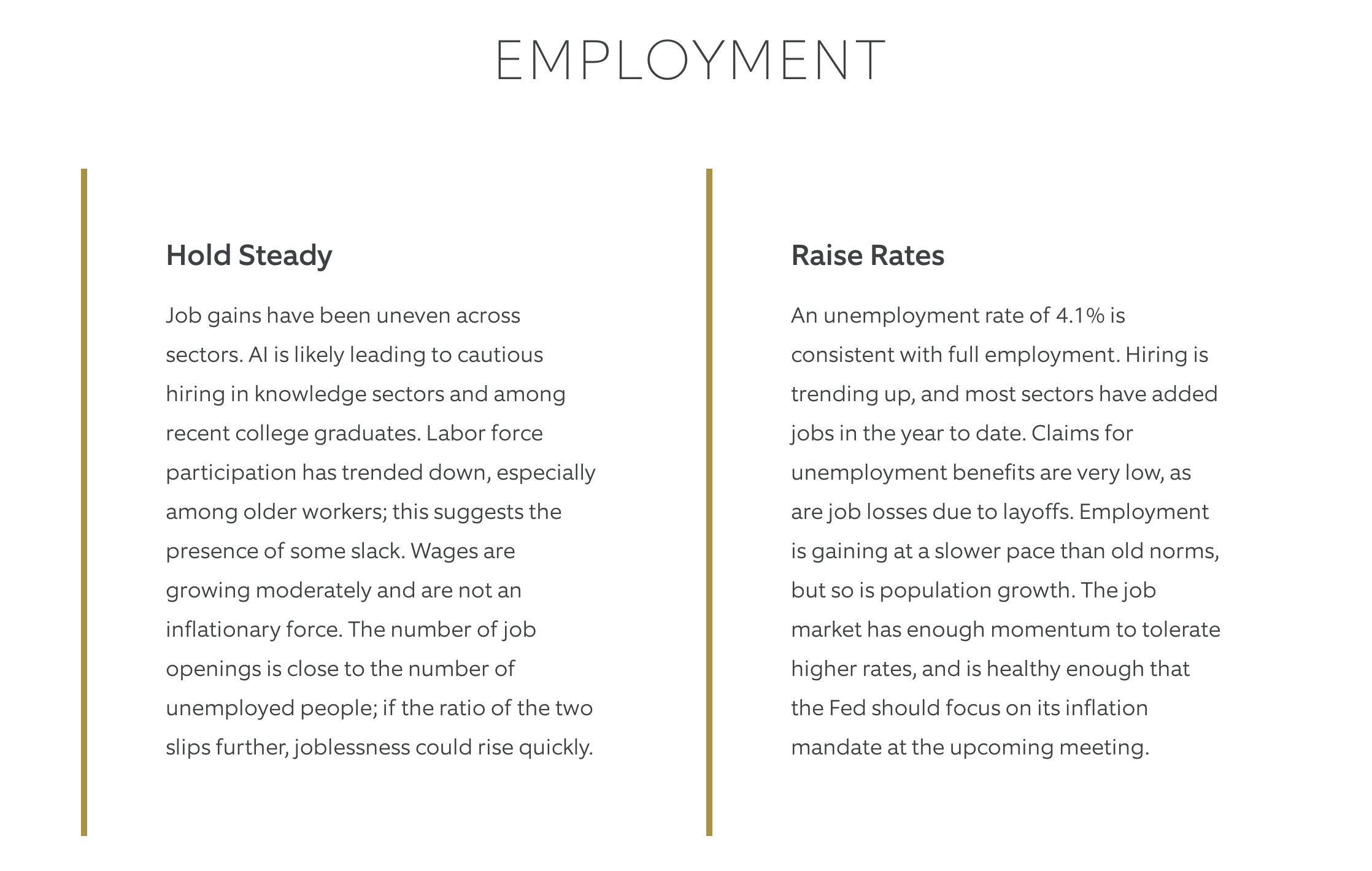
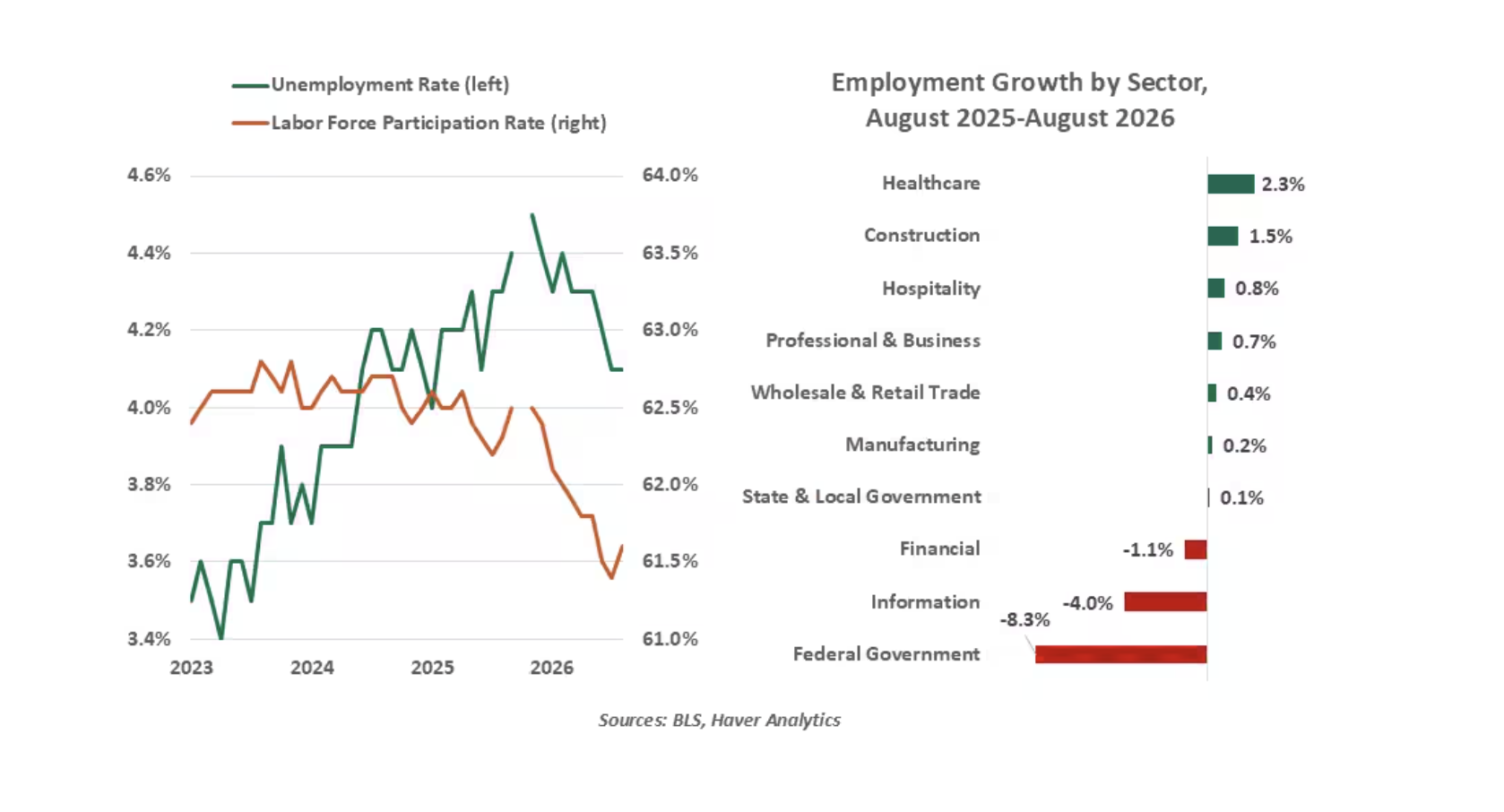
After a marked slowdown in 2025, the labor market has returned to modest hiring. Though job creation has not been uniformly strong every month, a move to limit immigration likely means that fewer payrolls need to be added in order to maintain equilibrium. The declining unemployment rate bears this out, trending down by four tenths from its peak in November 2025. The tenor of the Fed’s comments on its maximum employment mandate have softened accordingly. Few officials have expressed recent concerns about labor market stability.
The labor market is growing sustainably and does not require policy support, but growth is not so hot as to require cooling from higher rates. It should be a lesser consideration for the Fed.
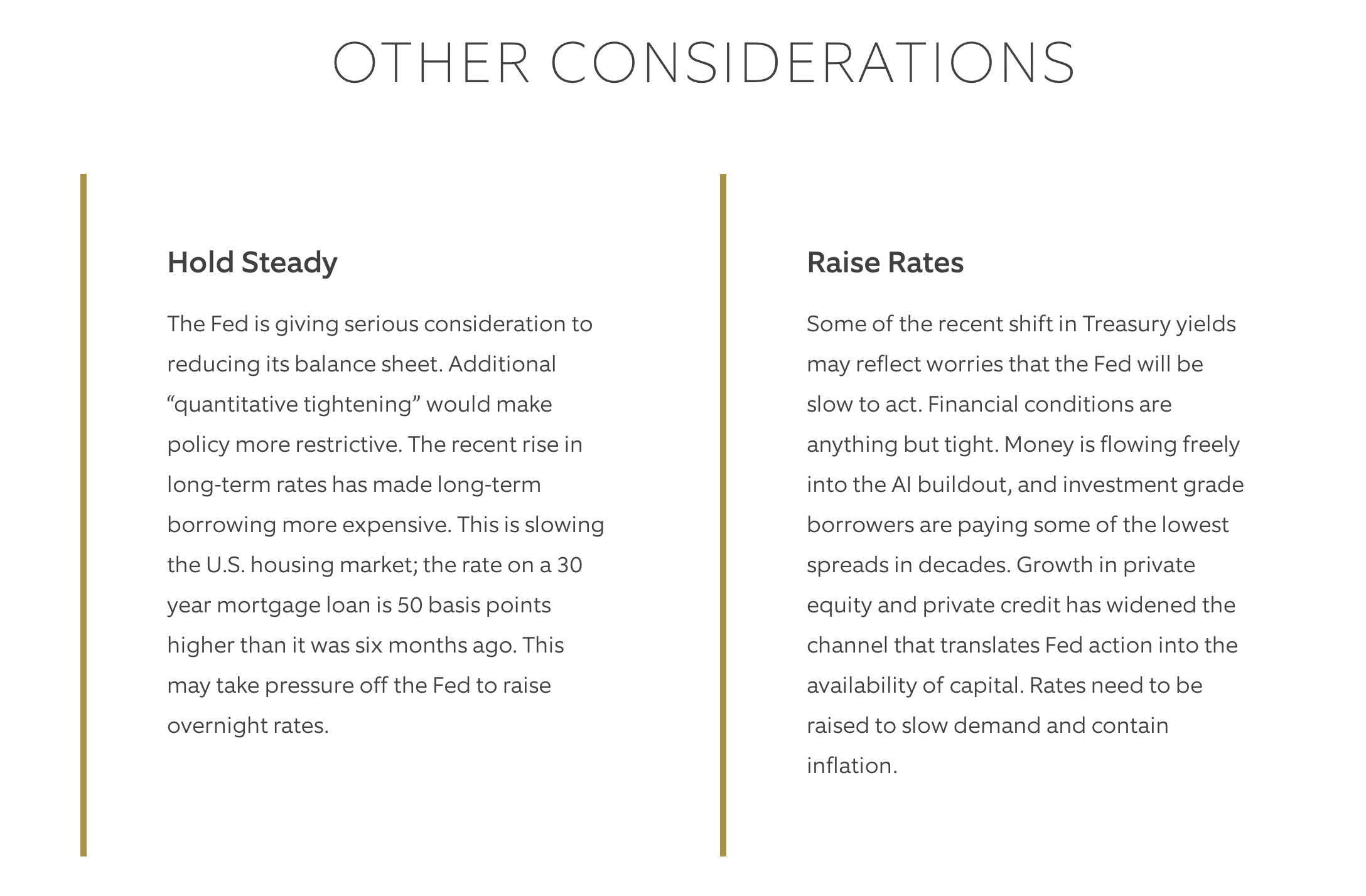
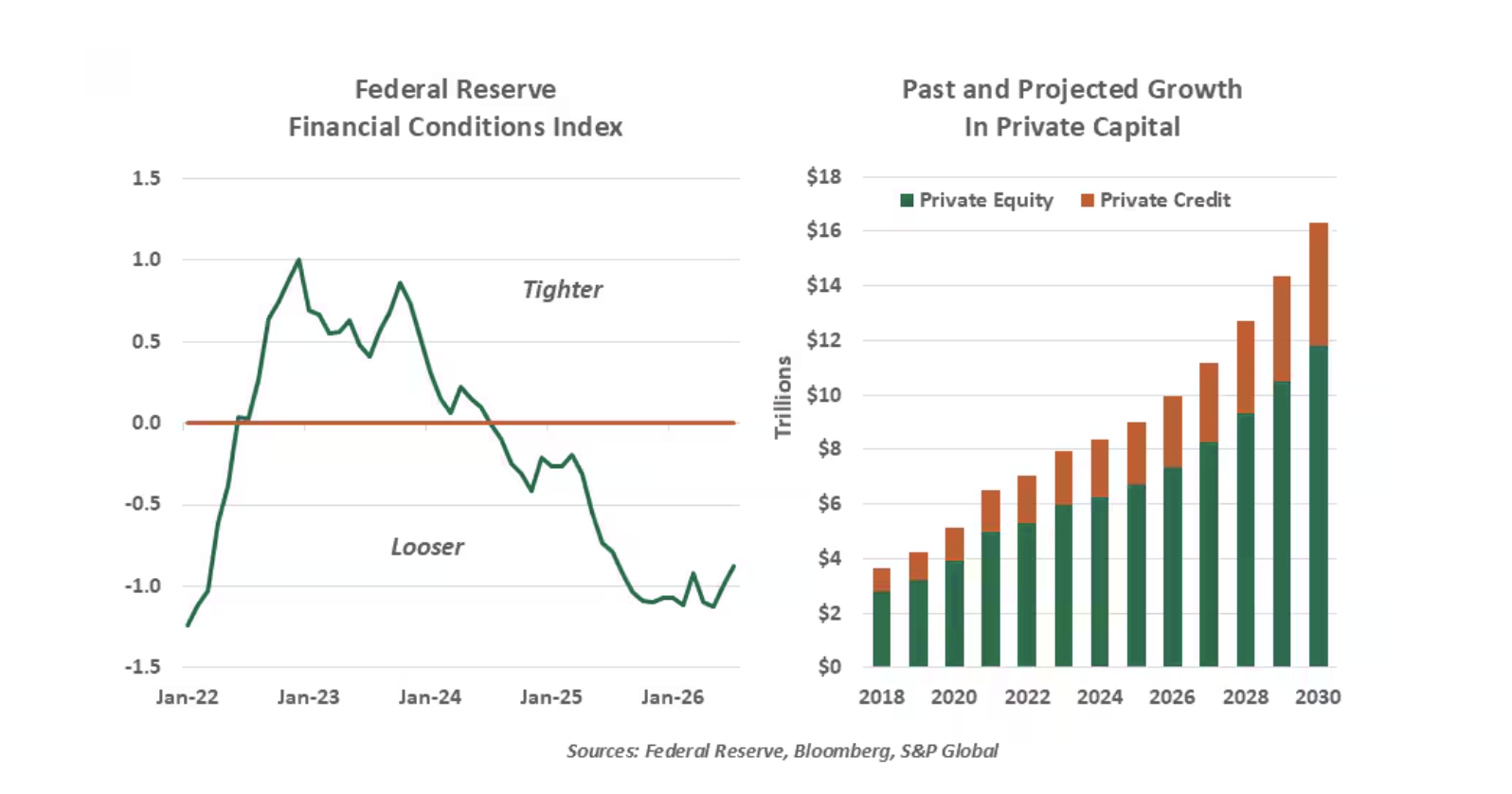
While the housing market is an important economic sector, it is not a dominant one. In almost every other industry, credit is readily available and reasonably priced. Pending changes in U.S. bank regulation may further support lending.
Long-term Treasury yields have been increasing sharply over the past month, despite interventions from the Treasury. Inflation concerns are among the reasons why. If the Fed fails to hike next week, the bond selloff could accelerate.
The politics surrounding next week’s decision are thick, and awkward for the Chairman. Kevin Warsh gave a somewhat hawkish speech at Jackson Hole; if he holds rates steady, it will almost certainly raise questions about the influence of the President and the Treasury Secretary. Raising rates within two months of the midterm elections will invite notes of displeasure on social media.
At times in the past, a difficult decision could be deferred by offering some preview of the future. (i.e. Suggesting that if conditions have not improved by the next meeting, a rate change will be likely.) This approach does not seem likely from Chair Warsh, given his disdain for forward guidance. If bond markets see the decision as a further reason to sell, the Fed may find itself on a collision course with the newly rate-sensitive Treasury.
OUR VIEW
The right decision for the Fed to make is far from obvious, and debate is sure to be robust. Chairman Warsh has welcomed a “family fight” on the Committee. Whatever the outcome, we expect dissenting votes.
We believe this month’s bout will lead to a decision to raise rates by 25 basis points. Maintaining credibility is of utmost importance, especially this early in the new Chairman’s tenure. Action will speak louder than words to affirm the FOMC’s commitment to price stability. Inflation may subside in due course, but rising oil prices have given renewed reason for concern.
We will watch bond markets to determine whether one hike will be enough. Past tightening cycles have typically not been “one and done.” If yields arrest their rise as investors regain confidence in the outlook for disinflation, a single signaling hike may prove sufficient.
We also await the results of the five task forces Chair Warsh has commissioned, which are due to report their recommendations around the end of the year. They have been chartered to think creatively about how best to steer policy in the modern economy. For a committee that may feel boxed in, some out-of-the-box thinking may unlock a better path ahead.
Information is not intended to be and should not be construed as an offer, solicitation or recommendation with respect to any transaction and should not be treated as legal advice, investment advice or tax advice. Under no circumstances should you rely upon this information as a substitute for obtaining specific legal or tax advice from your own professional legal or tax advisors. Information is subject to change based on market or other conditions and is not intended to influence your investment decisions.
© 2026 Northern Trust Corporation. Head Office: 50 South La Salle Street, Chicago, Illinois 60603 U.S.A. Incorporated with limited liability in the U.S. Products and services provided by subsidiaries of Northern Trust Corporation may vary in different markets and are offered in accordance with local regulation. For legal and regulatory information about individual market offices, visit northerntrust.com/terms-and-conditions.
A message from Advisor Perspectives and VettaFi: Discover something new! Click here to register for our upcoming webcasts.
© Northern Trust
More Tax Planning Topics >