Robin Wigglesworth Makes the ‘Boring’ Bond Market Come Alive
Membership required
Membership is now required to use this feature. To learn more:
View Membership BenefitsThe views presented here do not necessarily represent those of Advisor Perspectives.
Few concepts in human civilization present a greater challenge for writers than the bond market. It's just incredibly boring. You buy a bond; it pays a fixed interest rate; and when it matures, you get your money back. It would take a genius to turn that story into a gripping tale that’s the basis for a blockbuster movie.
Surprisingly, a few such geniuses have arisen. Tom Wolfe is one: In The Bonfire of the Vanities, he famously wrote that the din emerging from a Wall Street trading floor “…was the sound of well-educated young white men baying for money on the bond market.” The phrase has become legendary, and the book is a page-turner.
Not long after, in the opening scene of Liar’s Poker, Michael Lewis reported that Salomon Brothers chairman John Gutfreund, proposing an outrageous bet, had said to John Meriwether, a Salomon trader, “One hand, one million dollars, no tears." This phrase, too, has stuck in readers’ heads for decades.
A generation later, The Big Short reinforced Lewis’ reputation as someone who could make anything interesting, including mortgage-backed securities, collateralized debt obligations, and credit default swaps. The resulting movie included the wonderfully wacky pairing of the Nobel Prize-winning economist Richard Thaler and the young singer Selena Gomez, who appeared together in a scene that is still used in business schools to explain the 2008 financial crisis in plain English.
A New Bond Market Tale
All that is by way of introduction to Robin Wigglesworth’s new book, A Fabulous Debt: The Epic Story of How Bonds Built the Modern World, which describes the dominant, and at times dramatic, role of bonds in the world economy, both historically and today. It’s not quite up to Wolfe’s or Lewis’s levels of wizardry, and I wouldn’t call him a genius — more like a top talent. But Wigglesworth has found a way to hold the reader’s attention through 347 pages of financial storytelling (without the help of pictures, diagrams, or tables), a challenge that would have sunk many a lesser reporter.
Source
And if a man named Robin Wigglesworth didn’t exist, J. K. Rowling would have had to invent him.
Roadmap
As usual, I’ll begin by summarizing the book, but it’s so packed with information that all I can do is provide vignettes from selected times in history. The vignettes are biased toward older history because that’s the less known part of market lore.
As one proceeds through the book and through time, the stories become more familiar, although Wigglesworth enriches them with exceptional detail and his own amusing takes. I conclude with advice on whether to read the book and a lighthearted suggestion for investors1.
March 12, 1171: The Bond Market Is Born
Debt has been intertwined with humanity from the beginning of recorded time, but the specific innovation of bonds came later, in the High Middle Ages in Europe2. Wigglesworth begins his account with a raid in 1171 by the Byzantine emperor on the city-state of Venice. The author writes,
The Byzantine emperor’s soldiers suddenly rounded up every Venetian man, woman, and child they could find throughout their lands, seized their shops, wares, and ships, and threw the owners in jail. Over 10,000 people in Constantinople… [which had a Venetian quarter] were rounded up…
Life in the Middle Ages was tough! To fight back, the doge of Venice
divided the city into six districts, systematically assessed the wealth of its citizens, and forced them to hand over the money Venice needed for its fleet. But rather than a straightforward one-off war tax, it would be a loan, albeit an involuntary one. Venice promised to pay its citizens 5 percent a year until the debt could be repaid. Crucially, the receipts of the prestiti [loans] were made tradable, so a citizen who needed to raise money could sell their claim to someone else at a discount if necessary.
Thus, while scholars have found much earlier (ancient Roman and beyond) instances of loan documents being transferred from one person to another in exchange for cash, the bond market as we know it — with fungible securities, regular interest payments, and state-sponsored administration — was truly born that day in 11713.
Eight hundred and fifty years later, people are still baying for money on the bond market.
The Great Bog of Europe
Skip ahead five centuries, to the Netherlands in the 1600s where capitalism was beginning to assume its modern form. We all know about the various East India companies and the tragicomic tulip bubble, but those were equities and commodities respectively, not bonds. It’s surprising that a fully functioning market in predictable cash flows — bonds — emerged later than the complex stock market with its “short selling, stock derivatives, margin loans, bear rates, and pump-and-dumps,” as Wigglesworth describes Renaissance-era Dutch stock practices — but that’s what happened.
Why did these markets develop and thrive in a windswept and wet corner of northwestern Europe, sometimes called the “Great Bog” of the continent, long before the traditionally richer Mediterranean world had them? Wigglesworth, like many economists before him, attributes the flourishing to democracy — an accountable government is more likely to be a worthy borrower than a king who might renege — and to diversification of issuers, which provided the benefits of competition. Dutch issuers included different provinces, towns, water boards, and corporations as well as the central government. All of these entities had to compete for funds, and did so by providing transparency, credible collateral, and standardized payment schedules — all features of the bond market as we know it today.
Hamilton
Skip ahead, again, to the Revolutionary period in the United States, where government bonds were critical to solving the challenges facing a new country carved out of the wilderness. While Great Britain4 established quite a bit of financial infrastructure in the eighteenth century, enabling it to win a series of wars as well as grow its economy vigorously, starting a country from scratch is a more interesting case study. The U.S. was the diciest of propositions for its first few decades — we almost lost both the Revolutionary War and the War of 1812 — and, by today’s standards, was a frontier market (a country that can’t even be considered an emerging market).
Wigglesworth reinforces the popular image of Alexander Hamilton (Exhibit 1 shows a modern reimagining) as championing the financial strength of the United States and making the U.S. bond market into a functioning enterprise. As Washington’s Secretary of the Treasury, he consolidated the states’ Revolutionary War debt into one big pool and federalized the debt. Considering that the quarreling colonies could barely agree on uniting to fight the British, this wasn't easy. Persuading the recently separate colonies, now states, to yield fiscal sovereignty to a newly formed central government was a big ask.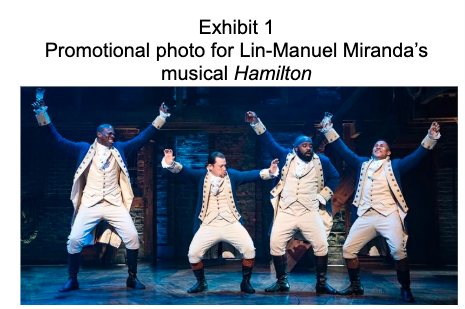
But the U.S. didn’t become a powerhouse right away. The emerging nation faced numerous debt crises. Those of 1790 and 1815 were related to the two wars the U.S. almost lost. The country also faced a mammoth unexpected expense in 1803 — the Louisiana Purchase.
President Jefferson is often said to have bought the vast Louisiana Territory from a desperate Napoleon for a song. But $15 million was not a song5, and the purchase had to be financed through a complex and risky bond issue. Wigglesworth writes,
Fortunately, Jefferson could count on Hamilton’s financial machinery, whose creation he had ironically opposed. But this was a big ask even for the bond market. Borrowing $6.5 million in two gulps in 1799 and 1800 to bankroll a new military had been a huge feat. Now the U.S. would need to borrow nearly twice that. The nascent American bond market was too small for such a task. The government would need to go abroad.
The deal that emerged was big risk for the young country:
The U.S. would hand France $11.25 million worth of American bonds that carried a 6% interest rate... These would be redeemable no earlier than 1819 or 1822. But Napoleon needed money in a hurry. [The investment banks of] Barings and Hope would therefore buy these bonds off the French at a 13.3% discount... and gradually sell them onto their networks of investors in London and Amsterdam.
Wigglesworth notes that the financing of the Louisiana purchase was a vivid illustration of how banks and bond markets often work in partnership. The details are too complex to be summarized in this review, but are relevant for understanding fixed-income markets even today.
The Gilded Age and Some Thoughts on Bubbles
Only after the Civil War — a financial cataclysm that Wigglesworth puzzlingly skips over — did the United States begin to assume a position of parity among the major financial powers of the world. The “engine” of growth was the railroads, built on a mountain of debt: “The appetite for railroad bonds was ravenous,” Wigglesworth writes. And did the issuers ever take advantage of the appetite!
The historian Richard White, quoted by Wigglesworth, notes that
…[t]here were first mortgage bonds and second mortgage bonds; there were mortgages on the trunk line and mortgages on the branches. There were land grant bonds and income bonds. There were bonds on anything and everything that investors might accept as collateral6.
It’s not a big surprise that the railroad mania, like all market manias, came to a sorry end. The Panic of 1873 and a second railroad-related crash in 1893 wiped out many investors — PBS reports that 89 of the country's 364 railroads went bankrupt in the first event. The upside is that we got the railroads. They’re still here, having added immense value through their rights of way, their still-unsurpassed ability to move big and heavy loads over long land routes, and their energy efficiency.
This outcome is typical of investment booms. As the economist Jared Bernstein (with co-authors) recently wrote, there’s such a thing as a “constructive bubble”:
Real economy bubbles, despite imposing severe private losses when they burst, have repeatedly financed socially valuable projects – from railroads and electrification to telecommunications and information technology – that endured long after speculative excess collapsed7.
We got the railroads. We got the cars in the 1920s. We got the internet. We got the (desperately needed) houses in the housing bubble of 2006-2007. As the historian and market maven Peter Bernstein (no relation to Jared) once said, “Hurrah for bubbles!8”
Bonds Go Mass Market: The Liberty Bond Issue of 1917-1919
In an even more dramatic democratization of bond-type debt, the U.S. government, facing extraordinary military expenses with the outbreak of World War I, appealed to the public to buy Liberty Bonds, a new concept — small-denomination issues designed for the masses. The smallest denomination of the actual bonds was $50, but that was two weeks’ pay for an average worker, so the Treasury went even smaller: a $5 savings certificate, which could be bought on the installment plan using 25-cent War Thrift Stamps (Exhibit 2). When you need to raise funds quickly, creativity becomes essential! 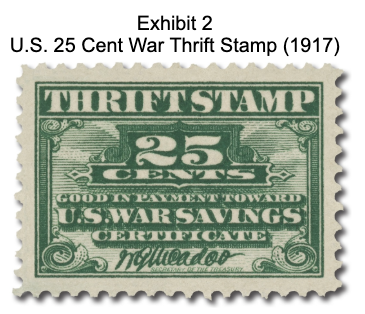
Source
Modern Times
We skip ahead again, to the major financial events within the memory of older market participants. Wigglesworth covers them with erudition and humor. This period, which arguably starts around 1980, is more familiar to readers so I’ll say less about it, even though the author devotes more than half of the book to these stories. Let’s begin with the Salomon bond trading desk (sounds boring, doesn’t it?) that inspired Tom Wolfe’s Bonfire of the Vanities, which I quoted at the beginning of this review.
The Bonfire of the Vanities
The genteel reputation that once characterized the bond business went out the window when John Gutfreund took the CEO position at Salomon in 1978. Their head of research, Marty Leibowitz, was one of the gentlest people I’ve ever known, but Gutfreund “exhort[ed]… Salomon’s traders [to] come to work every day ‘ready to bite the ass off a bear’.” The tone at the top permeated the institution. Somehow Marty survived.
Interestingly, the output of Salomon’s research is revered today, with Henry Kaufman and Sidney Homer, as well as Leibowitz, regarded as founding fathers of bond portfolio analysis. Meanwhile, the bear-biters who generated billions at the trading desk are mostly forgotten, although it’s hard to forget Lewis Ranieri, the man who popularized mortgage-backed securities (and who was among those blamed for the 2008 financial crisis). Salomon is no more, but it has cast a long shadow over the investment universe since its demise.
Milken
In the last half-century, no one on the “sell side” (broker-dealer side) of the bond market influenced the business more than Michael Milken, the whiz kid who rebranded “junk” bonds (those issued by companies with poor credit ratings) as “high-yield” bonds. He persuaded legions of issuers and investors that the yields were high enough to compensate for losses from defaults and still make the bonds profitable.
The newfound ability, in the 1980s, to sell high-yield bonds to investors launched the leveraged buyout business, which remains the largest part of the private equity asset class today. But Milken’s downfall was spectacular. His firm, Drexel Burnham Lambert, went bankrupt and was liquidated in 1990. Milken and his colleagues were convicted of a blizzard of securities law violations, including criminal fraud. He served 22 months in jail (out of an original 10-year sentence) and paid an unheard-of $600 million fine.
Wigglesworth portrays Milken somewhat sympathetically (my view also), and concludes that the high-yield market developed by Milken “is today an approximately $5 trillion market for tens of thousands of companies around the world that in previous eras might have struggled to fund themselves.” Meanwhile, barred for life from the practice of finance, the chastened Milken now runs an impressive economic think tank that specializes in advising philanthropies on how to give away money most effectively.
LTCM
Salomon Brothers now pops back unexpectedly into the story, with a group of the firm’s alumni starting a mysterious-sounding hedge fund called Long-Term Capital Management. This name suggested a Warren Buffett-type operation that bought companies for the very long haul, but what they actually did is better described as short-term capital management.
Headed by the ex-Salomon trader John Meriwether, who ran Salomon’s massive profit center known as the “arbitrage desk” and whom we met in the “no tears” bet with his boss John Gutfreund, LTCM also used the talents of two future Nobel Prize winners, Robert Merton and Myron Scholes. Both did brilliant academic work; neither was qualified to run a sprawling portfolio of ultra-leveraged bets.
At first, Wigglesworth writes, LTCM “[took] advantage of the bond market’s multiplying complexity to make eye-watering sums of money.” In four years, LTCM more than quadrupled investors’ money, a compound annual rate of return in excess of 40% per year. In bonds.
As the sky-high returns attracted ever larger sums of new money, however, LTCM used more and more leverage, up to 100 times, to put the money to work, an invitation to eventual serious trouble. When a double debt crisis — Asian markets in 1997 and Russia in 1998 — struck, the market value of LTCM’s positions tumbled. The fund lost 44% in the one month of August 1998.
And LTCM had become so large that the sheer size of the fund’s leveraged positions caused some commentators to fear the end of the financial system, at least until it could be reassembled. The investment banker and writer Jim Rickards told an interviewer, “The expectation was that had LTCM not been rescued, all the markets in the world would have closed9.”
Fortunately, with LTCM out of the picture, bond prices normalized and a worse crisis was averted. But, Wigglesworth writes, the LTCM incident showed the world that the financial system was vulnerable to previously unforeseen risks, especially leverage, or in simpler language, debt:
[T]he opaque interconnections, fiendish complexity, and humongous leverage that the disaster revealed proved just a trailer for a horror movie the world was forced to sit through a decade later.
2008 and Its Consequences
The horror movie began innocently enough, with a dip in housing prices in early 2007. Home values underlay the furiously leveraged mortgage-backed securities market, more or less invented a generation earlier by Lew Ranieri at Salomon, and grown by 2007 to $8.5 trillion, half the size of the entire U.S. stock market.
Because of this leverage and a great deal of creative financing, a roughly 23% decline in average house prices over a multi-year period — a big bear market for sure, but hardly unprecedented — translated to a total loss for some mortgage-backed securities and the bankruptcy of key financial institutions such as Bear Stearns. Many more institutions would falter or fail over the next two years.
A full recounting of the Global Financial Crisis would take an encyclopedia, not just a book, and Wigglesworth does not attempt it in the one chapter devoted to the crisis — “this is a brief and reductive retelling,” he admits. But the author succeeds in capturing the panicked, end-of-the-world atmosphere of late 2008. We are still living through the reverberations of that almost 20-year-old crisis, compounded by the folly of the zero-interest rate policy that lasted (with some interruptions) from 2008 to 2022, as well as the COVID shock.
In sum, the “boring” bond market, which used to provide an anchor to investors’ portfolios, and the purpose of which was to provide stable long-term financing to corporations and governments, has over the last half-century become a whirlpool of speculation, fortunes won and lost, and mind-numbing complexity fully understood only by math whizzes — the “quants,” who have taken over much of Wall Street, as well as many buy-side investment funds. Bonds are boring no more.
Should I Read This Book?
Yes, you should read this book — if you want to know the lively and informative stories behind the people, ideas, and institutions that have made up the bond market as it has evolved over the centuries and, in particular, over the last half-century. If you just want to learn more about bonds — how they’re priced, what the risks and expected returns of different types of bonds are, and so forth — other books cover this material better and more compactly.
That is, of course, a high compliment to Robin Wigglesworth and A Fabulous Debt. (The book title is from the British historian Thomas Babington Macaulay, writing in 1848 and, interestingly, arguing in defense of the U.K. policy of borrowing to finance public works, wars, and other matters.) Anyone who can make the history of the bond market come alive is worth reading. A Fabulous Debt is a fabulous read.
A Suggestion for Investors
I typically conclude my book reviews with advice for investors. I have only one bit of advice pursuant to A Fabulous Debt: If you are going to put a substantial fraction of your net worth into an asset class, learn all you can about it. The deep knowledge embedded in A Fabulous Debt, if applied in concert with good information about other investments from other sources, will help any investor.
Laurence B. Siegel is the Gary P. Brinson director of research emeritus at the CFA Institute Research Foundation, advisory board member at Chicago Global Wealth, senior advisor at Quent Capital, economist and futurist at Vintage Quants LLC, and an independent consultant, writer, and speaker. His books, which include Fewer, Richer, Greener and On Progress and Prosperity, explore ideas in economics, investing, technology, and human progress. Most recently, he served as executive editor of Roger Ibbotson’s book, Exponential Wealth: Centuries of Stock and Bond Returns. Larry’s website is http://www.larrysiegel.org. He may be reached at [email protected].
The author thanks Stephen C. Sexauer, CIO of the San Diego County Employees Retirement Association, and Theodore R. Aronson, founder and CEO of AJO Vista, for their excellent comments and suggestions.
A message from Advisor Perspectives and VettaFi: Discover something new! Click here to register for our upcoming webcasts.
1What year is midway through the book? Books with a historical orientation can be judged by the amount of calendar time that is packed into the first half of the book. A larger proportion means it’s a deep history book; a smaller proportion, more of a current-events book. In my recent review of Brendan Greeley’s The Almighty Dollar, I noted that by the halfway point of the book, Greeley had only reached 1781. Now that’s a history book! Wigglesworth is more current events-minded, although with admirable respect for older history. Halfway through the book, he’s up to 1963 and President Kennedy’s Interest Equalization Tax, a mistake that, in Wigglesworth’s telling, “force[d] all the business off to London.” The tax was gradually eliminated between 1974 and 1976.
2In an interview with Barry Ritholtz, Wigglesworth reveals that he studied several millennia of debt history, noting that “the Mesopotamians 4,000 years ago traded clay tablets of loans.” However, that’s not in the book. The proto-history of finance, which is more a history of debt than of equity, is beautifully documented in William Goetzmann’s Money Changes Everything. A focus specifically on debt is in Graeber, David. 2011. Debt: The First 5,000 Years. Brooklyn, NY: Melville House.
3It is worth noting that 1171 precedes the introduction, in 1202, of Hindu-Arabic numerals and base-10 positional notation into Europe (and into European finance) by Leonardo of Pisa, posthumously known as Fibonacci (“son of Bonacci”) — so the bond issue of 1171 was accomplished with primitive mathematical tools, probably not much different from what the Romans used a millennium earlier.
4It was not the U.K. until 1801, when Ireland was added to the Kingdom of Great Britain.
5In 1800 the U.S. population was 5.3 million, compared to 340 million today. The dollar was worth 29x its current value in terms of purchasing power. So $15 million in 1803 equates to about $435 million today, and after adjusting for population growth, would amount to a burden of $30 billion on today’s population. That certainly sounds doable for our Leviathan government. However, in 1803 the U.S. government was minimal, and income taxes were zero. Despite some folklore to the contrary, the Louisiana Purchase was a big deal.
6White, Richard. 2011. Railroaded: The Transcontinentals and the Making of Modern America. New York: W. W. Norton & Co.
7Bernstein, Jared, Aneil Kovvali, and Jeffery Y. Zhang. Forthcoming 2027. “Constructive Bubbles.” Journal of Corporation Law 52, in the Abstract. https://papers.ssrn.com/sol3/papers.cfm?abstract_id=7383298.
8Bernstein, Peter L. Date unknown (late 1990s). “Hurrah for Bubbles.” Economics and Portfolio Strategy (privately circulated market letter). New York: Peter L. Bernstein, Inc.
9Nilsen, Sverre Rørvik. 2013. “The Incredible Untold Story about How the Financial World Almost Ended.” Enterprising Investor (blog post, November 4), Charlottesville, VA: CFA Institute, https://rpc.cfainstitute.org/blogs/enterprising-investor/2013/the-incredible-untold-story-about-how-the-financial-world-almost-ended.
Membership required
Membership is now required to use this feature. To learn more:
View Membership Benefits