Advisor Perspectives welcomes guest contributions. The views presented here do not necessarily represent those of Advisor Perspectives.
There are at least three distinct perspectives emerging from the scientific debate over human longevity:
Each offers a different way of thinking about how long we might live.
Radical life extension advocates believe science could eventually achieve “longevity escape velocity,” in which advances in geroscience and biotechnology extend healthy life faster than people age. Scientists such as Dr. David Sinclair of Harvard Medical School and Dr. Aubrey de Grey of the Longevity Escape Velocity Foundation have suggested that lifespans of 150 years or more may eventually be possible.
At the other end, longevity skeptics such as Dr. S. Jay Olshansky of the University of Illinois Chicago argue that the dramatic gains in average life expectancy achieved during the past century may be difficult to extend further. Much of that progress came from public-health advances such as sanitation, clean water, vaccination, antibiotics, and improved nutrition. However, longevity skeptics can still be optimistic about health span — the years we live in good health — even if substantial increases in maximum lifespan prove elusive.
Bridging the Chasm
But I want to focus on a middle position: longevity optimism.
Longevity optimists believe advances in geroscience, biotechnology, artificial intelligence, and other fields could significantly extend both health span and lifespan, without suggesting that people will live for 150 years or longer. From this perspective, living healthy into our late 90s, and perhaps beyond 100 for many, should be taken seriously when thinking about our personal and financial futures.
Prominent voices include Dr. Eric Verdin, CEO of the Buck Institute for Research on Aging, and Dr. Michael Roizen, chief wellness officer emeritus of the Cleveland Clinic. Verdin has distanced himself from predictions of lifespans of 150 (or more). Meanwhile, Roizen has argued that advances in science, combined with better health behaviors, could make healthy lives to age 100 attainable for many more people. Roizen has further stated that in the near future “90 will be the new 40.”
That perspective appeals to me because it combines optimism with realism.
Maintaining Quality, Adding Quantity
I’m a proponent of a longevity vision of flourishing toward a healthy, joyful, and purposeful 100-year life, and I have embraced this vision for my own life. The objective isn't simply to add years to life, but to add healthy, meaningful years to life.
If longevity optimism is correct, we may have more healthy years ahead of us than we previously assumed. That creates an opportunity — but also a planning challenge.
What Does Longevity Optimism Mean for Retirement Planning?
Financial advisors have traditionally helped clients answer a fundamental question: Will I have enough money for the rest of my life?
But what happens when “the rest of my life” becomes considerably longer — and healthier — than expected?
Consider retirement savings. If a client expects to live to 100 rather than 85 or 90, the conventional assumptions underlying a retirement plan may look very different. Does a longer, healthier lifespan mean the client needs to save more because assets must support additional decades of spending? Or could better health and greater ability to work longer mean the client can save less because their earning years might also be extended? Or some combination of saving more and working longer?
The same question applies to withdrawal strategies. The familiar 4% withdrawal rule has become an important reference point in retirement planning. But if future retirees routinely experience longer lifespans, should withdrawal rates be adjusted? And if medical advances substantially improve health span, should retirement portfolios be designed around a longer period of active spending followed by a shorter period of frailty?
And just think: What would a “leap in longevity” do to actuarial assumptions built into annuity contracts?
There are no easy answers. But longevity optimism suggests that these questions deserve a place in the planning conversation.
Not Just Investments
The implications extend beyond portfolio construction.
What does a longer life mean for someone in a profession with a mandatory or practical retirement age? A surgeon may be forced to stop operating long before his or her health deteriorates. An airline pilot may face age-related restrictions. For these clients, a longer healthy life could create a potentially lengthy period between the end of a career and the end of one’s work life.
Perhaps the answer is a career transition rather than retirement — moving into teaching, consulting, mentoring or another form of purposeful contribution."
Estate planning could also look different. If people live substantially longer, inheritances may arrive when children are themselves retired. Should some assets be transferred earlier? Should trusts or other structures be designed differently? Should powers of attorney and other estate documents be reviewed more frequently as family circumstances change?
And then there are healthcare and long-term care.
Longer lives don't necessarily mean longer periods of disability. If medical advances allow people to remain healthy for more years, the traditional assumption of a long period of frailty at the end of life could change. That would have significant implications for healthcare spending, long-term-care planning, and the way advisors model late-life expenses.
I don't claim to have answers to all these questions. I believe the most important first step is to ask better questions.
Planning for Flourishing Longevity
Longevity optimism changes the conversation from simply asking, “How much money will I need to retire?” to asking, “How can I fund my vision of flourishing longevity as I seek a healthy, joyful, and purposeful 100-year life?”
That is a more expansive question, and is more fun to contemplate than “frailty longevity.” At age 65, if a person were to live to be 100, that is over 12,700 days or over 200,000 waking hours. Such an expanse of time calls for some serious reflection of using that time purposefully, rather than for mostly leisure. (How many games of pickleball do you really want to play with those 200,000 waking hours?)
Thus, a 65-year-old client who expects to live another 30+ years may make very different decisions about their life than one who thinks they will die in their late 70s or early 80s. The difference isn't merely financial. It affects where they live, how they spend their time, whether they continue working, whether or how they support their children and grandchildren, and how they define their purpose after traditional retirement.
Helping Clients
This is where financial advisors have an opportunity to provide value beyond investment management. It’s also where supplementing advisory skills with life coaching skills comes into view.
My vision for my own work as a Certified Financial Planner® is to function more as a longevity advisor-coach. I really think this is the future of the financial advisory profession. We can help clients plan not just for longevity, but for flourishing longevity — the vision of a healthy, joyful, and purposeful life that extends into one’s late 90s and beyond.
For financial advisors, if longevity optimism is for real, perhaps our career extension should complement life extension. For an advisor who has accumulated decades of experience, relationships, and professional wisdom, a longer healthy life could make an extended career not simply financially attractive, but deeply meaningful.
I’ll speak for myself: At age 70, I believe my best decades as a financial advisor are ahead of me!
How about you?
Disclaimer: Opinions expressed are those of the author and not necessarily those of Raymond James.
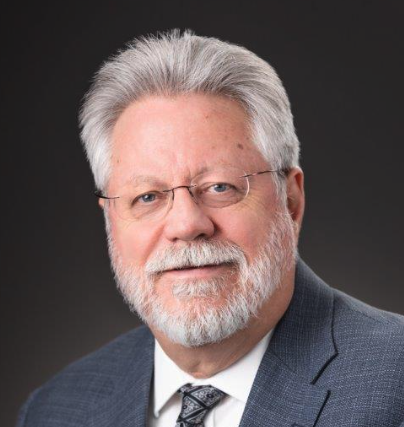
Brad Jenson has been a financial advisor since 2002 and has attained the CFP®, CIMA® and AIF® designations. Since 2009, he has been with Lake Superior Financial Services/Raymond James. He is the lead author of Join the Longevity Revolution: A Guide for Financial Advisors and Their Clients.
Lake Superior Financial Services, Inc. 11 East Superior Street, Duluth, MN 55802. 218-625-2430.
Securities offered through Raymond James Financial Services, Inc. Member FINRA/SIPC. Lake Superior Financial Services is not a registered broker/dealer and is independent of Raymond James Financial Services, Inc. Investment advisory services are offered through Raymond James Financial Services, Inc.
The information contained in this material does not purport to be a complete description of the securities, markets, or developments referred to in this material. The information has been obtained from sources considered to be reliable, but we do not guarantee that the foregoing material is accurate or complete. Investing involves risk and you may incur a profit or loss regardless of strategy selected, including diversification and asset allocation. Past performance does not guarantee future results.
Links to external content or websites, if provided, are for informational purposes only. Raymond James is not affiliated with and does not endorse, authorize or sponsor any of the listed websites or their respective sponsors. Raymond James is not responsible for the content of any website or the collection or use of information regarding any website’s uses and/or members.
A message from Advisor Perspectives and VettaFi: Discover something new! Click here to register for our upcoming webcasts.
Read more articles by Bradley Jenson
 Advisor Perspectives welcomes guest contributions. The views presented here do not necessarily represent those of Advisor Perspectives.