Advisor Perspectives welcomes guest contributions. The views presented here do not necessarily represent those of Advisor Perspectives.
You know how it feels when something just clicks and that proverbial light bulb goes on? In all my years working as a CFP® in the financial advisory profession, I’ve noticed the vast majority of advisors have the same concern: How do I attract and retain clients?
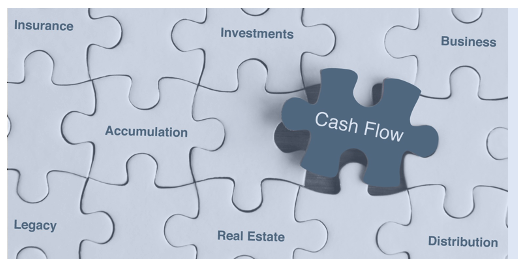
The easy answer is to provide value, especially value that people can’t receive elsewhere. The difficult question is figuring out how to create that unique value. That is the missing element and that is where cash-flow planning comes in.
This extra level of value is easily demonstrated when you help a client with cash flow. However, while cash-flow planning accelerates growth like you’ve never seen, advisors need to navigate the cash-flow conversation properly.
Cash-flow planning is not budgeting
You might be thinking, “I don’t want to work on a budget with my clients.” Cash-flow planning is not budgeting. In fact, it is one of the biggest oversights advisors make, especially in this era of homogenized practices.
Advisors are missing out on a huge opportunity to build trust and develop a client relationship. By leading with cash-flow management in the beginning of the planning process, an advisor can:
- Provide immediate actions clients can take to improve their financial situation;
- Help make something complex, simple and easy to understand; and
- Show competency in a subject other advisors skip over.
Here is the thing about cash flow. It’s not subjective. Clients have a certain amount every month to spend. If they go over that amount, they go into debt.
Cash flow is not just a conversation for people starting out or strapped in debt. A good understanding of where and how a client is spending money is important for all. Many advisors have clients who have a high six-figure income, but still find it hard to cover their monthly bills or save enough for retirement.
Your client’s may not want to budget because it is hard to track every receipt or check to make sure an app coded an item correctly. In fact, they may not even want to understand their cash flow because it seems overwhelming. However, they are still curious. Given the opportunity, they will learn about cash flow. That benefits everybody when they start looking forward with their financial planning rather than retrospectively.
Develop a forward-looking cash-flow plan
Work with your clients to develop a cash-flow plan that is forward looking and concrete, not abstract or based upon projections. Cash Flow planning is especially important in retirement planning. This is where most advisors use projections to map out the future rather than looking forward. Cash-flow planning helps clients understand what they can do today to build and protect their wealth.
When helping a client with retirement planning, get their buy-in when you can paint a clear picture with your recommendations. Show them they have the ability to implement changes necessary to hit their goals.
Cash flow is reality
Clients are curious about cash flow. Giving them a 30-year projection does not excite them. A 30-year projection isn’t tangible. However, a real-time plan that they can work on gives them a clear picture as well as feeling more comfortable about retirement.
Check out this quote from one of my clients who uses cash-flow planning:
For years my wife and I have struggled to understand how we could be living paycheck to paycheck when we made a good living. Asking ourselves each month, "Where did all of the money go?" We tried budget spreadsheets, banking software, and many other solutions. After using Cash Flow Mapping [cash flow planning software] for just a couple of months the results have been astounding. We are able to easily cover all fixed expenses, have money for the fun things we want to do, and put more money away for our future. It is incredible how this amazingly simple tool [planning for cash flow] provides this level of insight into what was an extremely complex problem for my family. I finally feel like we are telling our money where to go rather than wondering where it went. Jared J.
An advisor who takes time to empower their clients to understand their long-term savings, fixed expenses and variable expenses have clients who are loyal and with whom they have a deeper trust. You are also differentiating yourself by giving them clear direction and allowing them to achieve their goals with greater certainty. By teaching them to plan their cash flow, you are setting the foundation for all other planning. You aren’t giving them just a “lifestyle number,” but real actionable items.
Get on the fast track
To get on the fast track to leading with the cash flow conversation and getting more clients and sales, check out this informative webinar, “Solving the Biggest Problem: Cash Flow.” It will quickly and efficiently show how to lead with cash flow to get more clients and be your client’s hero.
To your continuous success!
Jennifer Sauter CFP® has over 20 years’ experience in the financial services industry. She is the head of customer success at Cash Flow Mapping. Schedule a short discovery call with her to learn how you can use the cash-flow conversation to grow your business.
Read more articles by Jennifer Sauter
 Advisor Perspectives welcomes guest contributions. The views presented here do not necessarily represent those of Advisor Perspectives.