Advisor Perspectives welcomes guest contributions. The views presented here do not necessarily represent those of Advisor Perspectives.
There’s something symbolic about watching the calendar roll over from 2019 to 2020. It’s a new decade, so why not take a shot at longer-term planning – like envisioning where your business will be in 2030?
It’s hard to imagine how much things can change in 10 years. There are plenty of studies showing that the human brain just isn’t wired for long-term planning. But growing a successful financial advisory firm requires a lot of forward thinking. Transitioning from a practice to a firm to an enterprise means making important decisions along the way, investing time and resources, and even making some sacrifices. That process will be a lot smoother if you’ve envisioned where you want your business to be in the next five, 10 or 20 years.
Here are five steps to help guide you toward your own vision for 2030:
1. Get into a future-thinking headspace
Because it’s so hard to wrap your head around the future, it helps to get a little inspiration. Start by reading books about managing company growth and preparing for what real change looks like.
I recommend The Breakthrough Company, by Keith R. McFarland. He focuses on the ways that small, entrepreneurial companies have made the leap to industry leaders, and I found it particularly helpful when I became president of Plancorp.
Another favorite of mine is Exponential Organizations, by entrepreneur and technologist Salim Ismael. He explains why we just can’t comprehend the kind of hockey-stick growth curve that we see in so many aspects of life – from technological innovation to societal changes. Understanding the nature of exponential growth is a great way to spark part of your brain into accepting that significant change for your firm is not just possible, but likely.
2. Ask your peers for their perspective
Before you ponder the future of your firm, reach out to colleagues to get a broader view of where the entire financial services industry is going. Gather those with different experiences and perspectives – peers from smaller and larger firms, those with different niche client bases, and especially those who’ve experienced major growth.
One particularly useful resource to me has been Zero Alpha Group, a national network of wealth management firms committed to applying the best financial thinking to serve clients in a fiduciary capacity. The conversations and idea-sharing with members from this group has helped me get a better view of the landscape as well as uncover blind spots I hadn’t previously considered.
Take copious notes during all your research. Writing something down – even if you never go back to it – helps to imprint the information on your brain.
3. Turn off your negative voice
Once you’ve completed this preliminary research and are ready for your own planning, concentrate on what’s possible. Assume that you’re going to be successful.
I know that’s not natural. Business owners tend to be conservative and always want to plan for what could go wrong. But doing that means we often fail to plan for success – and that puts us at risk of not being able to keep up with the changes that come with strong growth.
Of course, blind optimism isn’t the objective. As our firm has grown, I’ve found it useful to plan for both positive and less-than-optimal future states so that we can adapt to conditions in a quick and calculated manner.
4. Picture a 10x growth rate – and what it takes to get there
There’s a great exercise by the strategic coach Dan Sullivan called the “10x mind expander.” It calls for imagining that in 10 years your business has grown 10-times larger. Just take 2019’s AUM and multiply it by 10 – so if you have $150 million under management, in 2030 you’ll have $1.5 billion.
That might sound crazy at first, but remember, we’re assuming success here. Once you have that number, think through what your business looks like at that level, including how many clients you have, how many advisors you have to serve those clients, and roles that don’t exist at your firm today, like an operations manager or IT director.
At Plancorp, this exercise helped us plan for when we should hire key roles, such as our chief administrative officer and chief talent officer, rather than suddenly realizing these roles are necessary and rushing to make a hire. Similarly, form an opinion about how many advisors are needed to service a given number of clients and when you will need professional management roles to help support the advisory team.
Using those details, work backward from 2030 to picture the annual milestones you need to reach to get there. This is a critical part of the 10-year planning exercise, because it helps create a roadmap for the inflection points and decisions you’ll have to make along the way.
Finally, accept that all these numbers will be wrong. You’re not trying to build an accurate projection. You’re trying to envision what exponential growth would look like.
5. Ask yourself, “Does this feel like success?”
At some point when you’re looking at that 10-year number, you’ll start feeling something in your gut: Maybe you’ll get excited. Maybe your stomach will quiver. That’s the time to step back ask yourself if that future feels like success to you.
In 2030, you’ll be playing a much different role than you have today. For example, you could be running a business with 25 people reporting to you, rather than working with clients every day. Or, you could decide to hire a professional CEO to run the firm and just stay on in your client-facing role. Either way, you’ll have to be clear that this vision is something you really want.
If that future seems terrible, then ask yourself what you do want. The ideal goal might be somewhere in your hypothetical 10-year milestones: Maybe it’s at year three, when you’re comfortable with the headcount and AUM and you can picture the kinds of clients you’ll have and the systems you’ll need to support them.
Whatever success looks like you, a vision will help you make the decisions you need to get there. If you keep your head down and grow, grow, grow, change is going to happen over the next 10 years whether you like it or not. It’s better to plan for and guide that growth so that in 2030 you don’t look up and say, “Wow, how’d I get here?”
Instead, you’ll be sitting where you wanted to be, planning for what the next decade will bring.
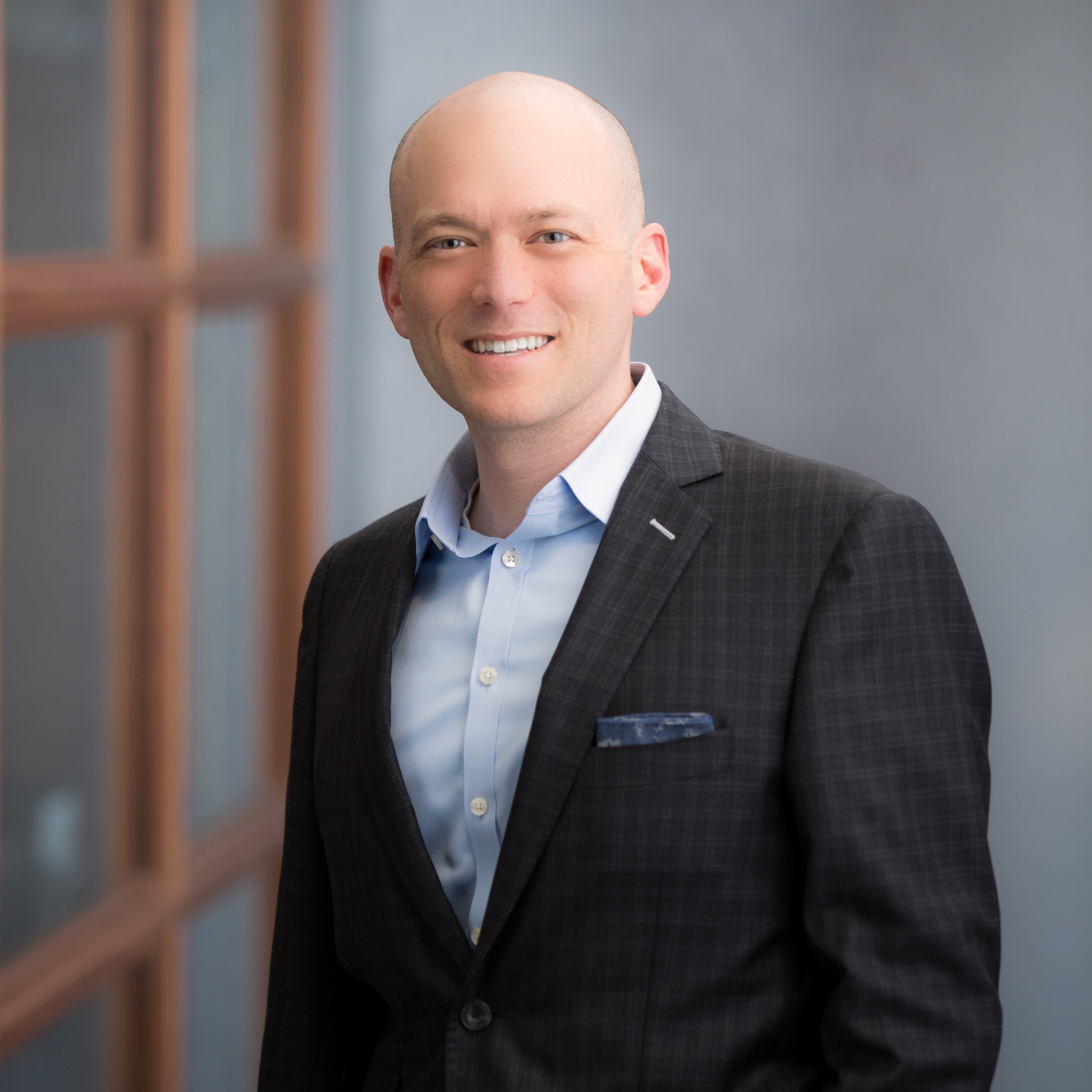
J. Christopher Kerckhoff, Jr. CFP®, AIF®, is president and CEO of Plancorp, LLC, an RIA based in St. Louis, MO.
Read more articles by J. Christopher Kerckhoff, Jr.
 Advisor Perspectives welcomes guest contributions. The views presented here do not necessarily represent those of Advisor Perspectives.