Advisor Perspectives welcomes guest contributions. The views presented here do not necessarily represent those of Advisor Perspectives.
The Tax Cuts and Jobs Act of 2017 created a new tax-preferred opportunity that seeks to reinvigorate certain depressed communities while providing tax incentives to investors.
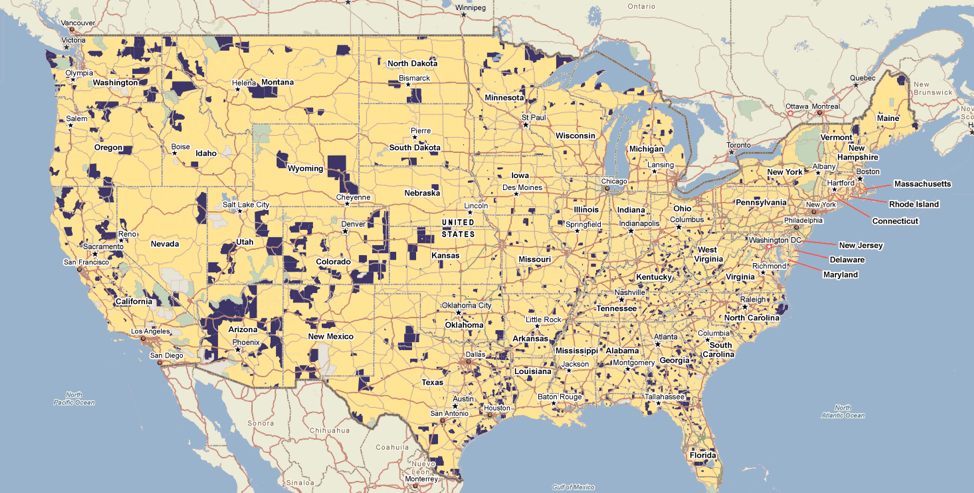
According to the IRS, an opportunity zone, popularly dubbed an “O-Zone,” is an “economically-distressed community where new investments, under certain conditions, may be eligible for preferential tax treatment.” Localities qualify as O-Zones if they have been nominated for that designation by the state, and that nomination has been certified by the U.S. Secretary of the Treasury. Investing in an O-Zone through qualified opportunity funds, or business entities that invest in tangible property within the designated zone, can allow for attractive tax benefits.
Map of areas currently designated as “opportunity zones” in the continental United States

Source: www.policymap.com
Investors can partially thank Sean Parker’s think tank (the Economic Innovation Group) for this potentially compelling strategy. Parker, of Napster and Facebook fame, created the policy and helped solidify it into law along with South Carolina Senator Tim Scott. The appeal reaches further than the tax incentives; O-Zone investments are generally considered impact or ESG investments because they are designed to direct capital to disadvantaged communities.
There are three main tax incentives associated with qualified opportunity fund investments:
- A temporary tax deferral for capital gains reinvested in an opportunity fund. The deferred gain must be recognized on the earlier of the date on which the opportunity zone investment is sold or December 31, 2026.
- A step-up in basis for capital gains reinvested in an opportunity fund. The basis of the original investment is increased by 10% if the investment in the qualified opportunity zone fund is held by the taxpayer for at least five years, and by an additional 5% if held for at least seven years, excluding up to 15% of the original gain from taxation.
- A permanent exclusion from taxable income of capital gains from the sale or exchange of an investment in a qualified opportunity zone fund, if the investment is held for at least 10 years. (Note: this exclusion applies to the gains accrued from an investment in an opportunity fund, not the original gains).
Here’s how it works. An investor realizes a gain on an appreciated asset and subsequently invests an amount equal to the capital gain in a qualified opportunity zone fund. For those assets to qualify for the incentives, the investor has 180 days (~six months) to fund the opportunity zone investment. It is thus prudent for investors to identify the specific opportunity fund investment before realizing gains due to this time constraint.
Here are a few, very large, caveats for this nascent investment opportunity. The industry is still awaiting final guidance from the Treasury regarding eligibility, structure and other very pertinent nuances. Until those issues are finalized there are a bevy of tax and investment risks. Another is that the demand for land in some opportunity zones has risen very quickly ahead of the final guidance. Higher prices beget lower returns. Ultimately, it is important to make sure the investment can stand on its own as a good long-term investment decision, especially considering the lack of liquidity. As the popular investment idiom goes, don’t let the tax tail wag the investment dog.
As the industry awaits further regulatory guidance from the Treasury, we are actively evaluating this space for changes and potential solutions. For more detailed information on qualified opportunity zones and funds, I recommend checking out the links below and consulting with your tax advisor.
Additional Resources:
Max Meltzer, CFP®, is a director with Bronfman Rothschild Wealth Advisors.