Advisor Perspectives welcomes guest contributions. The views presented here do not necessarily represent those of Advisor Perspectives.
Your clients have likely referred their Millennial children or grandchildren to you for help with financial planning. It’s a tall order because of the unique financial challenges they face. Here’s some practical advice to overcome those hurdles.
Although they don’t have significant financial resources, they are worth courting by Gen X and Millennial financial advisors. Why? They outnumber Baby Boomers by 92 million to 78 million.
The hurdles
Their first problem is student and educational debt. For the first time in America, there is now more student loan debt than credit card debt.
Unlike earlier generations that had manageable student debt (I paid off mine within five years after graduation), this generation has relatively larger amounts. In fact, a recent Wells Fargo study of those 22-35 years old found that 75% of Millennials with student debt found it unmanageable.
The St. Louis Federal Reserve reported that the “current national rate of serious delinquencies for student loans – defined as 90 days or more overdue – is about 11 percent, nearly double where it was in 2003. That number also could be considerably higher considering that many student loans are in deferment, grace periods or forbearance.”
Making significant student debt payments leaves less money that you can “financially plan.”
For example, if we get down the simple requirement to pay rent, here’s the gap that Millennials face relative to their income:
When paying rent is a struggle, it’s hard to allocate funds for anything else much less investing for retirement. As an aside, this is also a case for funding 529 plans or similar investment vehicles early on for the next generation.
In fact, it’s not just rent that makes routine finances difficult to manage. As few Americans may realize, the Millennials entered their adulthood as incomes started to decline. While many believe the “Great Recession” is the cause for Millennials’ financial difficulties, that is mistaken. American household income had already peaked and started declining in 2000 (I added the straight red lines below to make the trend obvious).
The parents and grandparents of Millennials generally experienced economies that were increasing the standard of living. Since the Great Depression, this is the first cohort to see a shrinking economic pie.
Among the 32% in the Wells Fargo study who expected to eventually reach $1 million in retirement savings, the median annual income was $53,000. This is higher than the median income for the survey participants overall: $39,100 for men, $28,800 for women. Miraculously, even with the stated hurdles, more than three-quarters of these “higher income” millennials are already saving for retirement.
What help can you provide?
Address any investing program as investing for independence. While retirement seems a long way off and may not resonate as important, the issue of independence has more cachet.
This generation will need more assistance with budgeting issues – stretching the cash they do have to include room for retirement investing. You need to explain why they don’t need the latest iPhone, the electric BMW I3 or the costly and popular latest “experience.”
Indeed, there may be other financial issues more pressing than saving for retirement. USNews.com surveyed and concluded that the biggest financial concerns for Millennials are:
- 55% – paying for school
- 47% – day-to-day expenses
- 28% – buying a home
- 22% – funding their retirement
- 20% – paying for healthcare
Advice you can provide:
- Having healthcare coverage is most important. While a typical Millennial may not see the need as they are young and healthy, getting hit by a bus is an accident that does not discriminate by age.
- For those with dependents, having life insurance comes next.
-
Inquire as to the possibility of refinancing student debt. Many student-debt-holders face interest rates of 4,5 and 6%. If the interest rate is more than 3%, have them inquire with parents, grandparents or Uncle Harry about the following deal. Borrow the money from relatives to pay off the student loan. Pay the relatives at 1.5% or 2% and they become the lender. The new lender (e.g., Harry) is currently getting maybe 1% at the bank so receiving 1.5% or 2% seems like an interest windfall. That small interest savings can be an addition to the retirement fund.
Only once those essentials are covered, offer advice for retirement investing:
Get them to enroll in their company 401k account (at least to take advantage of matching contributions) and if it’s even as little as $100 per month, they have time and the power of compounding on their side. Although they should already know this, show them this chart:
Even if no formal retirement plan is available through work, the old systematic investing program offered by mutual fund companies is good way to establish an IRA. The key is, the payments must be automatic to obey the principal rule of financial planning, “pay yourself first.”
You may want to form an investment club for Millennial clients. Not only is this a forum for contribution of your experience, it gets them involved in the investment process. You may also get a free lesson on how to use Snapchat.
Ask if the Millennial receives periodic or occasional monetary gifts from parents or grandparents. If so, have them ask if the giver can make the gift directly into their retirement plan.
Suggest that they earn some side income to fund retirement independence. For example, can the Millennial fit in a few hours of weekly work doing an Uber or similar gig? If yes, then put that money into the retiremet fund. Do they have a pull-out sofa they can list on Airbnb? If they are a web surfing addict, Usertesting.com (and other sites) pay their testers $10 per test for every 20-minute video they complete. A user can make $100 to $200 testing websites during a month.
You likely won’t earn much if any money from advising Millennials, so consider it your pro bono contribution. And it doesn’t hurt to ask – can they refer you to their wealthy friends or coworkers?
Larry Klein is publisher of the Retirement Income Blog for Boomers and Seniors and the WealthyProducer Blog for insurance professionals and financial advisors. He can be reached at [email protected].
 Advisor Perspectives welcomes guest contributions. The views presented here do not necessarily represent those of Advisor Perspectives.

 Inquire as to the possibility of refinancing student debt. Many student-debt-holders face interest rates of 4,5 and 6%. If the interest rate is more than 3%, have them inquire with parents, grandparents or Uncle Harry about the following deal. Borrow the money from relatives to pay off the student loan. Pay the relatives at 1.5% or 2% and they become the lender. The new lender (e.g., Harry) is currently getting maybe 1% at the bank so receiving 1.5% or 2% seems like an interest windfall. That small interest savings can be an addition to the retirement fund.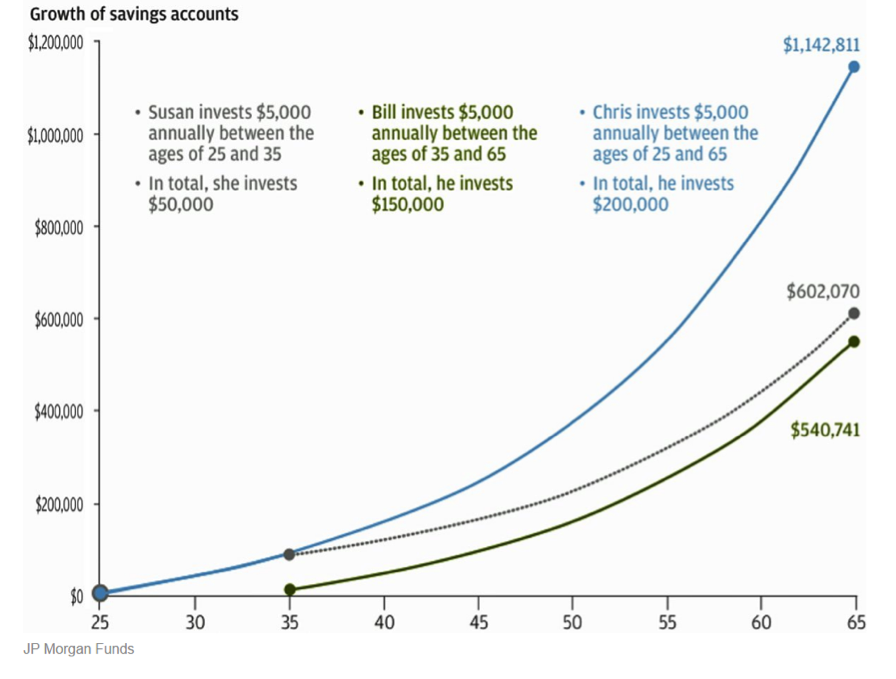
 You may want to form an investment club for Millennial clients. Not only is this a forum for contribution of your experience, it gets them involved in the investment process. You may also get a free lesson on how to use Snapchat.