Advisor Perspectives welcomes guest contributions. The views presented here do not necessarily represent those of Advisor Perspectives.
 I don't know if it's because I've spent 99% of my life on islands (Guadeloupe, O'ahu, Manhattan) or the fact that I was born a Pisces. Whatever the reason, nothing is more restorative for me than hanging out by the sea; regular pilgrimages to the ocean are key to my happiness.
One such excursion took me to the Gulf Coast of Florida where I spent many blissful hours walking up and down the shore. I won't lie down for long on a beach, but I will walk for miles on one, and will compulsively start gleaning for something - anything - pebbles, mermaid purses, or in this case, since I was on Captiva, the shell capital of the U.S., seashells.
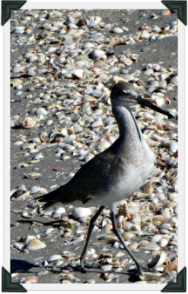
There's a lot of wildlife to be spotted in and around the Gulf Coast - dolphins, pelicans, ospreys. But shells? Oh my goodness, yes. Ridiculous amounts have been belched up by the sea, each receding tide leaving another heaping layer in its wake.
I was in heaven and spent hours bent over the shoreline.
The most common shell was a scallop, followed closely by conch shells. Occasionally I'd stumble upon a whelk or an olive shell. At first I picked up any undamaged shell, which meant I returned to home base weighed down with bulging pockets.
But very soon I became a shell snob, picking up only those scallop shells that had an unusual color, or were unusually big or small, and only those conch shells that were completely blemish-free. Eventually, I only sought out the rare shells and didn't even bother with the scallop or conch. Each time I went out, I got pickier and pickier and came back with fewer shells.
Now mind you, getting pickier didn't take any less time, but it did mean more work. I had to turn over pile after pile of shells, because the rare ones aren't always deposited right on top, and if they were, they would have already been snatched by some other gleaner who got there first.
And as I was turning over by hand, miles of shells, my mind wandered and I started thinking about turnover of another kind, the kind that happens in portfolios.
Questions about turnover are a fairly standard part of investment process due diligence, and I find that the answers these common questions unearth (usually point in time averages) are not unlike the common scallop shell - easy to find and ubiquitous, but not all that special. Ask a banal question, get a banal answer.
If, instead, you want to uncover that rare flash of insight into a manager's investment process and performance, you've got to ask perfect, uncommon questions.
So, if you like to take long walks on the data beaches of your managers, read on for some questions to help you glean that which you seek.