Japan can thank its high debt loads and aging demographics for the inflation restraint. But the cost paid in stagnant growth and diminished prosperity for its citizens has been dear. We do not fear an inflationary spike in the U.S.; instead, we are concerned that the economic doldrum that has infected Japan for over 25 years will slowly work its way here.
The Facebook parent’s shares had jumped 36% in September through Thursday’s close following the release of its Muse personal AI assistant, which has risen quickly to the top of app charts and muffled concerns that heavy spending on AI won’t pay off. The stock is on pace for its best month since July 2013 and within striking distance of joining an elite group of companies worth at least $2 trillion.
The rise in Treasury yields has prompted a familiar set of explanations. Some investors have pointed to government borrowing and persistent inflation, while others have focused on the possibility that artificial intelligence will lift economic growth and interest rates.
Looking ahead, markets are priced for additional hikes. And our base case is that the FOMC will likely deliver one or two more 25-bp rate hikes through this year and into early next. However, looking further out, anticipating appropriate Fed policy through a financial-conditions-targeting framework has its own limitations. Hence, a neutral rate anchor is still useful.
LPL Research analyzes S&P 500 margin expansion, assessing how much is structural versus cyclical and what that means for future earnings forecasts.
Global growth remains resilient but uneven. In the United States, expansion is supported by private demand, a stable labor market and AI investment, while Europe and Japan continue to show surprising strength despite ongoing risks.
For many advisory firms, portfolio management creates a practical tension. Standardized models can simplify implementation and support scale, yet they may not reflect a firm's investment philosophy, tax realities, legacy holdings or preferred managers. Building every portfolio internally preserves control, but it also demands time, systems and ongoing investment oversight.
The week began with calls for a potential slowdown in AI spending amid growing safety concerns and included a midweek Fed rate hike for the first time since 2023. The S&P 500 finished slightly lower for the second week in a row despite continuing signs that economic growth is strong. Shorter-term bond yields pushed higher as investors priced in the potential for additional rate hikes, both in the U.S. and abroad.
Every runner has a natural pace: the speed that we maintain under optimal conditions like flat terrain, cool temperatures and a good night of sleep. Runners can train to speed up to meet a target time, or slow down for endurance.
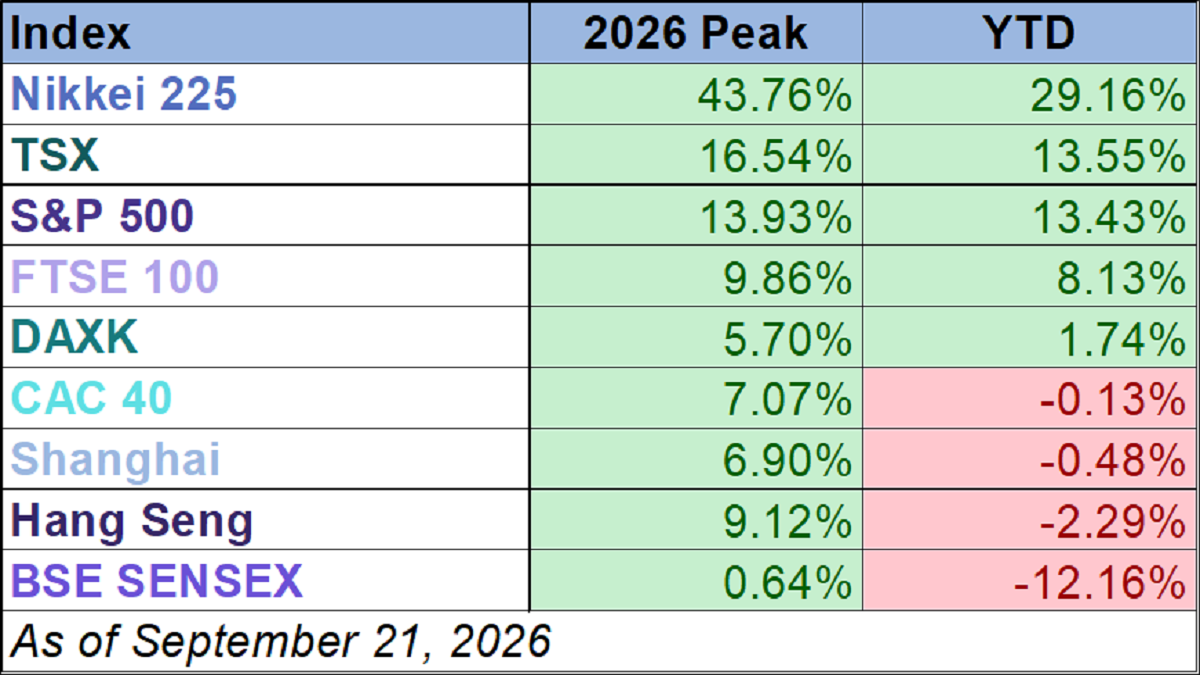
Six of the nine indexes on our world markets watch list posted year-to-date gains through September 21, 2026.
The combination of prior Fed inaction followed by relatively significant market tightening raises a question: If long-maturity yields were already weighing on economic activity, did the bond market already do the Fed’s job?
The K-shaped economy is real, and it is old. What changed isn’t the shape of the economy; it’s just that the media found a narrative that gets lots of clicks and views, and we let headlines do our thinking for us.
We are never going to get rid of the FOMC for political and practical reasons. For those of us who would like to see the market set rates without an FOMC intervening, this is as good as it’s going to get.
Open any market commentary today and the conversation is dominated by giants. Mega-cap technology companies command outsized shares of major indexes, and the private markets tell a similar story, as we watch companies increasingly staying private well past the point where they once would have gone public.
In an environment marked by the Fed’s first rate hike in three years and ongoing market uncertainty, income-focused investors face a unique dilemma. While cash alternatives offer attractive yields in the short-term horizon, they leave portfolios vulnerable to reinvestment risk should the
Municipal bonds might still offer attractive tax-advantaged income and relatively stable credit quality for investors who understand the risks.
Janus Henderson launched a new international equity ETF on Wednesday, according to a Janus Henderson press release. The Janus Henderson International Core Alpha ETF (JINT) seeks long-term growth of capital across developed markets outside the U.S.
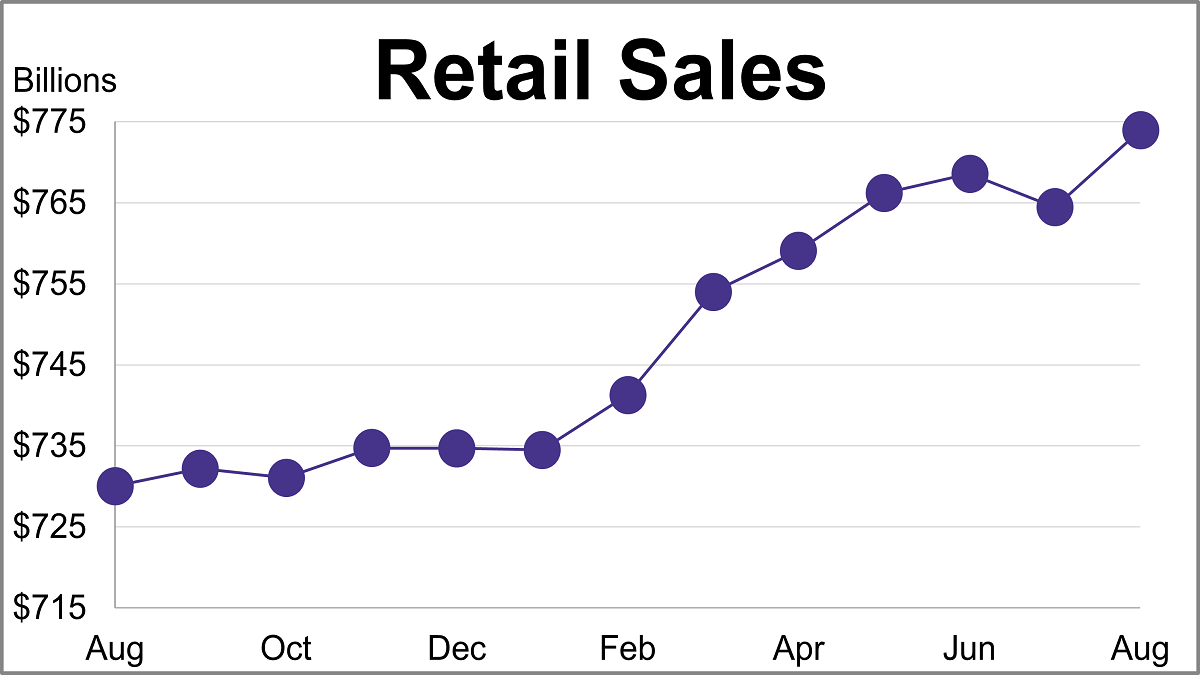
U.S. headline retail sales rebounded in August, up 1.2% to $773.9 in August, while core retail sales increased by 1.4%.
Last December we published Riding the Wave: The Anatomy of Booms & Bubbles. In it, we argued that the AI spending boom would continue through 2026 without tipping into ‘bubble’ mania, and that the right posture was to stay overweight stocks while favoring US assets. Nine months on, we think that call has aged well.
With so much attention focused on what the Fed might do at its policy meeting this week, it’s a good time to look back at history to get a sense of how stocks might respond should policymakers hike rates as the market now expects. LPL Research had been characterizing the rate decision as a coin flip until Fed Chair Kevin Warsh’s hawkish comments at the Jackson Hole meeting and the strong August jobs report.
A week of rising oil prices and higher interest rates sent stocks lower across the board as investors increasingly priced in the likelihood that the Federal Reserve (Fed) will begin a rate-hiking cycle at its September 16 meeting. Following the August Consumer Price Index (CPI) report, futures markets implied an 88 percent probability that the Fed will, or at least should, raise rates at next week's meeting.
Treasury yields are closing in on an inflection point where, historically, stocks and bonds have reinforced losses in one another. That points to a regime shift of higher bond and stock volatility and wider credit spreads.
Attractive yields and resilient credit conditions are creating opportunities across fixed income, but uncertainty around inflation and interest rates makes flexibility, selectivity and disciplined risk management especially important.
In Part III, the focus will center on practical applications of this discipline. In particular, how advisors can integrate the methodology into modern asset allocation, and why it offers an evolutionary leap for passive investing that’s available through exchange-traded funds (ETFs).
Heading into the September 16 FOMC meeting, the debate over whether the Fed should raise rates or hold is heated. To help you appreciate the range of views, I present this article as a courtroom exercise. I will let the prosecution make its case for a rate hike, and the defense for a hold.
There is so much going on, it is hard to know where to begin. The data is all over the place. I had a long and epic dinner in New York with David Bahnsen, Rene Aninao, and Brian Syztel which has my mind buzzing with ideas and new concepts.
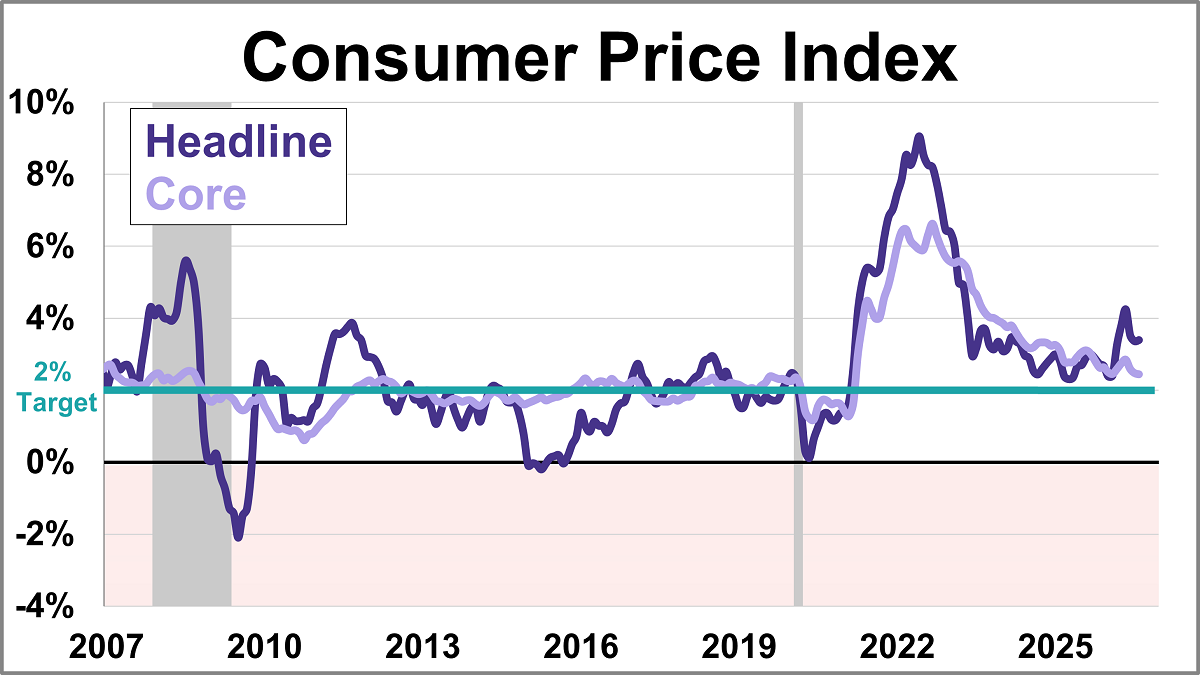
Inflation rose 3.4% year-over-year in August, as it did for the 12 months ending July. The headline figure for the Consumer Price Index (CPI) was in line with economist estimates.
While the name is new, Syzygy is not. Syzygy, formerly Research Affiliates, will extend our multi-decade sub-advisory relationships in asset allocation and long-only active equities and expand into other active diversification strategies in the coming quarters.
In this article, Russ Koesterich argues that momentum remains supported by strong earnings growth, making the factor attractive despite market risks.
As students get closer to making a final college decision, the last two years of high school are particularly important. Parents will want to review their financial strategy to meet the costs of college, including a review of current savings, financial and merit aid, scholarships and loan options.
On Friday, the August U.S. employment report surprised to the upside, with 162,000 jobs added during the month. Year to date, the labor market has shown impressive resilience, with hiring also becoming more balanced across sectors than in previous years.
Direct venture investment rewards a rigorous, patient approach. The companies that generate exceptional returns tend to combine all three factors above: genuine growth momentum, clear category ownership, and strong institutional support.
Around 2020, Apple Inc. Chief Executive Officer Tim Cook returned from a trip to Asia unusually energized about a new product category: foldable phones.
A sudden reversal in momentum for previously high-flying shares of industrial companies over the past three weeks has some investors bracing for more pain ahead.
Before I discuss why I disagree with the “AI bears,” I want to state that I respect their opinions, have evaluated their concerns, and have simply derived a different set of conclusions. That is an important statement, because this particular group of “AI bears” includes some of the sharpest risk minds in the business, and they have been early to almost every warning that later mattered.
Cerulli projects a $2 trillion surge in advisor-held alternatives over five years, as interval funds reshape how RIAs access private markets.
A recent plunge in US labor force participation has sparked competing theories about whether persistent drivers — like aging and immigration — or more temporary seasonal shifts are to blame. Any evidence in upcoming jobs reports could reshape how policymakers view the labor market.
By enhancing the input that goes into so much of what we do—intelligence—AI’s potential to drive higher economic growth is enormous. But with fears of the technology's unintended consequences affecting the pace and depth of adoption, the promise of long-term gains must be set against more immediate risks.
This summer has delivered "blockbuster" returns, both positive and negative, while the possibility of quick and seemingly easy gains continues to draw investors toward speculative areas of the market. In his latest insight, Richard Bernstein, Global Head of Macro & Customized Investing, shares five charts that cut through the noise and highlight important shifts in credit creation, inflation, global growth, market leadership, and asset class performance.
Should the recent value rotation be viewed as a regime shift-driven change in market preference, or a simple reversal trade? We think there is a compelling case to be made for the former. In a regime of higher interest rates and stubbornly above-target inflation, the market is increasingly focused on capex intensity, free cash flow conversion, and the cost of capital.
There is a reasonable argument that population decline is not a catastrophe. Fewer people means less pressure on housing, energy, and food. Automation may cover some of the missing labor, and countries have absorbed demographic shifts before. Those adjustments take decades, though, and you will likely retire before they finish.
Over seven years ago, I wrote a piece using the 1960s TV sitcom Gilligan's Island to provide a simple example of why productivity is the most important driver of economic growth. In this article, I present the next episode of Gilligan’s Island, describing what happens after the benefits of innovation stop driving economic growth.
Markets are largely reducing expectations for a near-term U.S. Federal Reserve (Fed) rate hike, and we agree. July’s weak jobs report, the underwhelming retail sales report, and continued softening of the monthly inflation figures give the Fed room to stay patient in the coming months.
U.S. labor force participation is declining due to an aging population, slowing immigration, and other factors. This could impact economic growth and earnings moving forward.
Earnings have built a strong foundation. As we wrote earlier this month, earnings have provided a strong foundation for stocks this year. With second quarter earnings growth for the S&P 500 on track to exceed 30% (excluding private investment mark-ups) and analysts continuing to raise estimates, it's safe to say this season strengthened the fundamental case for equities.
European equities have long been written off as the ultimate value trap — a sleepy, slow-growth market living in the shadow of Wall Street’s tech-fueled mega-rally. But a massive shift in market dynamics is unfolding across the Atlantic.
Equity markets stumbled this week despite an economic backdrop that continues to show signs of broadening. While concerns about consumer strain are mounting, those worries have so far been offset by ongoing strength in business investment, particularly spending tied to artificial intelligence (AI).
When portfolios become standardized, investor experience becomes standardized right along with them, even though almost nothing else about those investors is standard. Their goals, tax exposure, risk tolerances, and individual spending needs are too individualized to be captured by many models that purport to be customized.
GMO’s liquid alternatives are hedge fund strategies (e.g., equity long-short, global macro, event-driven) managed with an emphasis on risk control and liquidity. The GMO Alternative Allocation Strategy (“ALTA”) is a liquid alternative solution combining several underlying strategies; ALTA is available in a mutual fund with daily liquidity.
For years, Russell index reconstitutions have been treated as a routine maintenance event. Thousands of stocks are ranked, memberships are adjusted, and markets move on