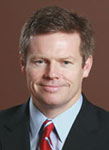
After facing dramatic losses in 2008 and 2009, it is easy for investors to lose confidence and adopt negative attitudes. “It is still a staggering thing to think about,” says David Kelly, Chief Market Strategist at JP Morgan Funds. “On the average day in autumn of 2008, you could wake up and expect that the stock market could be up or down 3.3%,”compared to the Dow’s 115-year moving average of .73%. With that unprecedented volatility now largely behind us, however, Kelly believes that the economy is entering a period of recovery. To move forward, we must abandon our negative mindsets and focus on opportunities for expansion.
“I know that there are a lot of problems out there,” he said. “But at some stage you’ve got to put emotion to one side and look at things logically. You’ve got to distinguish between what could possibly go wrong and what will probably go right.”
In his keynote presentation at the Financial Planning Association of New York’s Annual Spring Forum, held on April 22 at the JP Morgan Conference Center in New York, Kelly urged investors to think logically about where the market stands, highlighting both opportunities for economic expansion and the risks that we could encounter.
From recession to expansion
Though the financial crisis spawned a nasty recession, Kelly said, it’s now basically over. The economy grew by 2.2% in third quarter of last year, 5.6% in the fourth quarter, and by an estimated 3% in the first quarter of 2010. Kelly forecast growth between 4 and 6% in the second quarter.
What should we expect next? Kelly says historical data from past recessions hold the answer. The current recession, characterized by a 3.8% decline in GDP, was the largest since World War II, but it was not unprecedented. The recessions of 1982 (2.9% decline in GDP) and 1975 (3.2% decline in GDP) and 1957 (3.7% decline in GDP) approached this one in severity. Historically, strong economic growth followed those big recessions. Thus, Kelly’s analysis of recent recessions focused on four aspects of the economy: growth, jobs, profit, and inflation.
The four horsemen
“The one positive about a big recession is you get a big bounce back,” Kelly said. Over the past 50 years, the economy has grown by an average of 3.2% annually. Naturally, this growth shrinks during the average recession. During the first year of recovery, however, the economy has grown by an average of 5% in real terms. After a large recession – like the recessions of 1975 and 1982 – the economy has grown by 7%. While Kelly does not expect a growth rate of 7% now, he said history strongly suggests we can expect average growth of at least 4%.
What will drive this growth? According to Kelly, there are four key sectors – “the four horsemen of recessions” – that both lead the economy into recession and bring it into recovery: auto sales, changes in inventory, business equipment spending, and home building. While these sectors account for less than 20% of growth in the US economy, they accounted for 140% of outward loss during recession and 60% of outward gains during the first year of recovery. In fact, these sectors have accounted for 83% of current growth, he said.
According to Kelly, these sectors are prominent participants in both busts and booms because they are discretionary in nature. “‘Let’s wait and see’ are the four most dangerous words in economics.” When consumers wait, what they see is never good, he said. While consumers were less likely to spend in those sectors last year, he anticipated that these purchases would rebound in the upcoming year.
Cars, for example, are discretionary purchases, since consumers often buy new vehicles before they break down. Although the demand for new cars may be high during a recession, consumers delay these purchases until the economy rebounds. This creates a pent-up demand for new vehicles. When recession shifts to recovery, consumers are likely to make those purchases they have been putting off, as 10.8 million vehicles were sold in 2009, “still an incredibly low number.” Furthermore, there are 250 million vehicles on US roads, and each year 5 to 6% of these vehicles will break down, representing demand for 13-14 million units. In addition, the size of the driving-aged population increases by 2.5 million people per year, translating into additional vehicle demand. When you account for all these factors, Kelly estimated that annual demand for vehicles will rise to at least 16 million annually.
Similarly, there is a pent-up demand for new inventory during a recession. During the “worst of this crisis,” retailers did not want to replenish their inventories, said Kelly. While these purchases were cut during the recession, inventories deplete over time and orders must resume. To restock supplies, Kelly estimated a $90-100 billion positive number on inventories over the next few years. Ultimately, the same principle applies to business spending, as companies postpone discretionary purchases during recession and resume during recovery.
Finally, Kelly argued that there is a pent-up demand for housing. Based on the most recent data, from March, there were approximately 600,000 monthly housing starts. If you combine this number of housing starts with the total population growth, which is approximately 2.7 million people per year, Kelly estimated a normal level of 1.6 million monthly housing starts. “We are one million short [of housing starts] and that is causing inventories to fall,” he said. “But eventually, these numbers will go up, because you can’t keep [housing] at that level,” given the current demographics.
Jobs
Kelly also had a positive outlook on job creation. “There is no such thing as a jobless recovery,” he argued. But “you’ve got to get deep economic growth going for about six months” to produce jobs. Now that growth is underway, Kelly reported that jobs have been created in the first quarter, which is “right on schedule” given historical patterns of recessions. The economy could be producing 200,000 new jobs per month by the summer, he predicted, although the overall payroll numbers will be distorted by Census Bureau data.
Despite current progress, we still have “a long, long way to go,” said Kelly, as it is easier to destroy jobs than to create them. According to Kelly, it will take at least five years to return to 5% unemployment from its current level of 9.7%
Profits
With increasing growth, Kelly forecast good news for profits and a significant rebound in earnings. At its peak point in 2007, the operating earnings of the S&P500 reached $34.06. By the fourth quarter of 2009, it rebounded to $17.16 and increased to $17.81 at the beginning of last week, leading to predicted earnings of $18.00 at the end of this quarter. “So long as expansion continues, earnings will peak in the next three years,” Kelly said. According to Kelly, earnings will improve because companies have the ability to control costs, as both corporate taxes and labor costs have decreased. With a high unemployment rate, competition for jobs increases, there is less collective bargaining, and workers tend to settle for lower salaries. As Kelly joked, “What worker is going to have the guts to bang on the boss’ door and say, ‘Give me a raise or I quit?’”
Inflation is not in the cards
Kelly argued that we should not worry about inflation for the next three to four years. “The relationship between the money supply growth and the inflation rate died 25 years ago, and it has not been resurrected since,” he said. “No matter how much growth you have, the money supply goes up and the velocity goes down; you don’t get inflation.”
Instead, Kelly said that we have a greater threat of deflation, especially if the economy double-dips.
The Federal Reserve intends to keep short-term interest rates low for an extended period of time, Kelly said. If the second quarter GDP reaches his predicted high of 6%, however, the Fed will be pressured to change course. In that scenario, Kelly would like to see a two-stage process. First, the Fed should push the interest rate on reserves up to 50 basis points in recognition of the fact that the financial crisis is over and hold that rate for an extended period of time, until recovery is better established. Then, in 2011, it should push the rate an additional 25 basis points.
Threats to expansion?
Where there are opportunities, there are also risks, Kelly stressed. “We believe this expansion looks relatively healthy,” Kelly said. “But if something goes wrong,” he asked, “exactly how much more stimulus can the federal government come up with?”
Oil is the top risk to the US economy, Kelly said. Because of the way the oil market functions, increasing prices would drain money from the consumer economy. Even worse, a conflict between Iran and Israel could cut off the oil coming from the Persian Gulf. Since the US is tremendously vulnerable to oil, these changes would affect both the economy and the national psyche.
Another concern is that credit may be too tight, Kelly said. “There were a lot of mistakes made by lenders and borrowers, investors and spenders … that brought us into this mess,” he said. “But right now it’s only okay to blame one bunch – and that is the banks. You can tax the banks, you can fine the banks, you can make them raise their capital standards, you can tell them they may not make risky loans. But if you expect them to do all those things and then extend credits to small business – it doesn’t work. The truth is we need a healthy, growing, vibrant banking industry which is lending money.” In our determination to prevent another credit crisis, we risk enacting regulations that are too stringent, said Kelly. Once the system has recovered, “that’s when we should tighten up on regulations.”
Stocks are cheap
Along with his predictions, Kelly provided a brief overview of asset classes. “Stocks are still cheap,” he said, as earnings are growing and interest rates are low. He noted that the real yield on Treasury bonds is about 2.5%, compared to the historical average of 2.8%. “But I have a problem with below average real yields in the first place,” said Kelly. “Over the last 40 years, the federal debt and the share of GDP is averaged 35%. Over the next ten years, it’s going to average 70% or more. I don’t think that’s quite as much of a debt burden on the economy… So we do think that long-term interest rates will move up.”
Residential real estate is currently a great investment, Kelly said. “Home prices have actually stabilized … partly because of inventory, but mostly because affordability is great.” He advocated for prospective homeowners or those thinking about purchasing second houses to “do it now.” Kelly was less optimistic about commercial real estate, as it is a “lagging indicator” during recovery. As an asset class, commercial real estate takes longer to recover – it “goes into recession late, and it comes out late,” he said. He recommended approaching commercial real estate on “a case by case basis.”
Internationally, Kelly said that 60% of the world’s GDP is in developing economies. “If 60% of the world is contributing 5 to 10% growth rates, we can’t match it,” he says. “Now that doesn’t say we need to go all the way to emerging markets necessarily, but the trend to bet on is that developing economies will grow faster than the US economy or the European economy.”
Restoring confidence in the future
While growth is increasing and the economy is moving towards expansion, Kelly expressed concern about the spirit of the American investor. “The last thing to get fixed here is the emotion of the average investor,” he said, as consumer confidence numbers are extremely low relative to what is happening in the economy.
“This truly was a dismal decade,” Kelly said. “We ended [the 1990s] with so much hope [for the 2000s] … and since then, we’ve had two stock market crashes… we’ve had two recessions, two wars, we’ve had Hurricane Katrina … 9/11, we’ve had Lehman Brothers and AIG and the huge financial crisis – all of this has squeezed every ounce of optimism out of the American investor.”
While Kelly doubts that the next decade will be as good as the 1980s or 1990s, he predicted that it will be better than the one we just finished. To succeed in the coming decade, he advocated a balanced approach to investing, focusing on broad asset allocation. He stressed having the courage to tell clients to invest in a diversified way and to invest in long-term assets. Ultimately, those strategies will work to rebuild investor attitudes and restore confidence in the market.
Read more articles by Katie Southwick