Since the stunning collapse of America’s financial system in 2008, questions have swirled around how we got here and who’s to blame. The subsequent finger-pointing has yielded few answers, but now one economist has taken a cue from CSI’s Gil Grissom and Law and Order’s Jack McCoy.

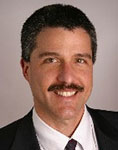
Ross Levine
He performed an autopsy.
For Ross Levine, the James and Merryl Tisch Professor of Economics at Brown University, too much time spent analyzing the minutiae of heated decisions made in September 2008 obscures a more interesting question: did the underlying factors that precipitated the collapse constitute a suicide, an accident, or a murder? Did investors’ irrational behavior lead to their own demise, was the government somehow responsible, or was it all just an unforeseeable tragedy? Pouring over publicly available records, media accounts, and government documents, he came to a surprising conclusion, one which he recently presented to officials at the International Monetary Fund and the World Bank.
His verdict is negligent homicide.
“There was an element of suicide in the sense that there was a bubble in housing, and people were behaving irrationally, exuberantly,” explains Levine, who directs Brown’s William R. Rhodes Center for International Economics and Finance. But dropping the inquiry there, he says, ignores a trail of evidence that, in the decade leading up to the crisis, federal regulators were well aware of the dangers and warning signs – and negligently chose not to act.
“The authorities had lots of information that would have dramatically reduced the probability of an accident and the opportunity for suicide,” he says.
Levine’s detective work has focused on how financial regulation affects financial system performance and economic growth around the world. He was compelled to take a closer look at the circumstances surrounding the financial crisis because he believes the current narrative that has emerged in Washington – that the sudden crisis in 2008 was unpredictable, and the Fed and other regulators reacted as best they could while facing tough decisions and constraints in the heat of the moment – doesn’t tell the whole story.
The focus on 2008, Levine says, is like following the wrong lead. “In emphasizing that the crisis was an accident, the authorities correctly note that it was impossible to predict that this was going to happen in September of 2008,” he says. But “the real question of long-run significance is why over a five- to ten-year period leading up to the crisis, during a period of calm when there was time for serious debate, were so many serious mistakes made that ultimately produced this crisis?”
Over a long period of calmer conditions, Levine says, the authorities made very bad decisions – it was as if they handed inebriated markets a loaded gun, one might argue. “This is not part of the general story one hears in the popular press,” Levine says.
Loading the gun, if not pulling the trigger
In examining two major root causes of the crisis – the proliferation of credit default swaps and the increasingly dysfunctional role of the credit rating agencies – Levine found government regulators guilty of conscious inaction.
“The Fed knew,” he says. “Their own documents over a long period of time suggest that they knew of these problems and that the people at the top decided not to act.”
Exhibit 1A for the prosecution is the Fed’s decision to allow banks to use credit default swaps, such as those sold by AIG and other insurers, to lower their capital requirements, something Levine emphasizes the Fed was under no obligation to do.
The Fed made the active decision internally to accept AIG’s credit default swaps as a legitimate form of risk mitigation, Levine stresses. He contends that major banks should not have been allowed to reduce their capital until there was a mechanism for assessing the counterparty risk of credit default swap issuers like AIG – something the Fed would have been well within its rights to decide, he emphasizes.
Levine believes that the Fed failed in its primary regulatory responsibility. “The Fed can’t be responsible necessarily for overseeing credit default swaps, but they are responsible for ensuring the safety and soundness of the banking system,” he says. “One of the main ways they do this is by ensuring that banks have adequate reserves against the risks that they take.”
The Fed, Levine argues, did not lack the information to make the right call. Current Treasury Secretary Timothy Geithner, as head of the New York Fed, appointed a task force to study credit default swaps in 2004, he notes. “They looked into the problem and decided, oh, this is a problem,” Levine says. But they backed down, according to Levine, because the banks said that reforming the credit default swap market would cost them too much money.
“That doesn’t strike me as the way the system is supposed to work,” he says. “This is not murder, in the sense that the authorities were not out to kill the banks.” But the Fed’s decisions allowed for all sorts of dangerous, risky activities to occur, according to Levine.
And when it came to growing conflicts of interest at the credit rating agencies, he says, the problem was the same, although an alternative path was not clear cut. And the historic causes of the problem were rooted in the SEC’s decision to favor certain private rating agencies. Again, it’s as if regulators gave the markets a dangerous weapon – then sat back and watched while a tragedy slowly unfolded.
In the decade leading up to the crisis, the Big Three rating agencies were increasingly both designing and rating structured products for the issuers who paid them. “The incentives for malfeasance were enormous,” Levine says, comparing the conflicts at the rating agencies to those that created the Enron debacle a decade ago. “Now, again, this was not a surprise. This was well known for 10 years before the crisis. There were many conferences and many papers on the problems with rating agencies. The SEC knew about this … and they were well aware that the emergence and growth of structured finance were intensifying the bad incentives.”
Given their entrenchment at the heart of the financial markets, there was no easy solution to the increasingly problematic role of the rating agencies. But the fact remains that government regulators had years of foreknowledge about a catastrophic flaw in the system and chose to do nothing, he says.
Rehabilitating the culprits
While autopsies can be a useful tool for solving a crime, Levine’s goal is not merely to prosecute the offenders. Narrow inquiries into the causes of the crisis have led to narrow solutions, and Levine thinks a clearer picture of how the crisis came to be shows that more creative reforms are in order.
“None of this has changed,” Levine says, emphatically, in regard to the systemic problems in derivatives, the ratings agencies and the flawed regulatory incentives that contributed to the events of 2008. The narrative emerging in Washington convinces him that the proposed legislative solutions are focused on the wrong things. “They’re going to give new names to the regulatory agencies,” he says. “They are going to grant additional powers to some agencies too. These are not necessarily bad ideas. But they don’t deal with the fundamental causes of what happened.”
In other words, much bolder corrective action is called for.
“One of the things we learned during the crisis is that there were certain tools that were unavailable to policymakers that would have made addressing the crisis go much more smoothly, including the ability to rewrite certain types of contracts with AIG and the ability to intervene in Lehman Brothers,” he says. As a result, reform efforts have focused on giving regulators new tools to act in a crisis. “Some of the tools that they’re asking for would have been worthwhile.” But, Levine says, “we’re only going to get a partial and incomplete set of beneficial reforms if we only focus on the extra tools that would have been beneficial in the fall of 2008.”
Not that Washington agrees. “Any discussion along these lines is frequently met with the critique that, ‘Oh, 20/20 hindsight is just great, but it’s not very useful,’” he says. He disagrees. “We have to go back and do an assessment in order to move forward,” he counters.
Levine says this broader focus – “a more serious, long-term autopsy” – has not taken center stage in D.C. in large part because nobody likes to cast a critical eye on themselves. That reality is part of the basis for his proposed reform – a new oversight entity that would be broadly empowered to shed light on regulatory shortcomings and conflicts. He lays out his analysis of the crisis and his proposed new watchdog in a working paper, “The Sentinel: Improving the Governance of Financial Regulation.”
“The Sentinel” is his proposed oversight entity, whose sole job would be to evaluate and publicly report on the health of the United States’ financial regulatory system. The Sentinel would be both independent from politics and from private markets. He sees such a body as a necessary complement to the Fed.
Levine stresses that the Fed, his former employer, is a valuable and reasonably effective institution. The evidence from his autopsy does not suggest that the Fed is ineffectual or ill-intentioned, but it does show that a watchful eye might spur the Fed to act quicker the next time it sees warning signs. Too much of the current debate over whether to expand or reduce the power of the Fed or reduce its power misses the point, he says.
“This is sort of doing what politicians do best, which is redesign and reconfigure lines of responsibility and agencies,” he says. “It’s not dealing with the core problem. The Fed’s a great institution. It has wonderful people. You want to use that institution and those people for the best interests of the country. That said, having an additional institution looking over its shoulder will make the Fed do a better job.”
Why not simply improve the Federal Reserve itself? Levine sees two fundamental shortcomings with this approach. The first is the Fed has close ties to Wall Street. While it may be politically independent, “the Fed is not independent of the private sector,” he says. “Many of the presidents of the reserve banks are chosen, or at least partially chosen, by the private sector,” he notes, and both top officials and lower-level people frequently take high-paying jobs on Wall Street immediately after leaving the Fed. Hiring people with this expertise is critical for establishing a well-functioning Fed, but ti also means that a complementary Sentinel without those ties would be a valuable addition to the overall design of financial policies acting in the public interest, Levine says.
Second, he says, the Fed’s role as a direct regulator of financial institutions has pros and cons. “Direct regulation provides information that is crucial to implementing effective policies.” But, Levine adds, “If there’s a mistake, it’s a natural human tendency to not want to admit that you made a mistake,” he says. “We see this in the Fed’s actions now. While they’re willing to talk in vague terms about their mistakes, they don’t really want to get into a detailed discussion of what went wrong.”
The Sentinel would play a single, complementary role: to regularly evaluate the health of the nation’s financial regulations from the perspective of the public. It should be independent politically and independent of the financial system, Levine says – it shouldn’t have any direct regulatory authority, which breeds coziness. “It has no power except to formulate a view,” he says.
To be effective, Levine’s “Sentinel” would need to be an established Washington institution – whose leaders are given long tenures like the Fed chairmen to give it political independence – with a clear mandate to give definitive public assessments on a regular timetable. “If you get 500 independent experts coming to Washington and testifying, you get a lot of noise. If you get an institution that’s politically independent and independent of the private sector with numerous experts examining what’s going on and coming out with messages about big problems, that’s very different,” he says. “That’s very difficult to ignore.”
The other key would be compensation. In order to draw the best minds from the financial sector and beyond while minimizing conflicts of interest, salaries would have to be high. “Getting good people to examine the financial sector means spending a lot of money,” he says. “Experts on finance are expensive.” But, he quips, “the alternative is every once in a while you get a few-trillion-dollar crisis.”
What difference could this new overseer have made in the run-up to the current crisis? Levine believes it would have called out Fannie Mae and Freddie Mac as “completely out of control,” although he admits that Congress might still not have done anything. He’s more optimistic that recurring warnings about the problems with the SEC’s rating agency model might have, over time, yielded steps in the right direction. And, he says, “I think a sentinel that would have screamed bloody murder about what was going on in terms of the banks and capital. It could have had an effect.”
More generally, he says, it could have broadened the debate over financial regulation, which he says was too often driven by narrow ideology – the belief that fewer regulations are always better – in the run-up to the crisis. “This type of ideology is very problematic,” he says, “because you can have regulations that work, and then you can get innovations like securitization, the use of credit default swaps, and all of the developments of the collateralized debt obligations.” Those innovations may have been beneficial to society, but they also intensified and created problematic incentives that called for new regulations, according to Levine.
“When you listen to Greenspan, for example, come before Congress and say there was a flaw in his system of thinking about regulation, I think this is it. He had a very simplistic view of the role of government,” Levine says. A sentinel-type institution “would have challenged Greenspan and provided a valuable counterweight to his view of the world – kind of an intellectual checks and balances.”
“As information and warning signs about the fragility of the financial system emerged, it was the people at the top who made bad decisions,” he says. With some innovative sentencing and a vigilant parole officer looking over their shoulders, Levine hopes, the odds will increase that regulators can make the right choices next time.
Read more articles by Michael Skocpol