AP Charts & Analysis: Formerly dshort
Charting economic and market trends
Market Valuation: Is the Market Still Overvalued?

by Kirsten Chang, 8/8/26
Here is a summary of the four market valuation indicators we update on a monthly basis.
- The Crestmont Research P/E ratio
- The cyclical P/E ratio using the trailing 10-year earnings as the divisor
- The Q ratio, which is the total price of the market divided by its replacement cost
- The relationship of the S&P composite price to a regression trendline
More…
Q-Ratio and Market Valuation: July 2026

by Kirsten Chang, 8/8/26
The Q Ratio is the total price of the market divided by the replacement cost of all its companies. As of July 2026, the latest Q-ratio is at 1.83.
More…
Crestmont P/E and Market Valuation: July 2026

by Kirsten Chang, 8/7/26
Based on July's S&P 500 average of daily closes, the Crestmont P/E of 43.8 is 184% above its arithmetic mean, 212% above its geometric mean, and is in the 100th percentile of this 14-plus-decade series.
More…
Regression to Trend: S&P Composite 211% Above Trend in July

by Kirsten Chang, 8/7/26
The inflation-adjusted S&P Composite Index was 211% above its long-term trend at the end of July.
More…
S&P 500 Snapshot: Index Wraps Up Best Week Since April with Record Close

by Kirsten Chang, 8/7/26
The S&P 500 capped off its best week since April with a record close, ultimately finishing with a gain of 3.6%.
More…
The Big Four Recession Indicators: Employment

by Jennifer Nash, 8/7/26
There is a general belief that there are four big indicators that the NBER Business Cycle Dating Committee weighs heavily in their cycle identification process. This commentary focuses on one of these indicators: nonfarm employment. In July, total nonfarm payrolls decreased by 23,000 while the unemployment rate ticked down to 4.1%.
More…
Employment Report: 23K Jobs Shed in July, Worse Than Expected

by Jennifer Nash, 8/7/26
The latest employment report showed that 23,000 jobs were shed in July, compared to June's 20,000 gain. This figure was significantly lower than the projected addition of 85,000 jobs. Meanwhile, the unemployment rate ticked down to 4.1%.
More…
Cryptocurrencies: Bitcoin Roughly Flat This Week

by Jennifer Nash, 8/5/26
Bitcoin's closing price was roughly flat this week, up around 0.3%. BTC is currently down approximately 27% year-to-date and sits about 49% below its October 2025 record high.
More…
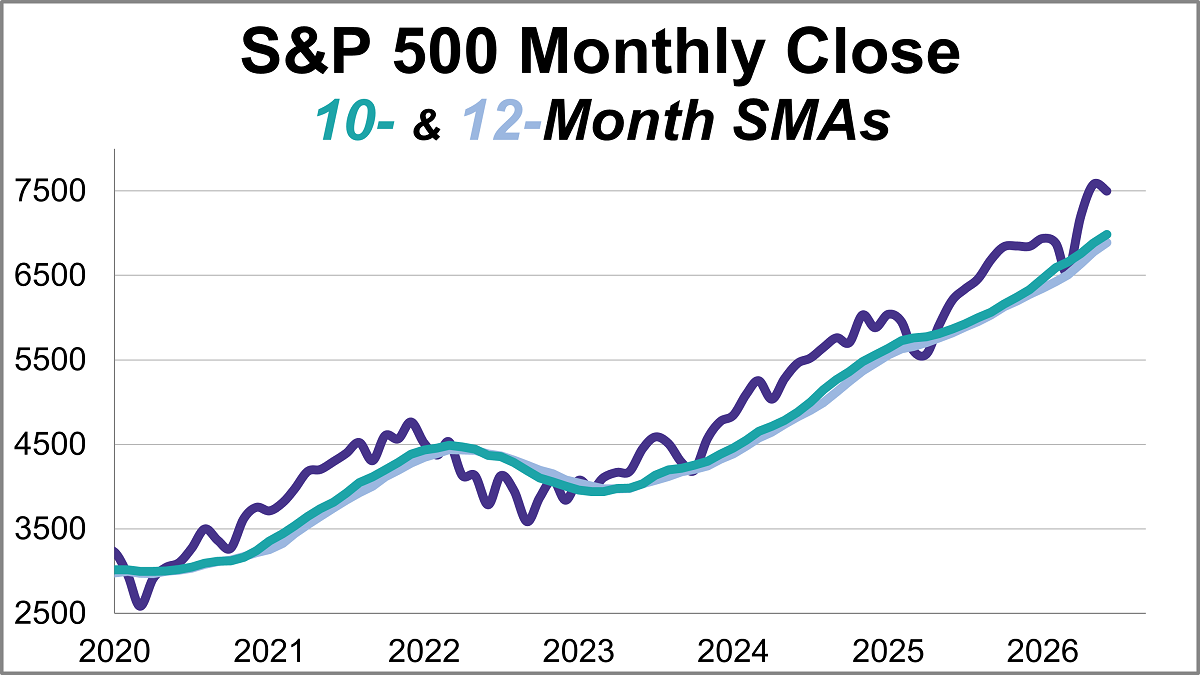
Moving Averages of the Ivy Portfolio and S&P 500: July 2026
by Jennifer Nash, 8/3/26
Valid until the market close on August 31, 2026
This article provides an update on the monthly moving averages we track for the S&P 500 and the Ivy Portfolio after the close of the last business day of the month.
More…
Treasury Yields Snapshot: July 31, 2026
by Jennifer Nash, 7/31/26
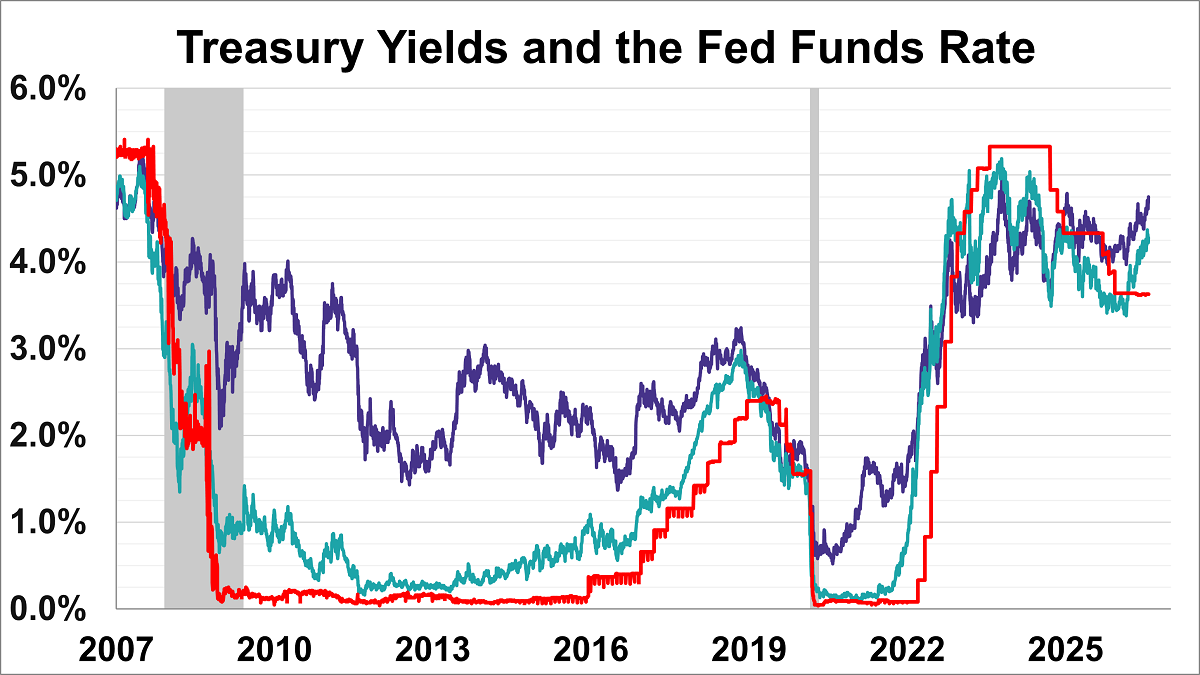
The yield on the 10-year note finished July 31, 2026 at 4.75% while the 2-year note ended at 4.28%.
More…
Consumer Sentiment Hits Five Month High, Improving Over Prelim Estimates
by Jennifer Nash, 7/31/26
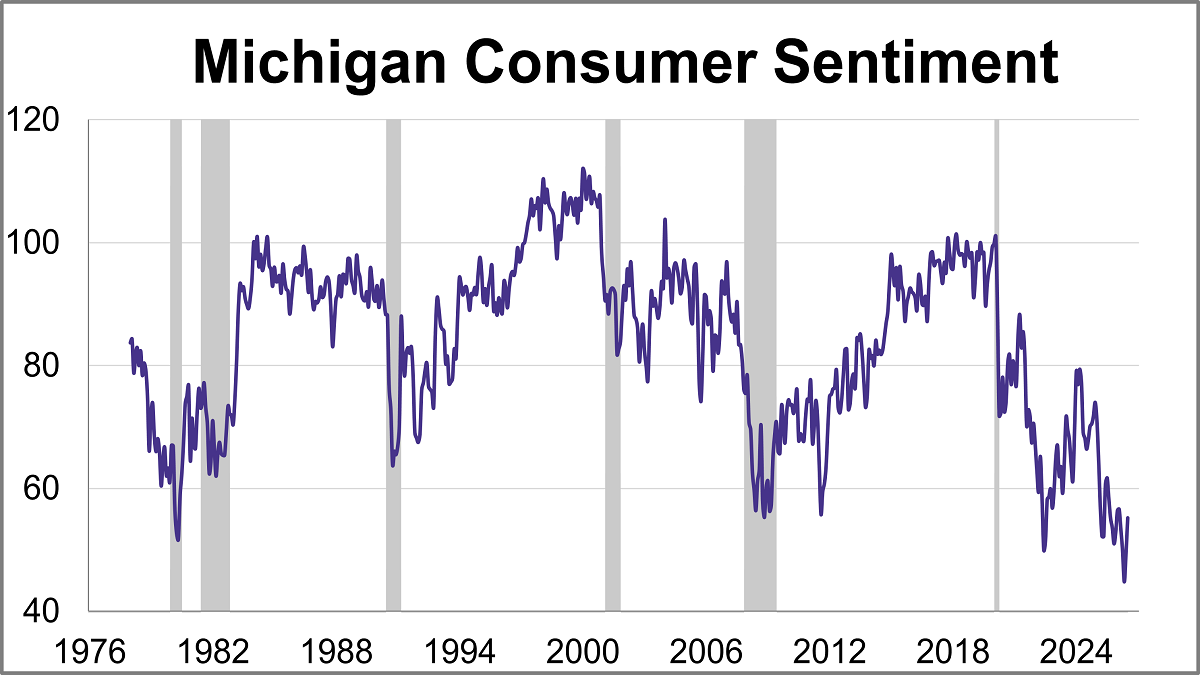
Consumer sentiment reached its highest level since March, driven by easing gas prices. The final July reading for the University of Michigan Consumer Sentiment Index came in at 55.2. This marks an 11.5% (5.7 points) increase from June and beat the preliminary reading of 54.4.
More…
Two Measures of Inflation: June 2026
by Jennifer Nash, 7/31/26
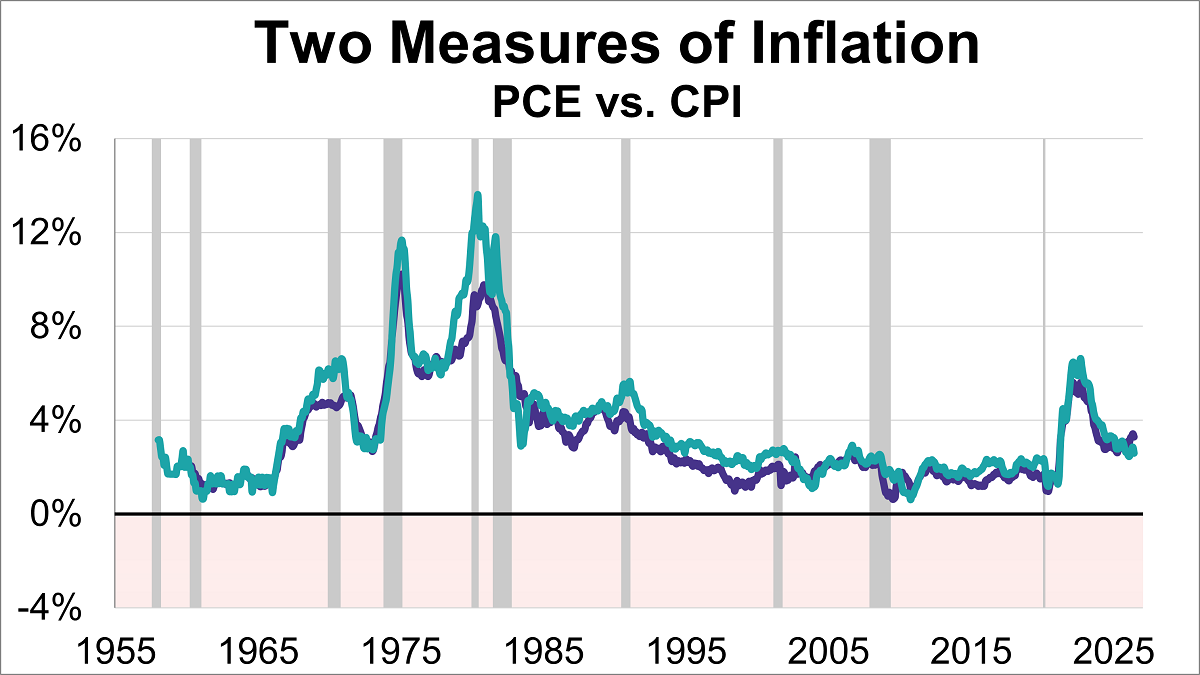
Inflation remains a hot topic, directly impacting everything from your grocery bill to interest rates. As of the latest data, two key inflation gauges — the Personal Consumption Expenditures (PCE) Price Index and the Consumer Price Index (CPI) — show that prices are still above the Federal Reserve's 2% target, with the core PCE at 3.3% and core CPI at 2.6%.
More…
The Big Four Recession Indicators: Real Personal Income
by Jennifer Nash, 7/30/26
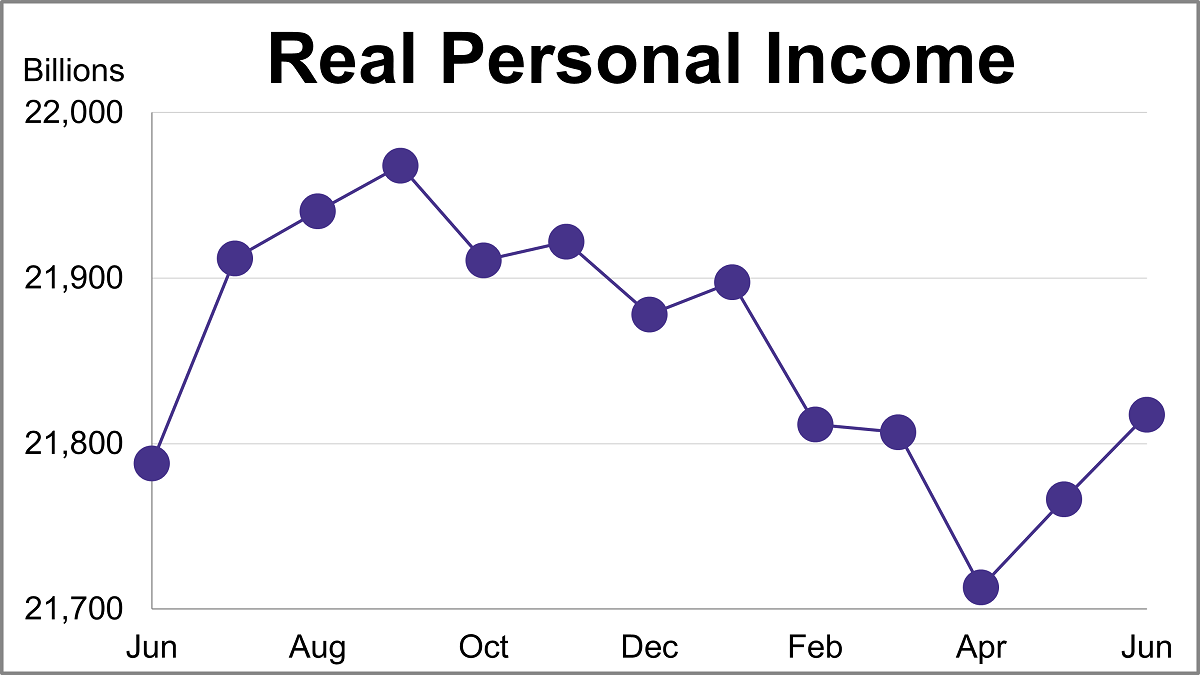
Personal income (excluding transfer receipts) was up 0.13% in June and was up 3.81% year-over-year. However, when adjusted for inflation using the BEA's PCE Price Index, real personal income (excluding transfer receipts) was up 0.24% month-over-month and up 0.14% year-over-year.
More…
Core PCE Inflation at 3.3% in June, Edging Down from May
by Jennifer Nash, 7/30/26
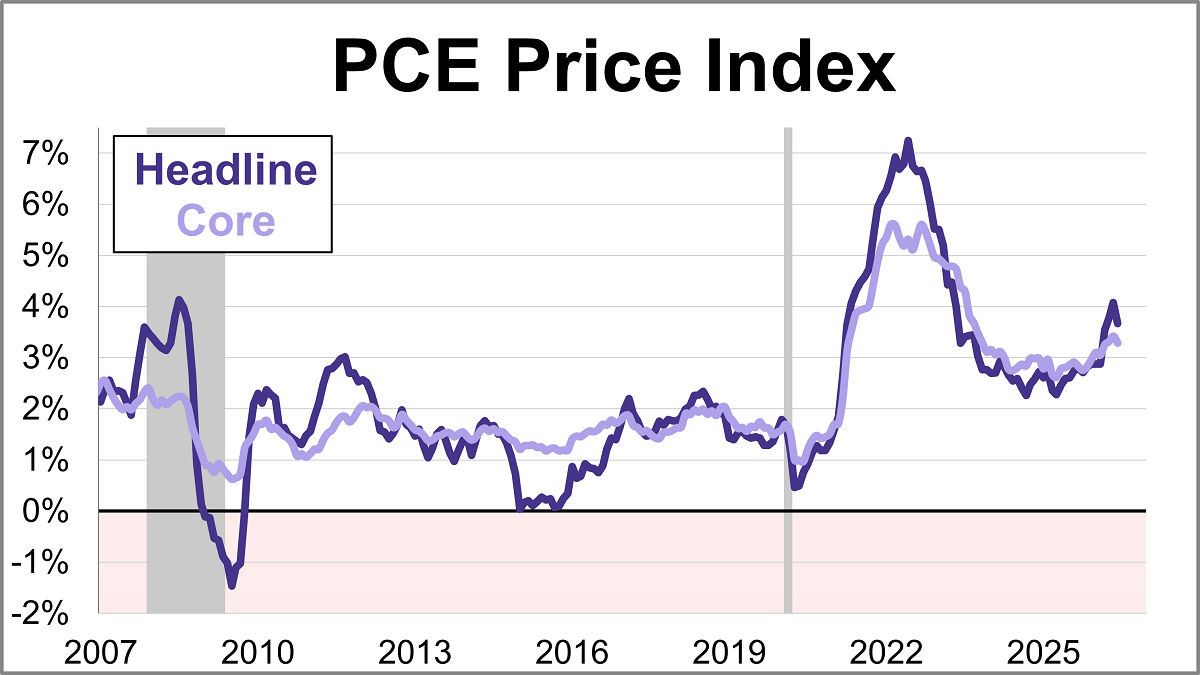
The Federal Reserve’s preferred inflation gauge, the core PCE price index, climbed 3.3% year-over-year in June. This marks a slight decrease from May's 3.4% reading. On a monthly basis, core prices rose 0.1%.
More…
Initial Jobless Claims Up 9K, Lower Than Expected
by Jennifer Nash, 7/30/26
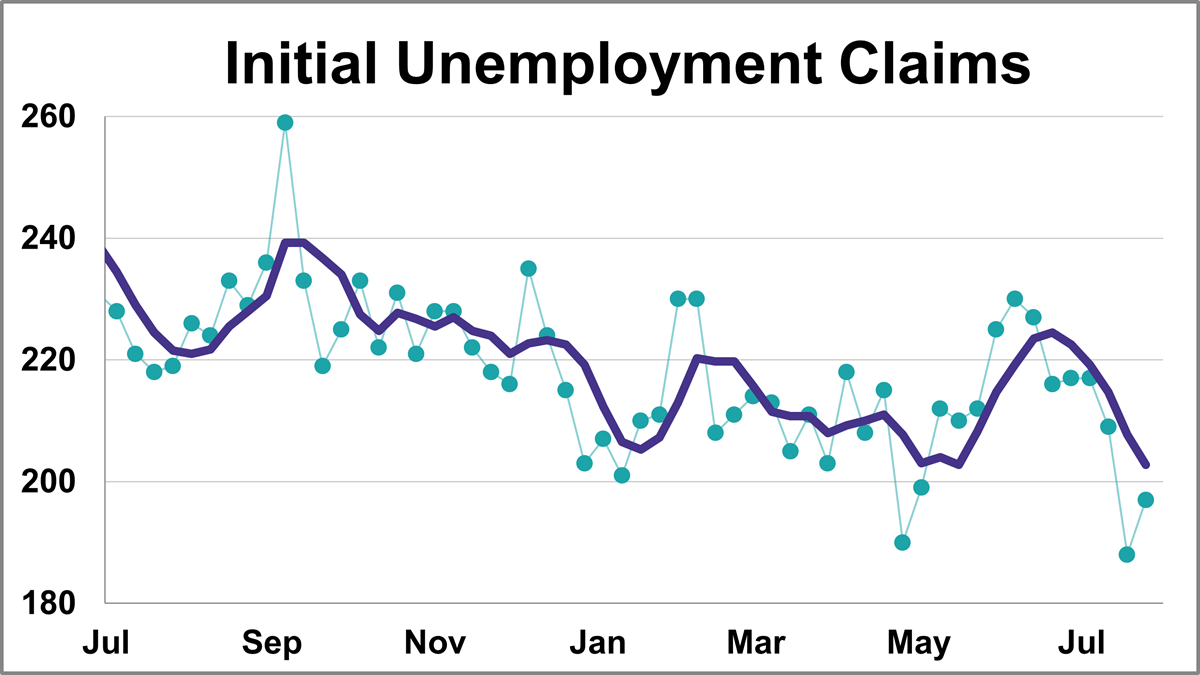
In the week ending July 25th, initial jobless claims were at a seasonally adjusted level of 197,000. This represents an increase of 9,000 from the previous week's figure and was lower than the forecast of 201,000.
More…
Q2 GDP Advance Estimate: Real GDP at 1.5%, Lower Than Expected
by Jennifer Nash, 7/30/26
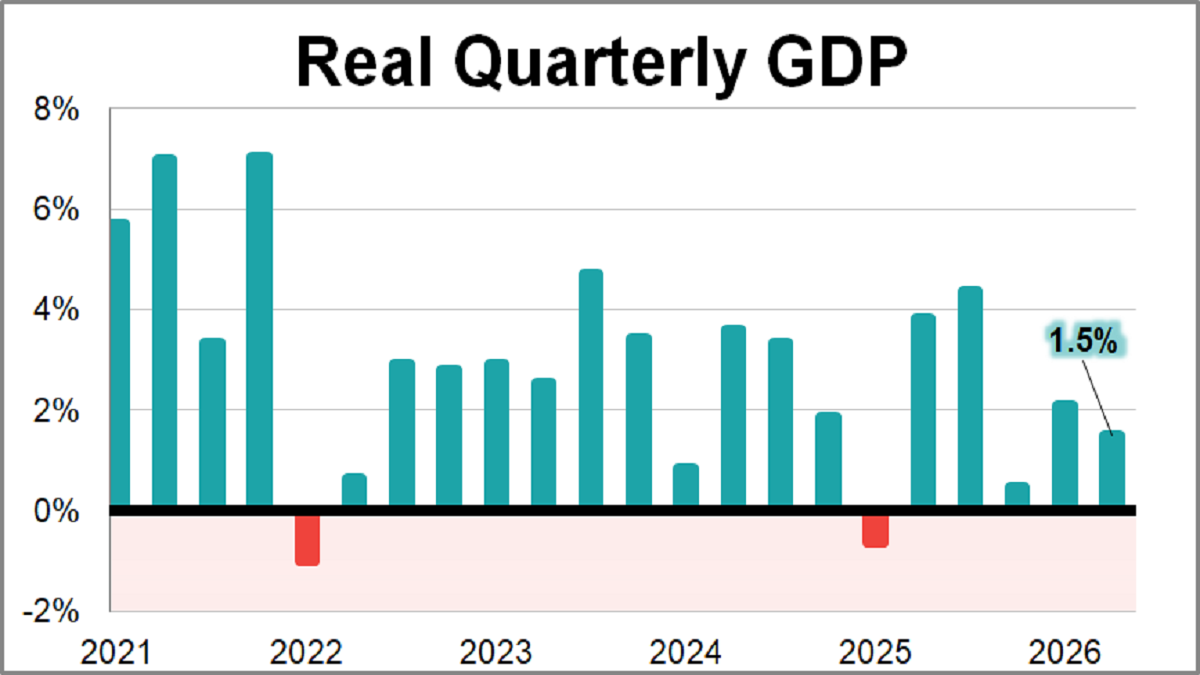
U.S. economic growth rebounded at the beginning of 2026, according to the BEA’s latest estimate. Real GDP rose at a 1.5% annual rate in Q2, falling below the 2.1% forecast, but marking an acceleration from the 0.5% final estimate seen in Q4 of last year.
More…
Fed’s Interest Rate Decision: July 29, 2026
by Jennifer Nash, 7/29/26
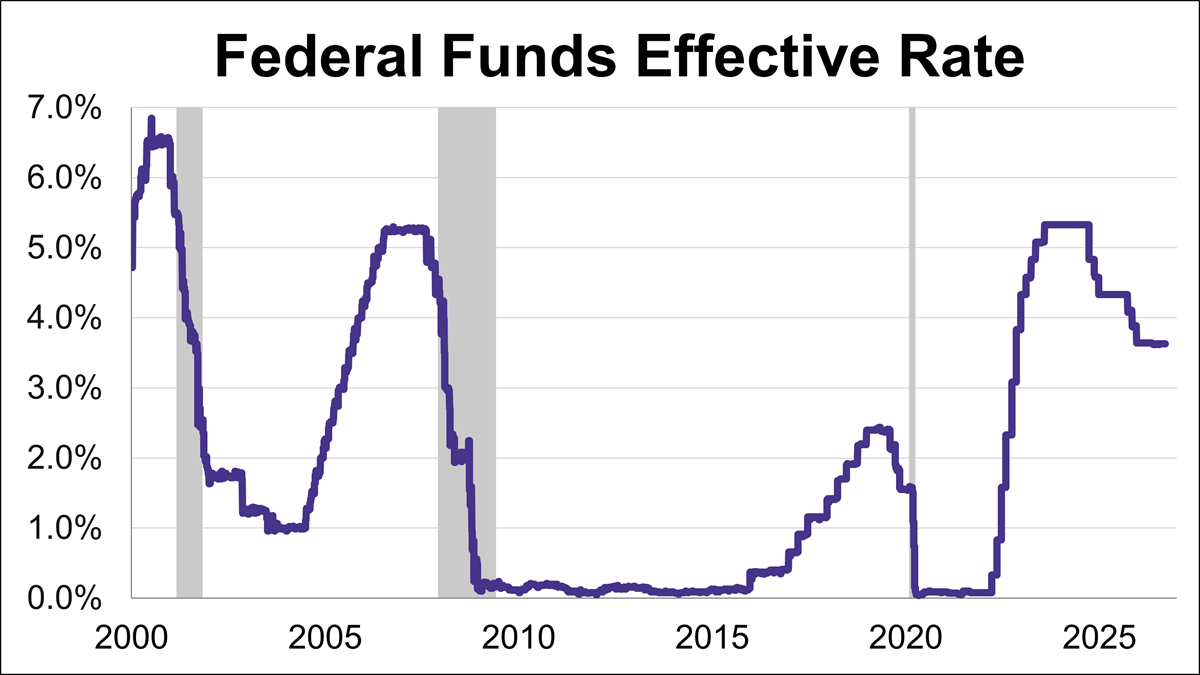
The Federal Reserve concluded its fifth meeting of the year by holding the federal funds rate (FFR) steady in the 3.50%-3.75% range.
More…
Gasoline Prices Jump for Third Straight Week
by Jennifer Nash, 7/28/26
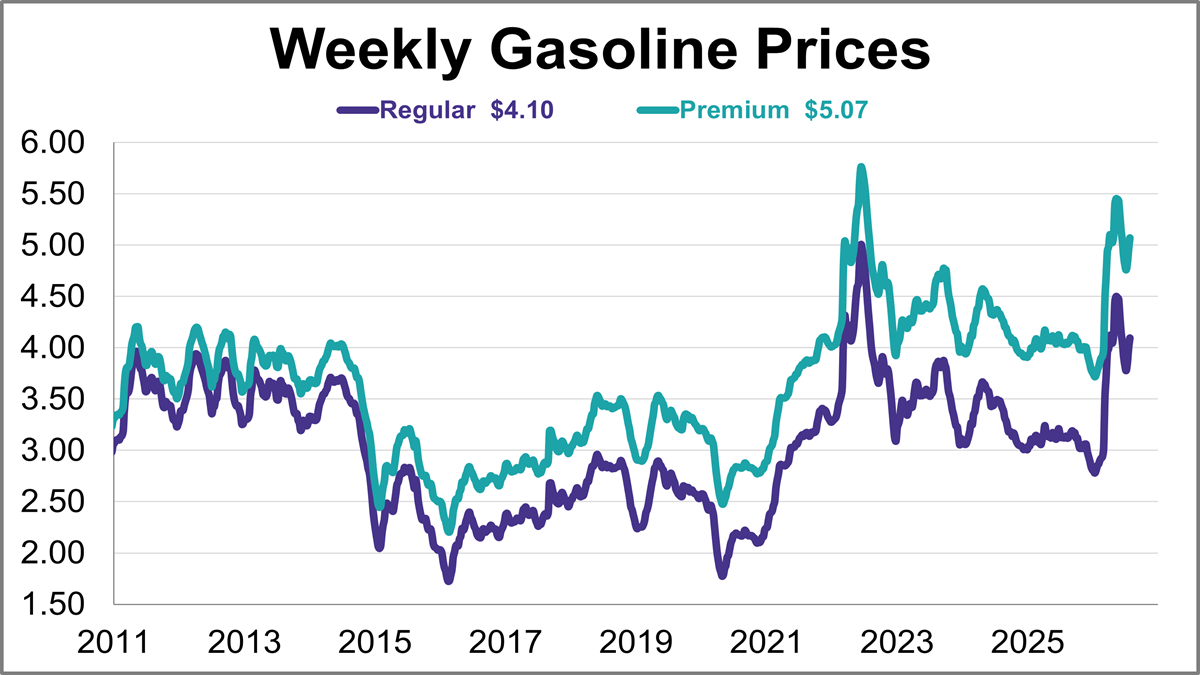
Gasoline prices jumped for a third straight week, reaching their highest level in almost two months.
More…
Richmond Manufacturing Index: Mostly Flat Activity in July
by Jennifer Nash, 7/28/26
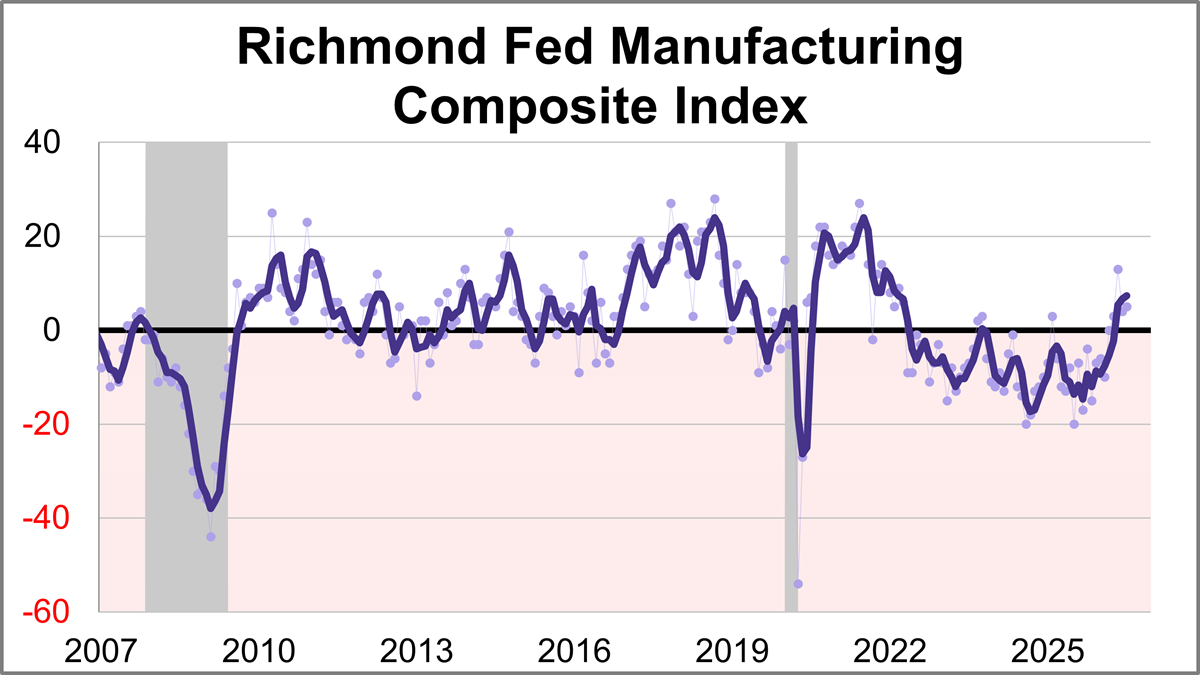
Fifth district manufacturing activity was mostly flat in July, according to the most recent survey from the Federal Reserve Bank of Richmond. The composite manufacturing index inched up one point to 5, marking the fourth consecutive positive reading.
More…
Consumer Confidence Moderated Slightly in July
by Jennifer Nash, 7/28/26
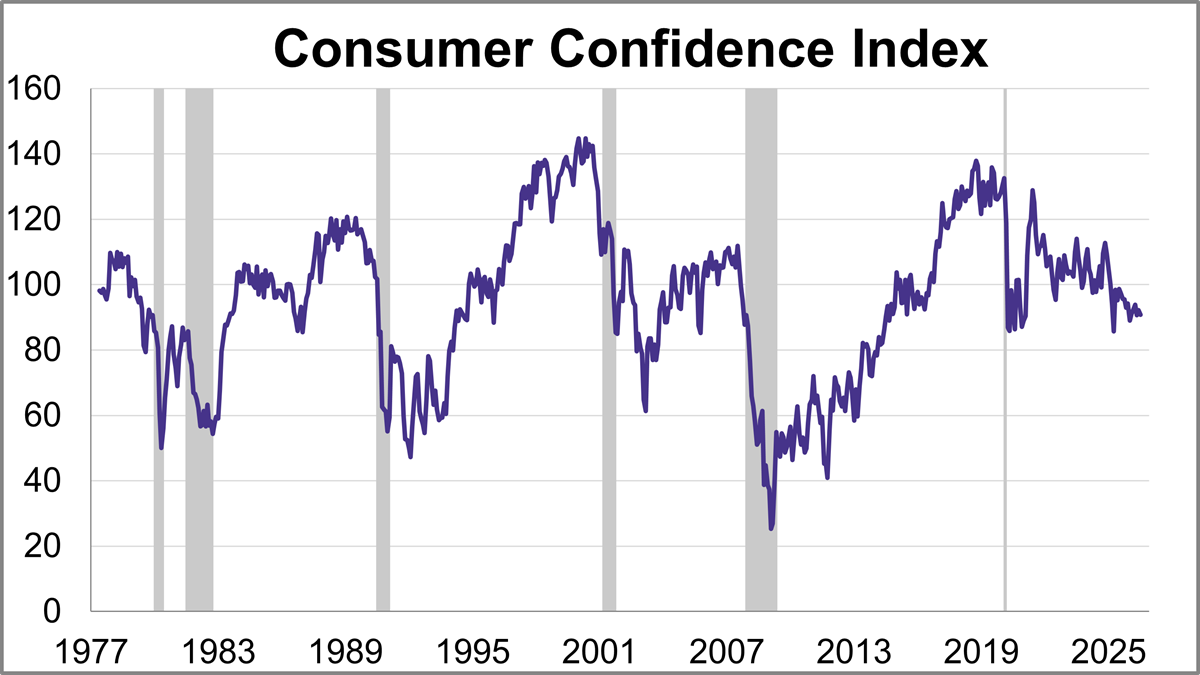
The Conference Board's Consumer Confidence Index® unexpectedly inched lower in July, falling 1.4 points to 90.8. The index was below the forecast of 92.4.
More…
S&P Cotality Case-Shiller Index: Home Prices Continue to Decline
by Jennifer Nash, 7/28/26
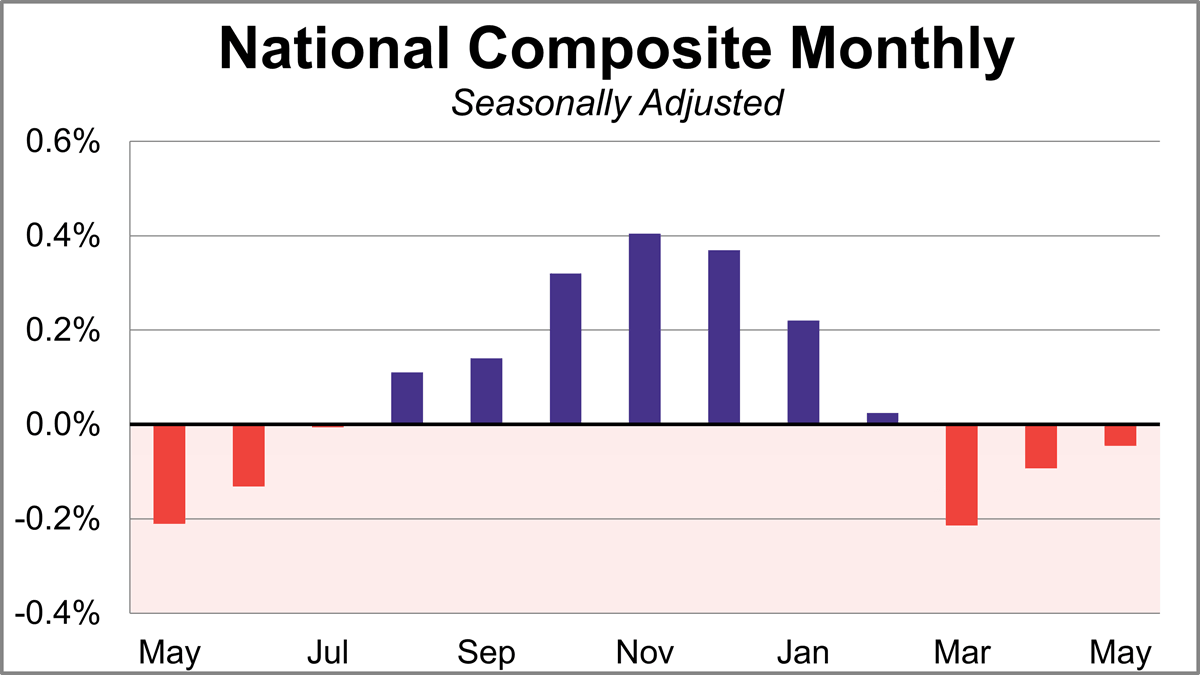
Home prices fell for a third straight month in May according to the S&P Cotality Case-Shiller index, as the housing slowdown continues. On a seasonally adjusted basis, the national index was essentially flat month-over-month and was up 1.1% year-over-year.
More…
FHFA House Price Index Rises 0.3% to Record High
by Jennifer Nash, 7/28/26
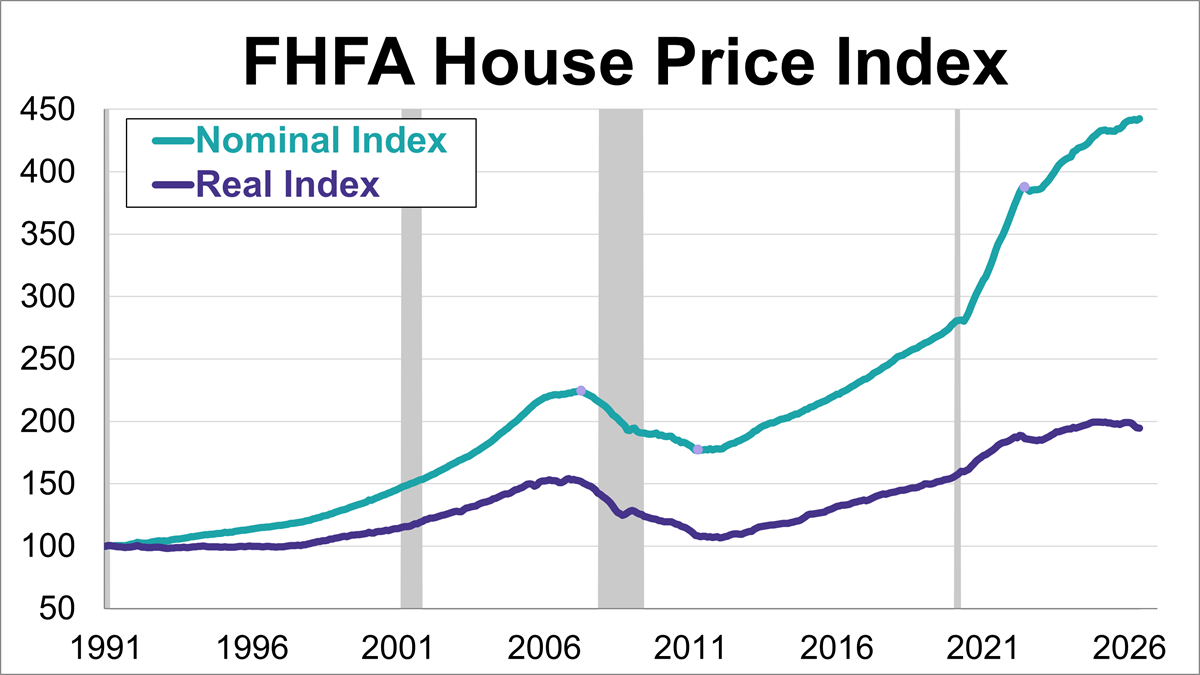
The Federal Housing Finance Agency (FHFA) House Price Index (HPI) rose more than expected in May, reaching a new record high.
More…
World Markets Watchlist: July 27, 2026
by Jennifer Nash, 7/27/26
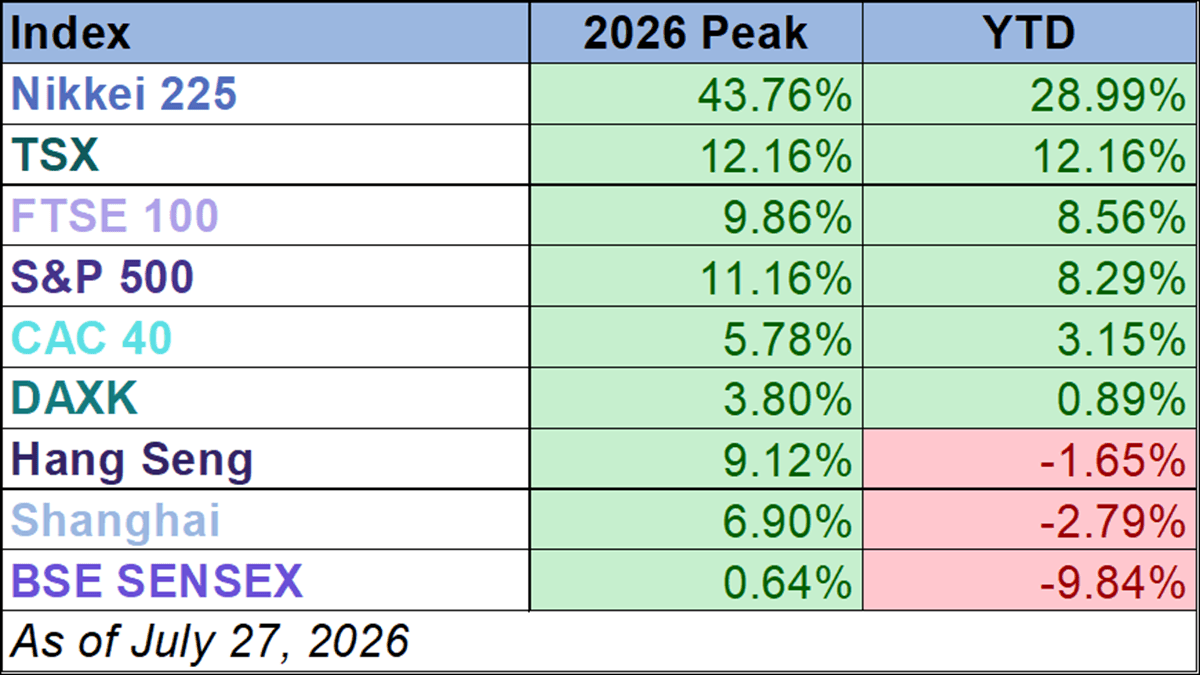
Six of the nine indexes on our world markets watch list posted year-to-date gains through July 27, 2026.
More…
Dallas Fed Manufacturing: Improved Business Conditions in July
by Jennifer Nash, 7/27/26
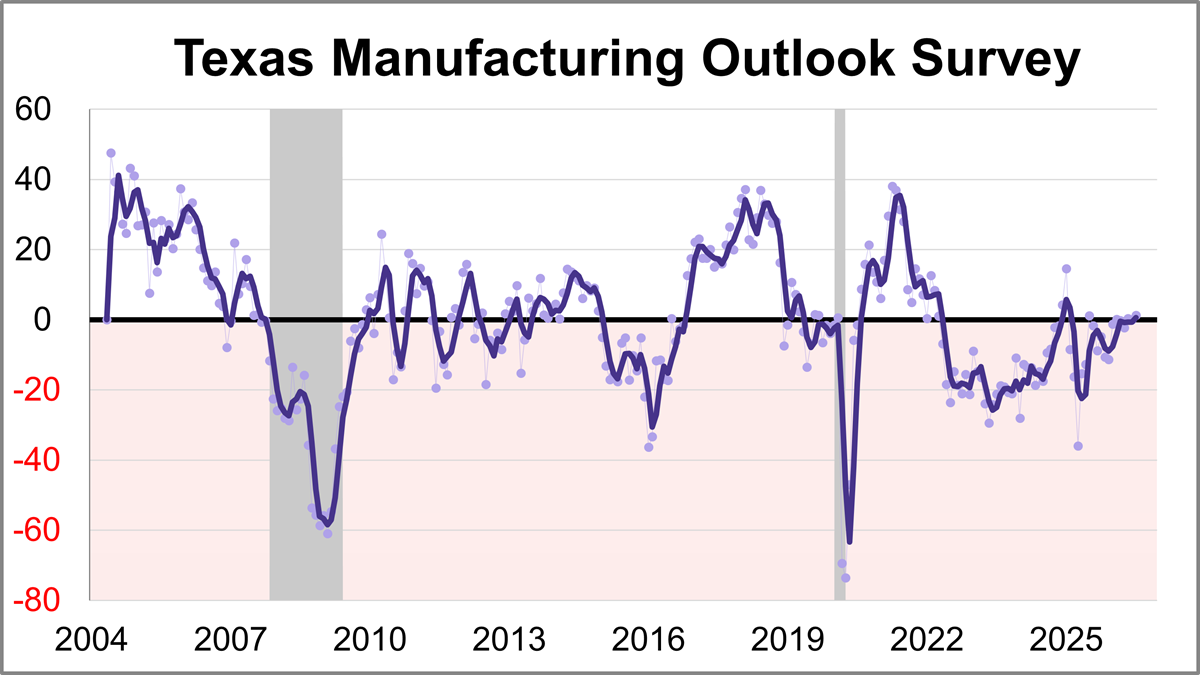
The Dallas Fed released its Texas Manufacturing Outlook Survey (TMOS) for July. The general business activity index rose 1.3 points to 1.3, indicating accelerated growth of manufacturing activity and improved business conditions perceptions.
More…
Durable Goods Orders Rise 0.3% in June, Less Than Expected
by Jennifer Nash, 7/27/26
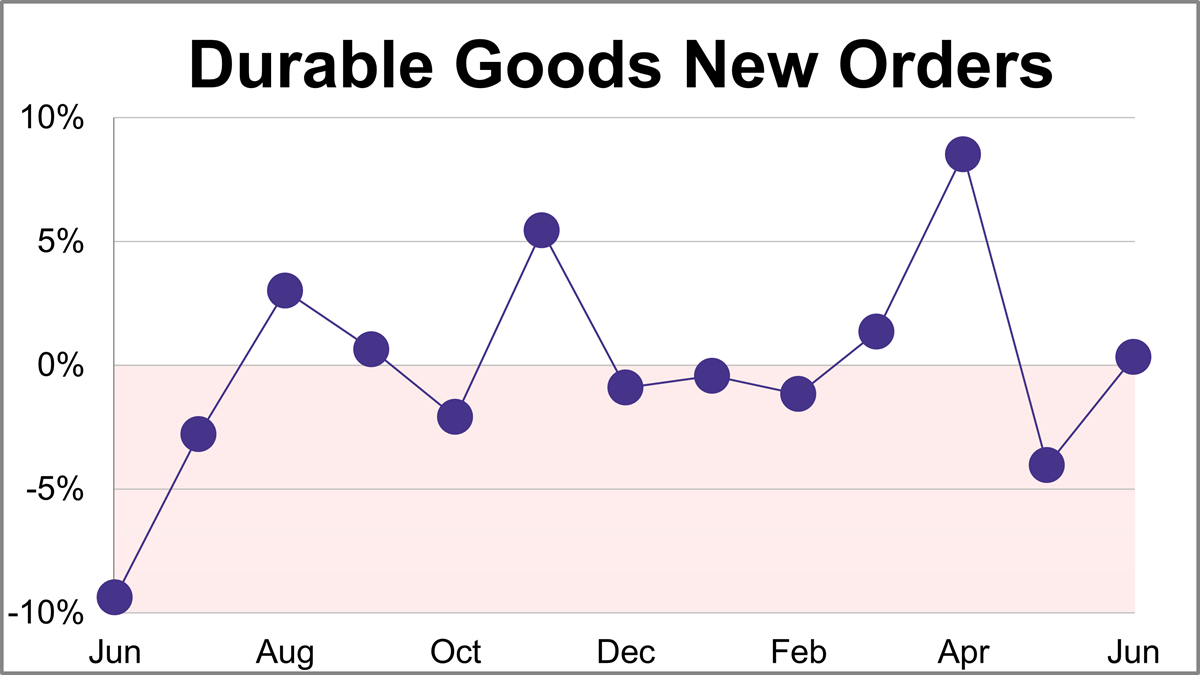
New orders for manufactured durable goods rose 0.3% in June to $334.77B, less than the projected 1.6% monthly growth.
More…
New Home Sales Unexpectedly Rise 1.6% in June
by Jennifer Nash, 7/24/26
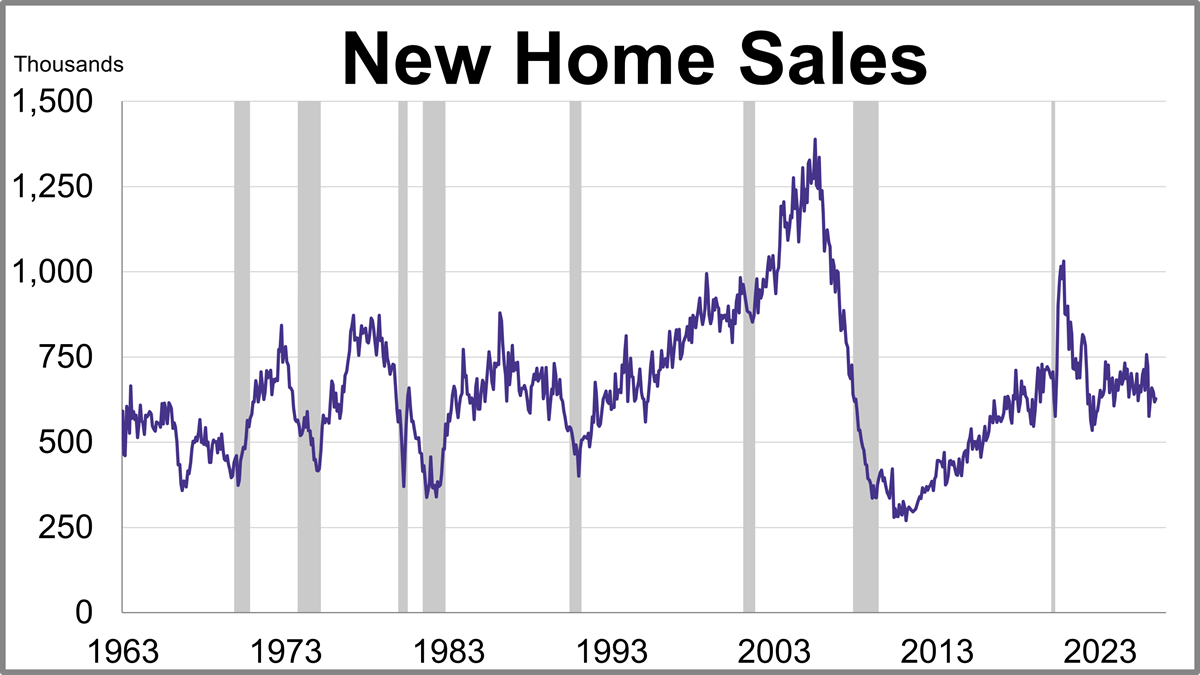
New home sales unexpectedly rose in June while the median price fell to its lowest level in almost a year.
More…
Kansas City Fed Manufacturing Index: Steady Growth in July
by Jennifer Nash, 7/23/26
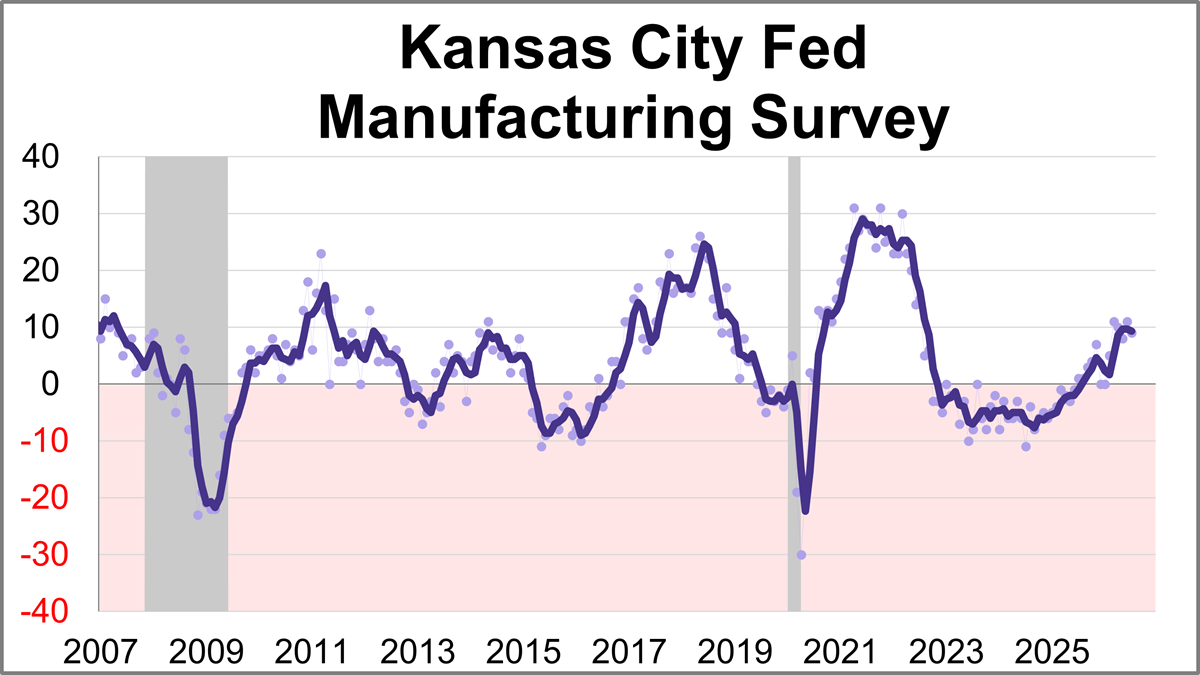
The Kansas City Fed Manufacturing Survey revealed regional activity remained steady in June. The composite index came in at 9 this month, down slightly from 11 in June but still indicating continued expansion.
More…
Chicago Fed National Activity Index: Economic Growth Increased in June
by Jennifer Nash, 7/23/26
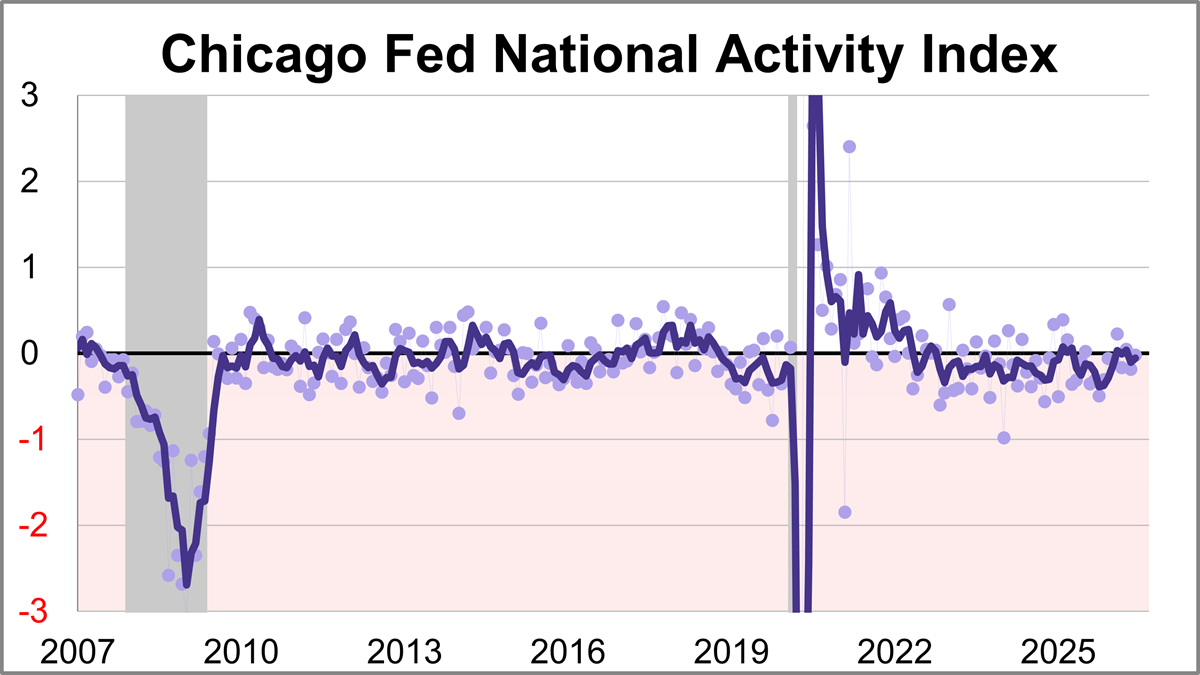
The Chicago Fed National Activity Index (CFNAI) rose to -0.02 in June from -0.19 in May. One of the four broad categories of indicators used to construct the index decreased from May, and two categories made negative contributions.
More…
Margin Debt Jumps 7.9% in June to Another Record High
by Jennifer Nash, 7/20/26
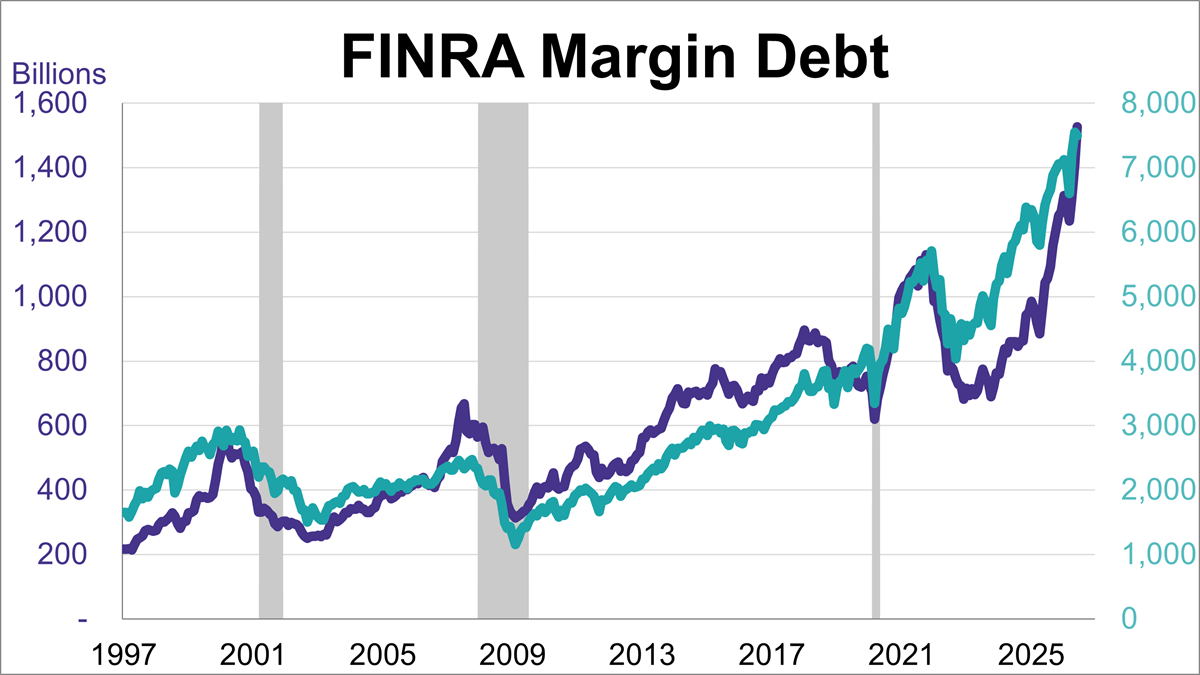
Margin debt rose for a third straight month in June, reaching a new record high of $1.53 trillion. This marked a 7.9% increase from May and a 51.5% rise compared to the previous year.
More…
Zillow Home Value Index: "Real" Home Values Hit 5-Year Low
by Jennifer Nash, 7/17/26
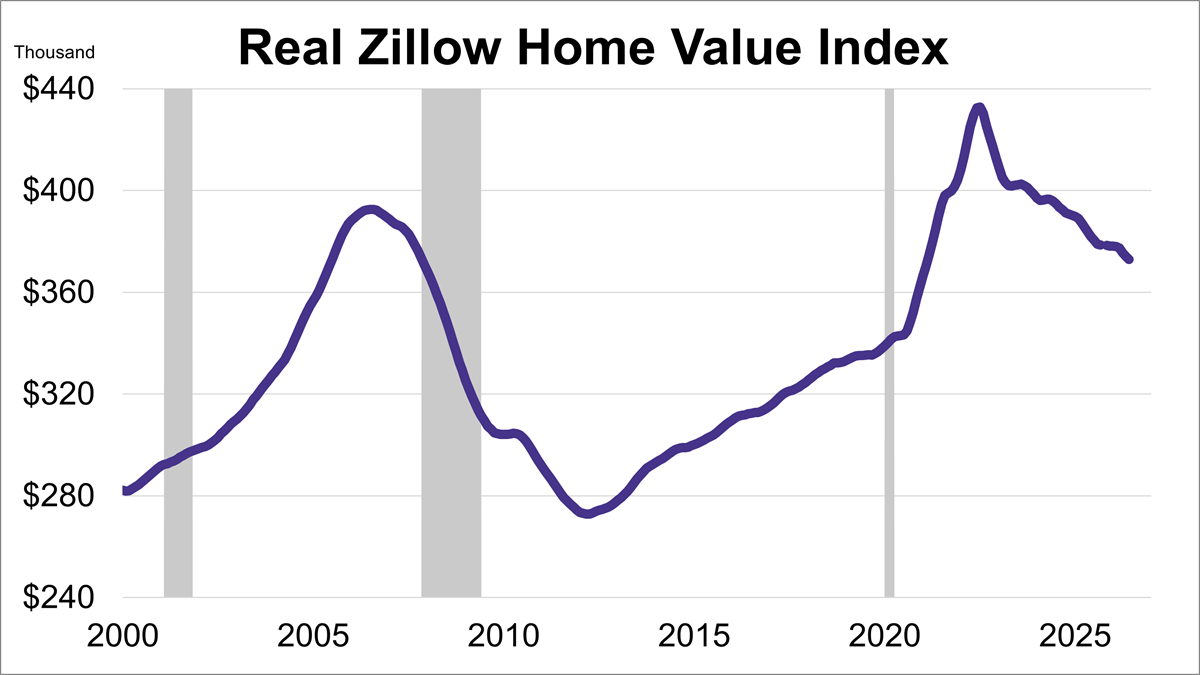
Home values fell for a second straight month in June, according to the Zillow Home Value Index. Additionally, after adjusting for inflation, real home values dropped even more sharply, hitting their lowest level in over five years.
More…
The Big Four Recession Indicators: Industrial Production
by Jennifer Nash, 7/17/26
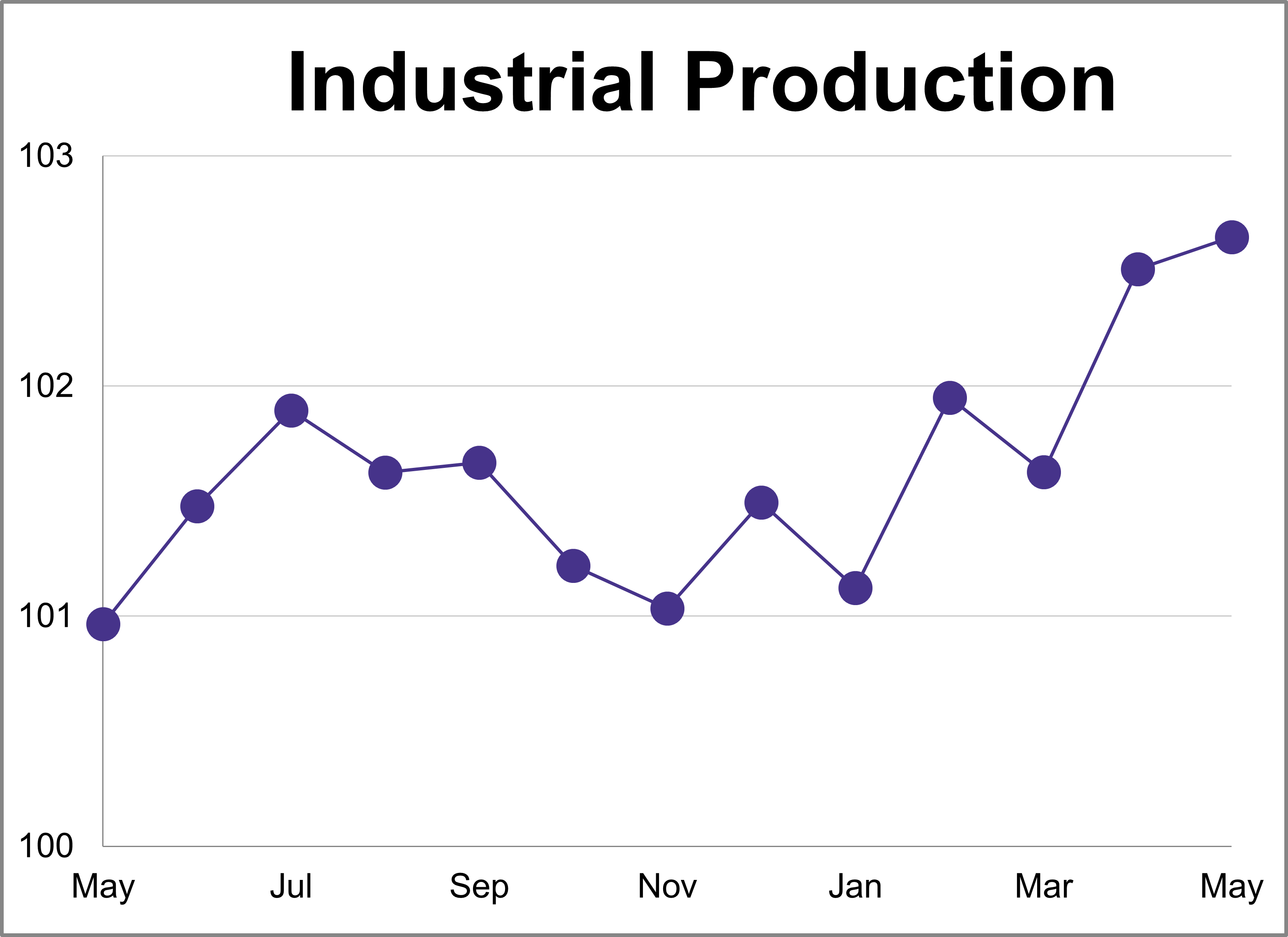
Industrial production rose less than expected in June, increasing 0.1% after May's 0.1% growth. This was lower than the expected 0.2% growth and marks a 1.1% increase compared to one year ago.
More…
Building Permits Fall 3.0% in June
by Jennifer Nash, 7/17/26
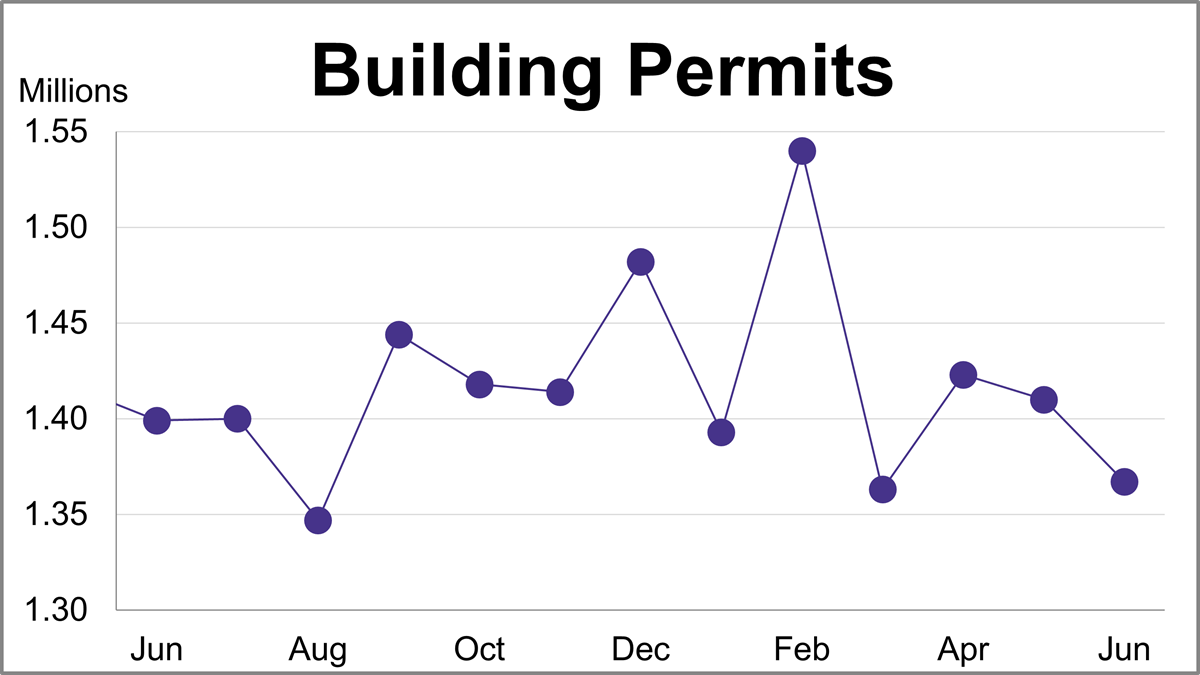
Building permits fell 3.0% in June to a seasonally adjusted annual rate of 1.367 million. The latest reading missed the forecast of 1.400 million.
More…
Housing Starts Jump 19% in June
by Jennifer Nash, 7/17/26
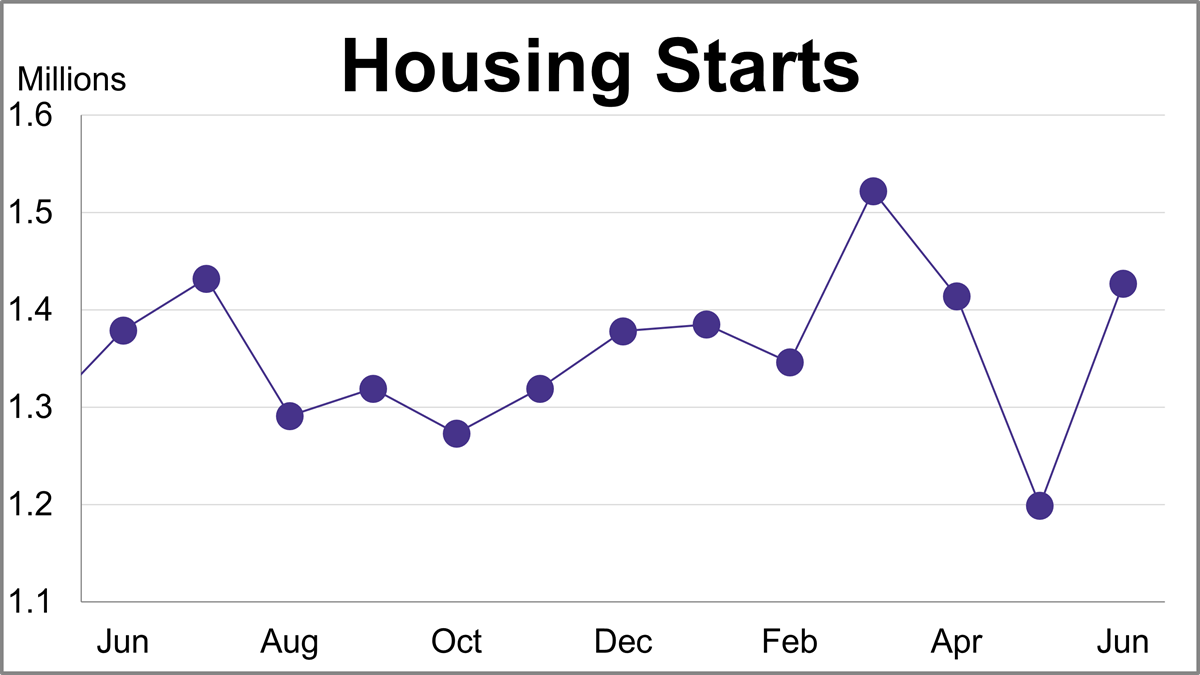
Housing starts jumped 19.0% in June to a seasonally adjusted annual rate of 1.427 million, beating forecasts driven by a massive surge in multi-family units.
More…
Top 10 Charts of 2026: Mid-Year Review

by Jennifer Nash, 7/16/26
Discover the top 10 most-read charts from the first half of 2026, covering historic market valuations, record margin debt, recession indicators, and global index performance.
More…
The Big Four Recession Indicators: Real Retail Sales
by Jennifer Nash, 7/16/26
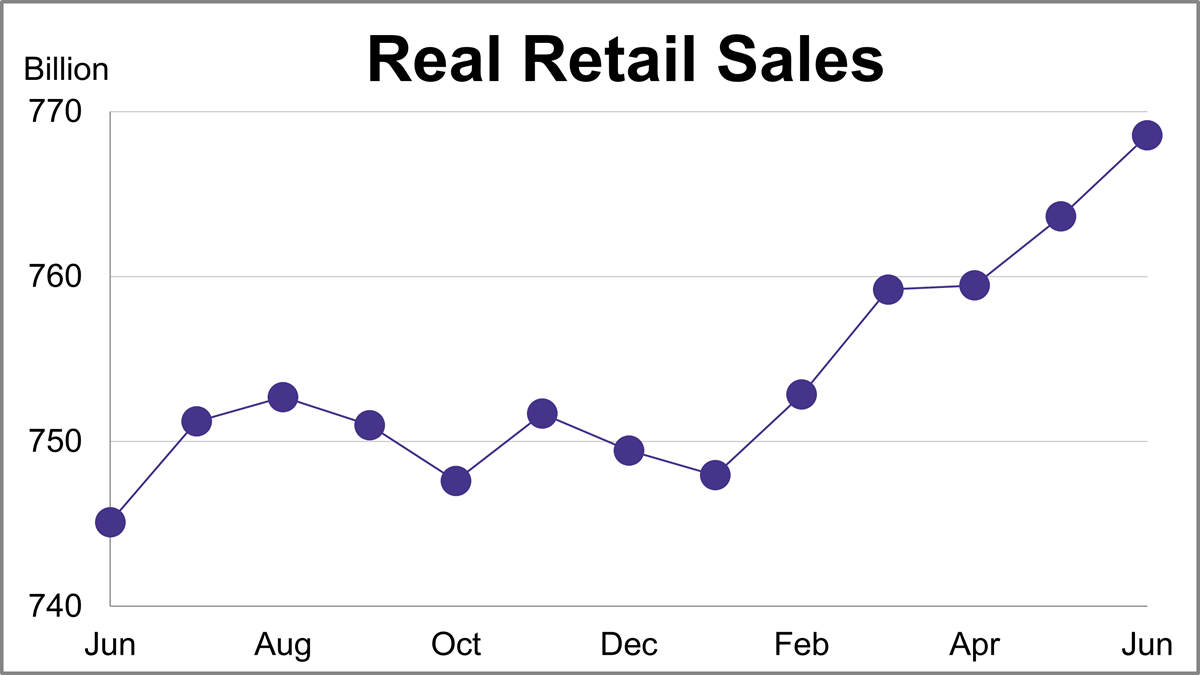
Nominal retail sales were up 0.22% month-over-month and up 6.72% year-over-year in May. However, after adjusting for inflation, real retail sales were up 0.64% month-over-month and up 3.15% year-over-year.
More…
NAHB Housing Market Index: Affordability Challenges Pull Down Builder Sentiment
by Jennifer Nash, 7/16/26
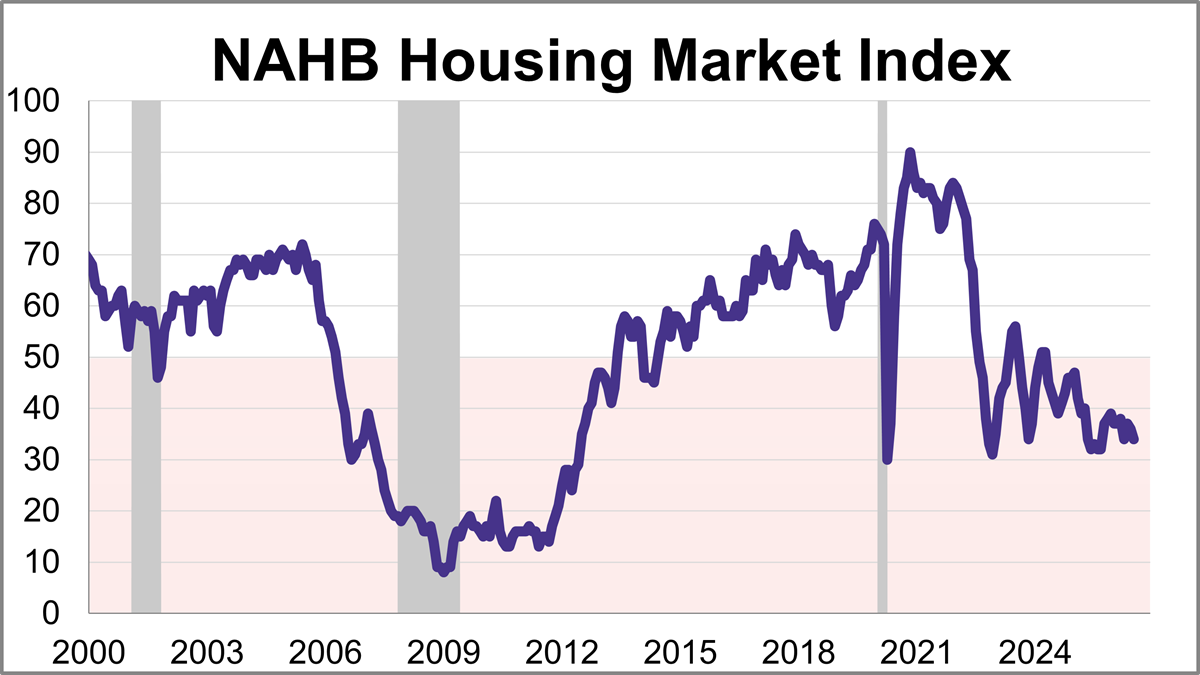
Builder confidence edged lower in July as ongoing affordability challenges continue to affect the housing market. The National Association of Home Builders (NAHB) Housing Market Index (HMI) fell 2 points from June to 34 this month, marking the 27th consecutive negative reading.
More…
Pending Home Sales Sink 5% in June
by Jennifer Nash, 7/16/26
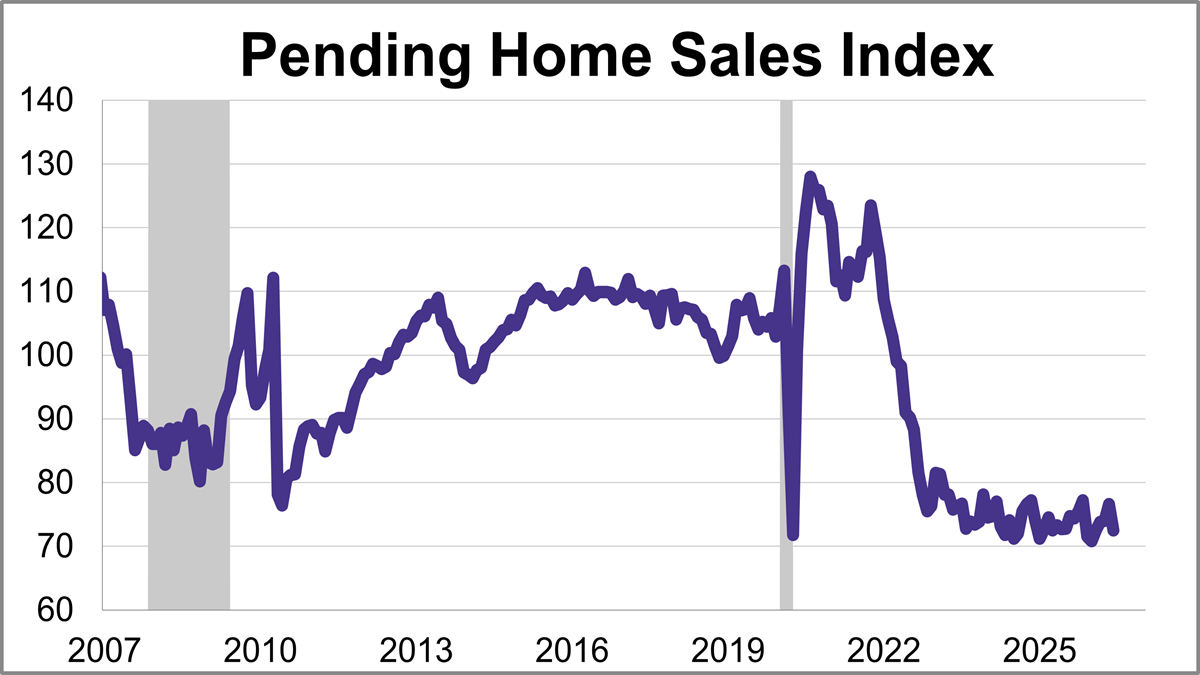
The National Association of Realtors® (NAR) pending home sales index sank 5.4% in June to 72.5, the lowest level since January.
More…
Philadelphia Fed Manufacturing Index Jumps to Highest Level Since 2021
by Jennifer Nash, 7/16/26
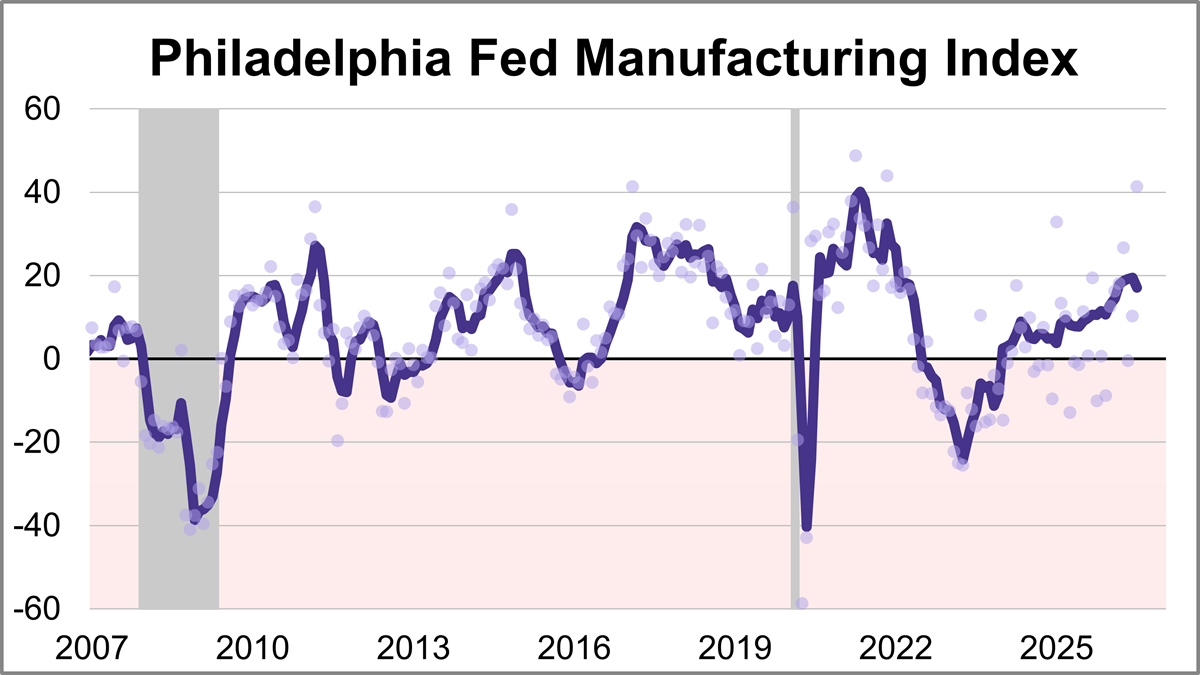
The Philadelphia Fed manufacturing index showed activity expanded significantly in July, with the index jumping 31.1 points to 41.4. This marks the highest level for the index since November 2021 and was more than triple the forecast of 12.7.
More…
Retail Sales Rise for Fifth Straight Month
by Jennifer Nash, 7/16/26
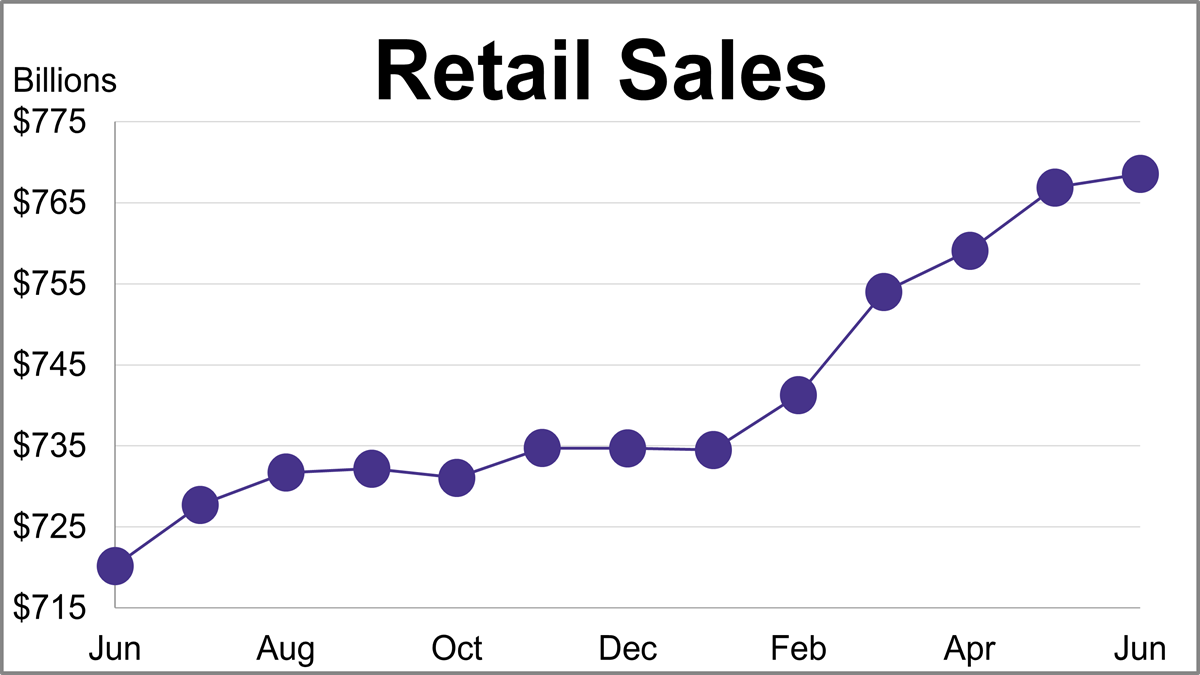
U.S. headline retail sales increased for a fifth straight month, rising 0.2% to $768.6B in June, while core retail sales fell unexpectedly by 0.2%.
More…
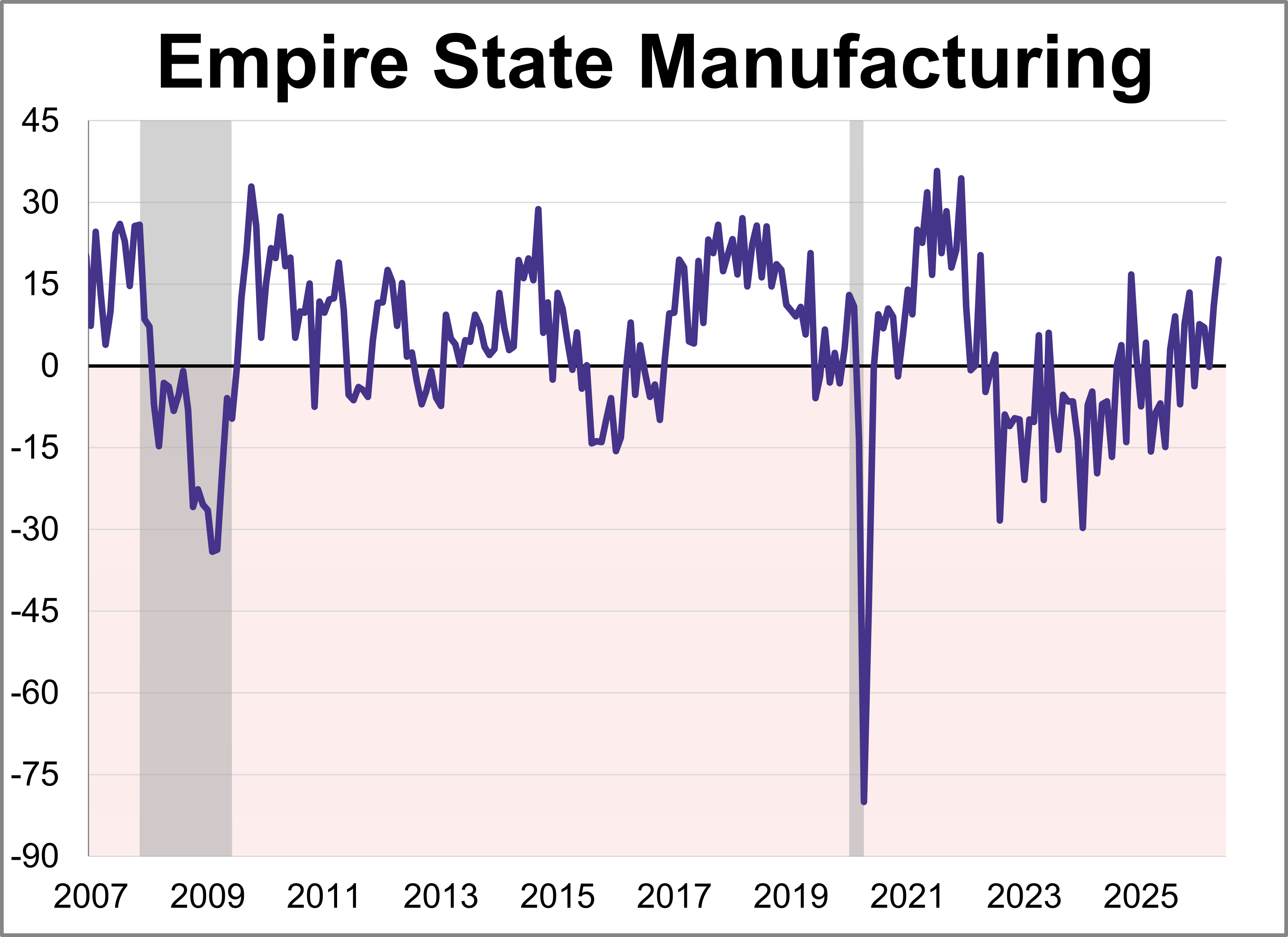
Empire State Manufacturing Survey: Significant Growth in July
by Jennifer Nash, 7/15/26
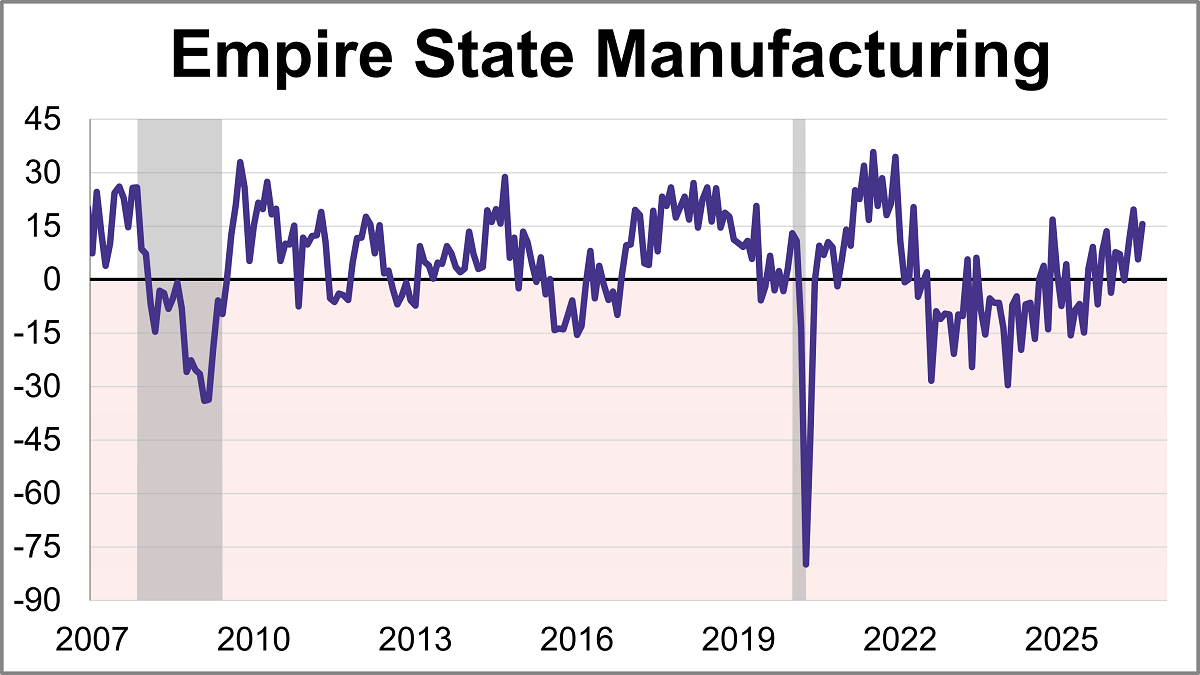
Manufacturing activity grew significantly in New York State, according to the Empire State Manufacturing July survey. The diffusion index for General Business Conditions remained in positive territory for a fourth straight month, jumping 9.9 points to 15.6 and coming in above the 9.3 forecast.
More…
Producer Price Index: Wholesale Inflation Unexpectedly Falls in June
by Jennifer Nash, 7/15/26
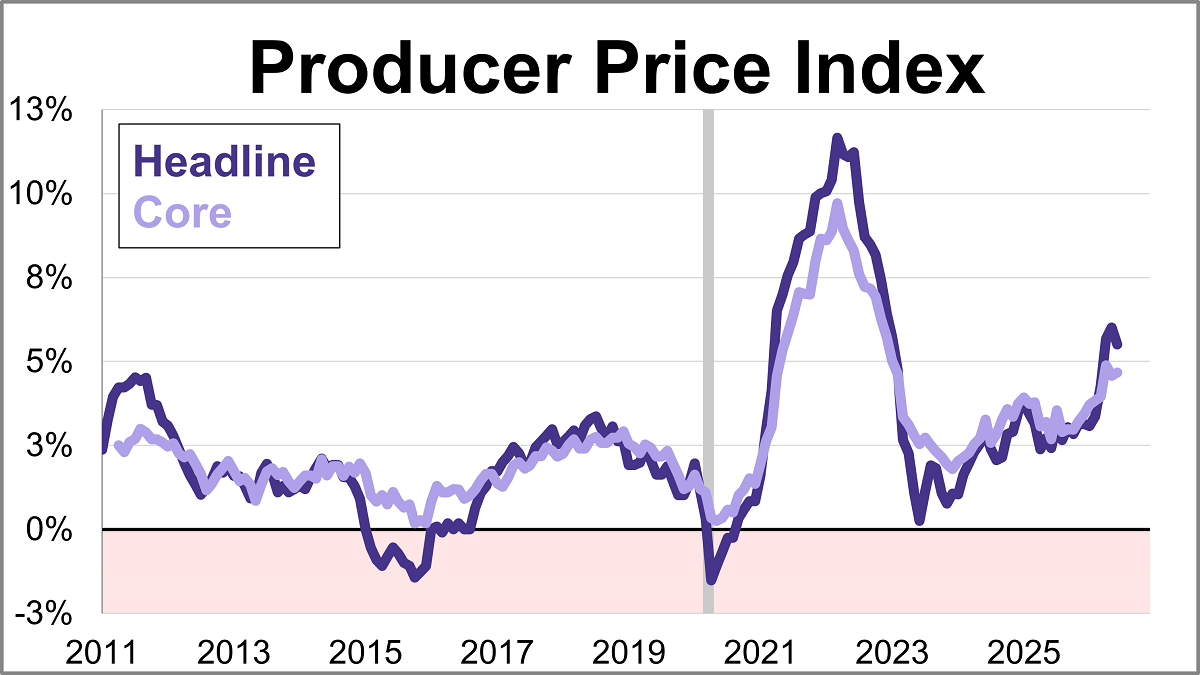
The Producer Price Index (PPI) experienced its largest decline in over a year in June, with wholesale inflation dropping 0.3%.
More…
NFIB Small Business Survey: Optimism Picks Up in June
by Jennifer Nash, 7/14/26
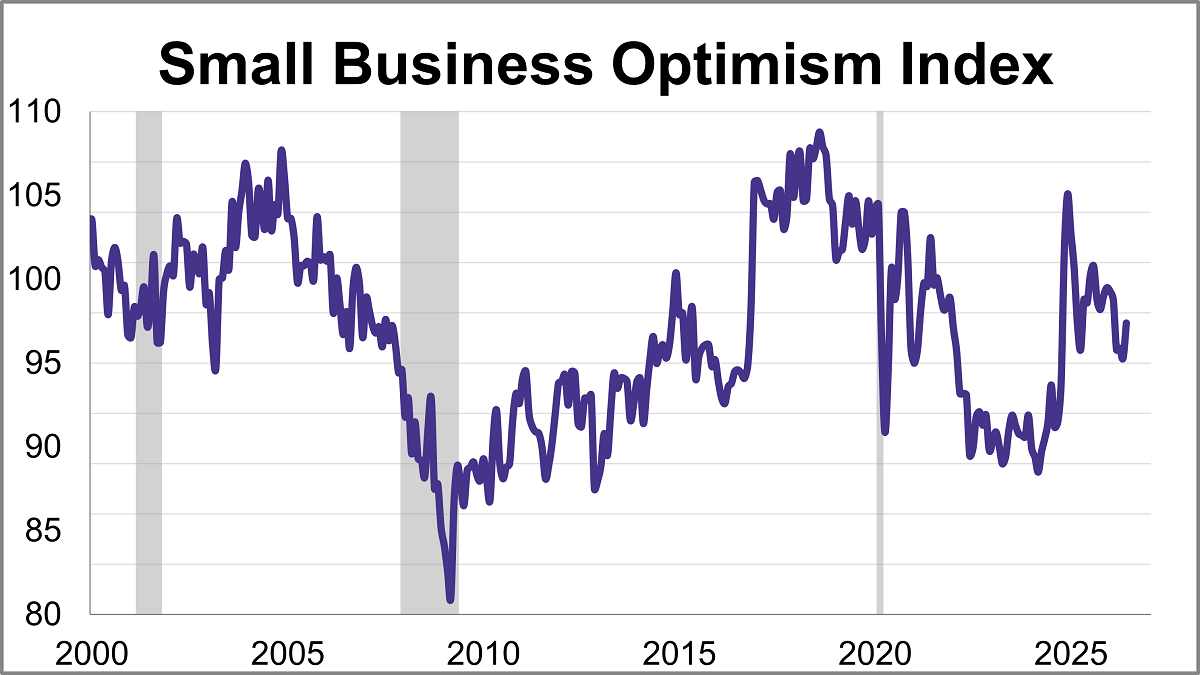
The NFIB Small Business Optimism Index rose 2.1 points to 97.4, reaching its highest level since February. However, the index remains below its historical average for a fourth straight month.
More…
Inflation Since 1872: A Long-Term Look at the CPI
by Jennifer Nash, 7/14/26
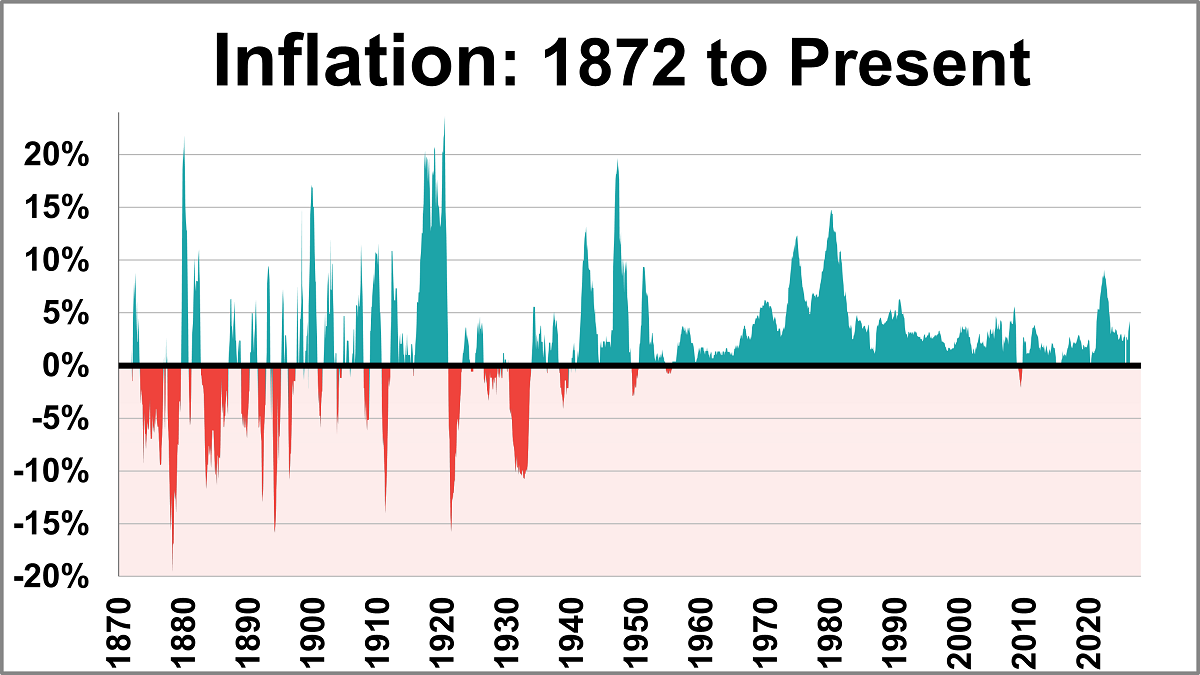
The June release of the Consumer Price Index for Urban Consumers (CPI-U) places the year-over-year inflation rate at 3.53%. This pushes inflation back below the post-WWII average of 3.72% for the first time since March. Meanwhile, this marks the fourth consecutive month that the current rate is above the 10-year moving average, which currently sits at 3.29%.
More…
Real Middle Class Wages: June 2026
by Jennifer Nash, 7/14/26
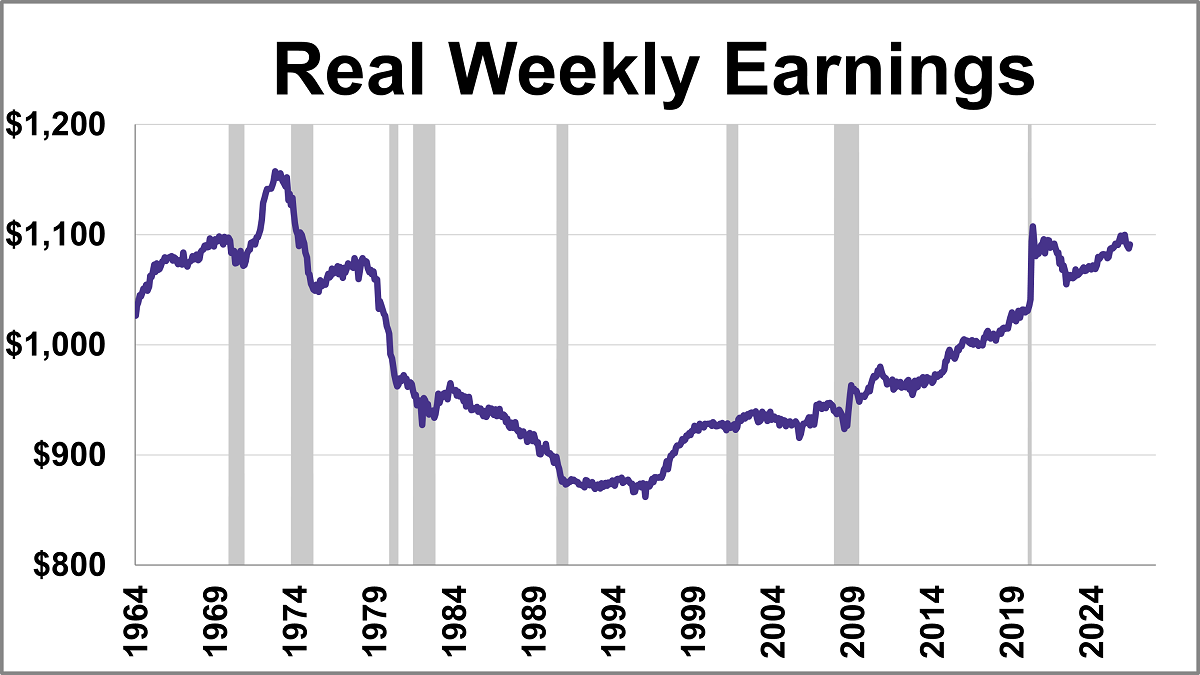
This series has been updated to include the June release of the consumer price index as the deflator and the monthly employment update. The latest hypothetical real (inflation-adjusted) annual earnings are at $54,560, down 5.7% from over 50 years ago.
More…
Inside the Consumer Price Index: June 2026
by Jennifer Nash, 7/14/26
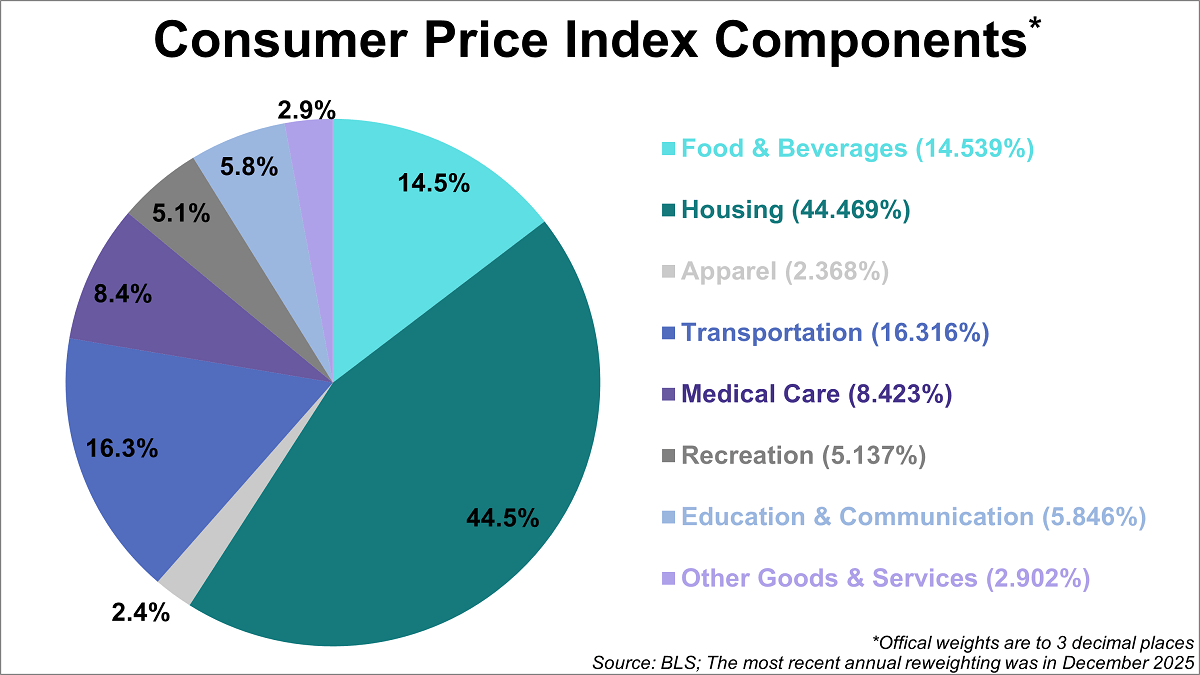
Inflation affects everything from grocery bills to rent, making the Consumer Price Index (CPI) one of the most closely watched economic indicators. The Bureau of Labor Statistics (BLS) tracks this by categorizing spending into eight categories, each weighted by its relative importance.
More…
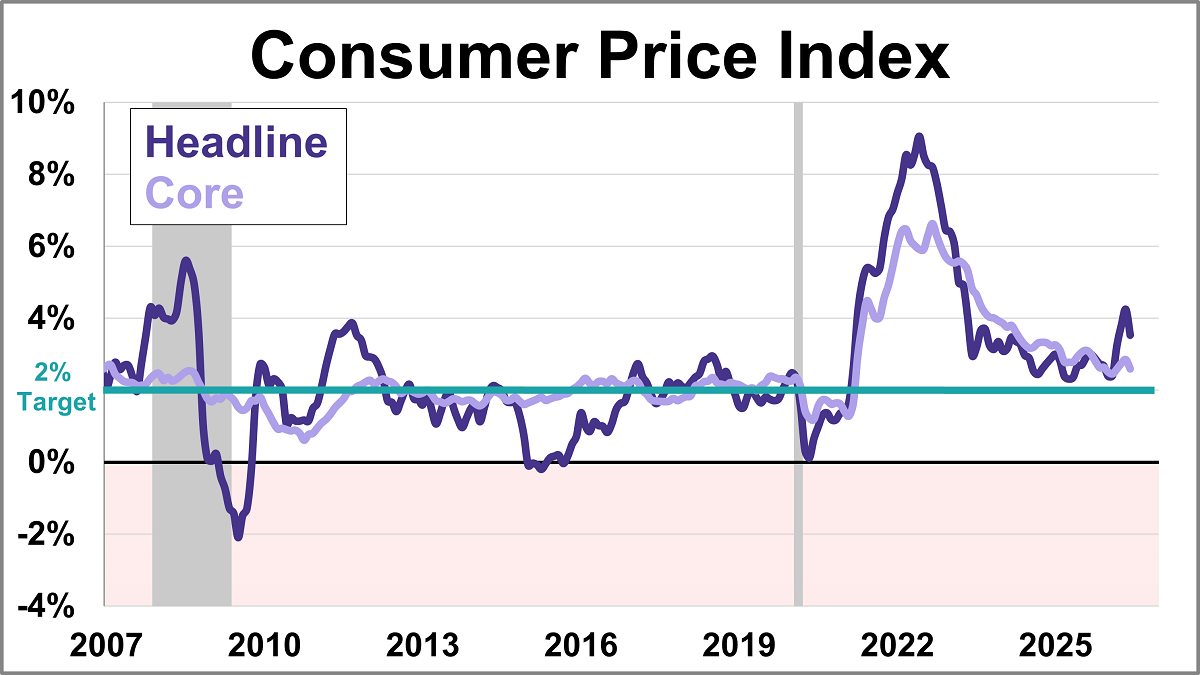
Consumer Price Index: Inflation at 3.5% in June
by Jennifer Nash, 7/14/26
Inflation cooled for the first time in five months, coming in at 3.5% year-over-year in June. The headline figure for the Consumer Price Index (CPI) was lower than the 3.8% forecast.
More…
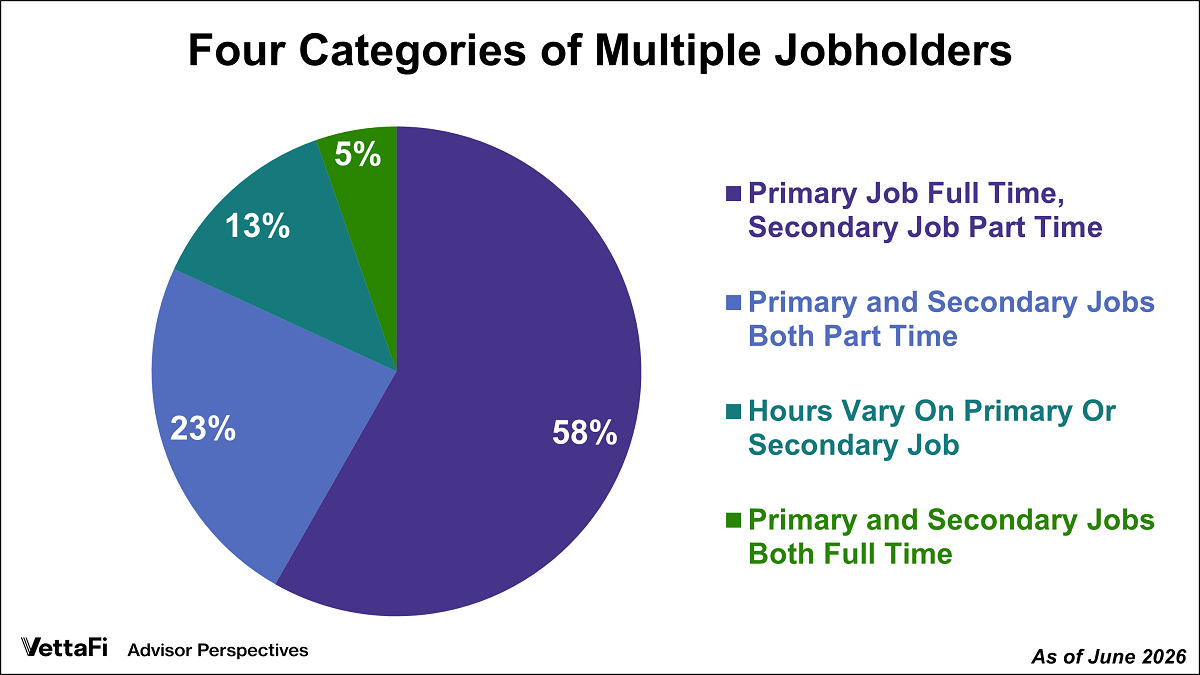
Long-Term Trends for Multiple Jobholders in the US: June 2026
by Jennifer Nash, 7/9/26
Multiple jobholders accounted for 5.2% of civilian employment in June.
More…
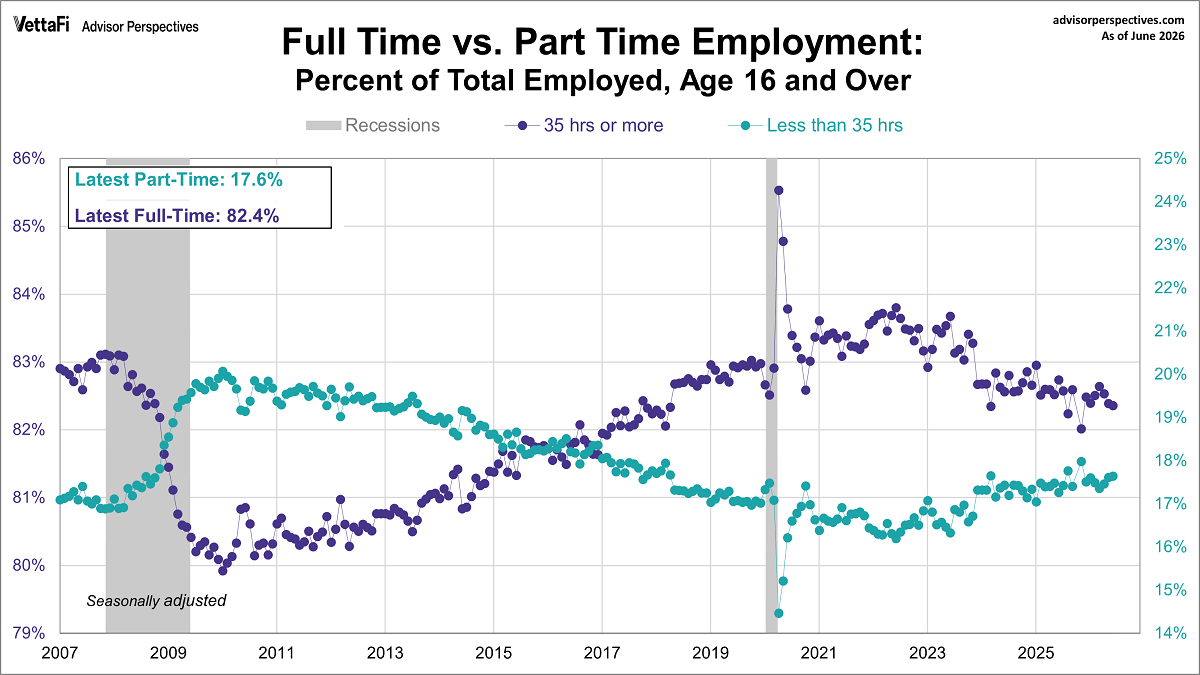
A Closer Look at Full-time and Part-time Employment: June 2026
by Jennifer Nash, 7/9/26
June's employment report showed that 17.6% of total employed workers were part time and 82.4% of total employed workers were full-time.
More…
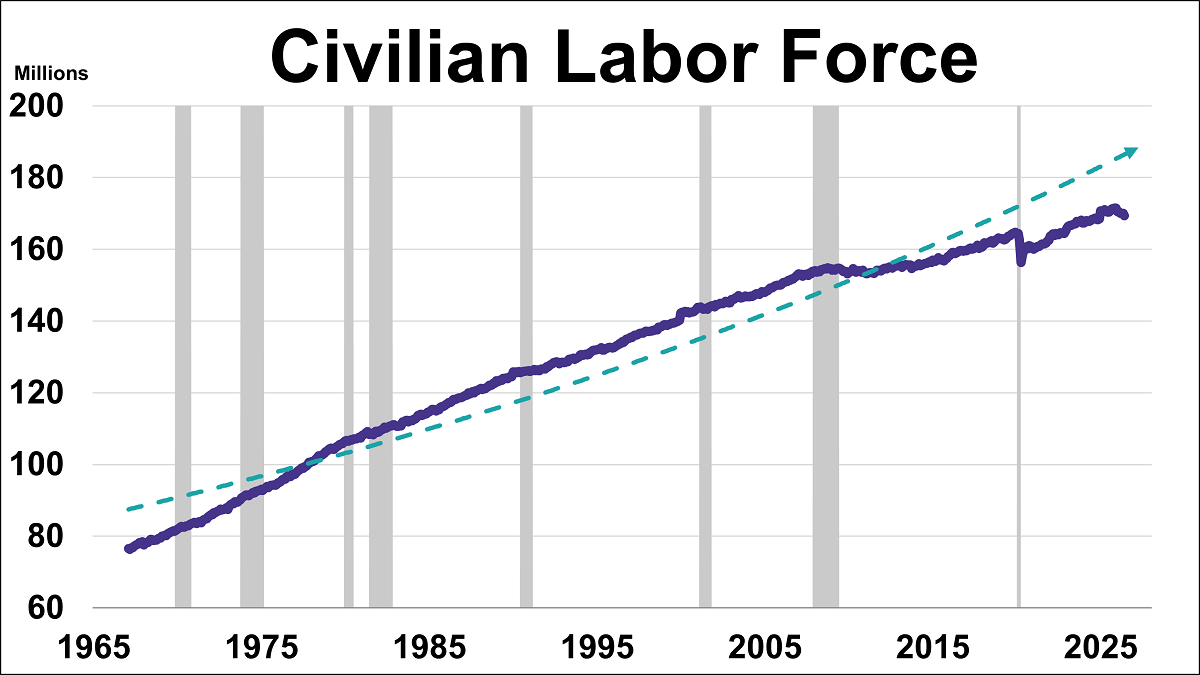
Unemployment Claims and the CLF as a Recession Indicator: June 2026
by Jennifer Nash, 7/9/26
What does the ratio of unemployment claims to the civilian labor force tell us about where we are in the business cycle and recession risk?
More…
Existing Home Sales Drop in June as Median Prices Hit All-Time High
by Jennifer Nash, 7/9/26
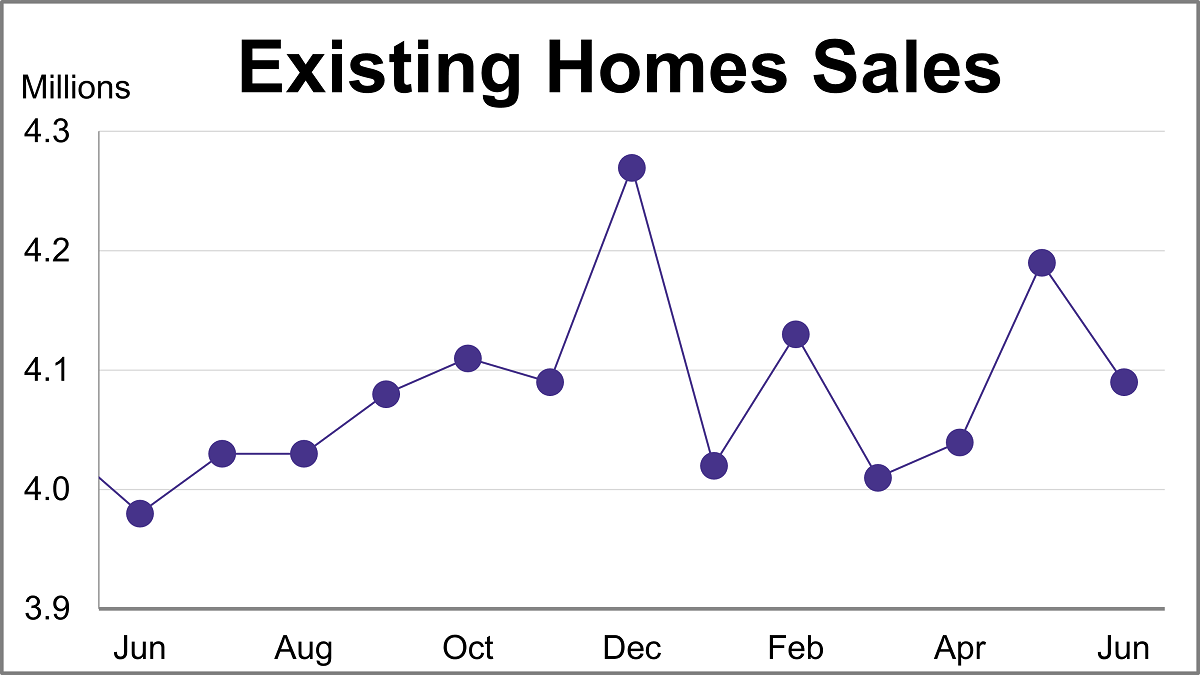
Existing home sales unexpectedly fell 2.4% in June as the median home price surged to a record high of $440,600.
More…
The S&P 500, Dow, and Nasdaq: Real Returns Since 2000 Peak (June 2026)
by Jennifer Nash, 7/8/26
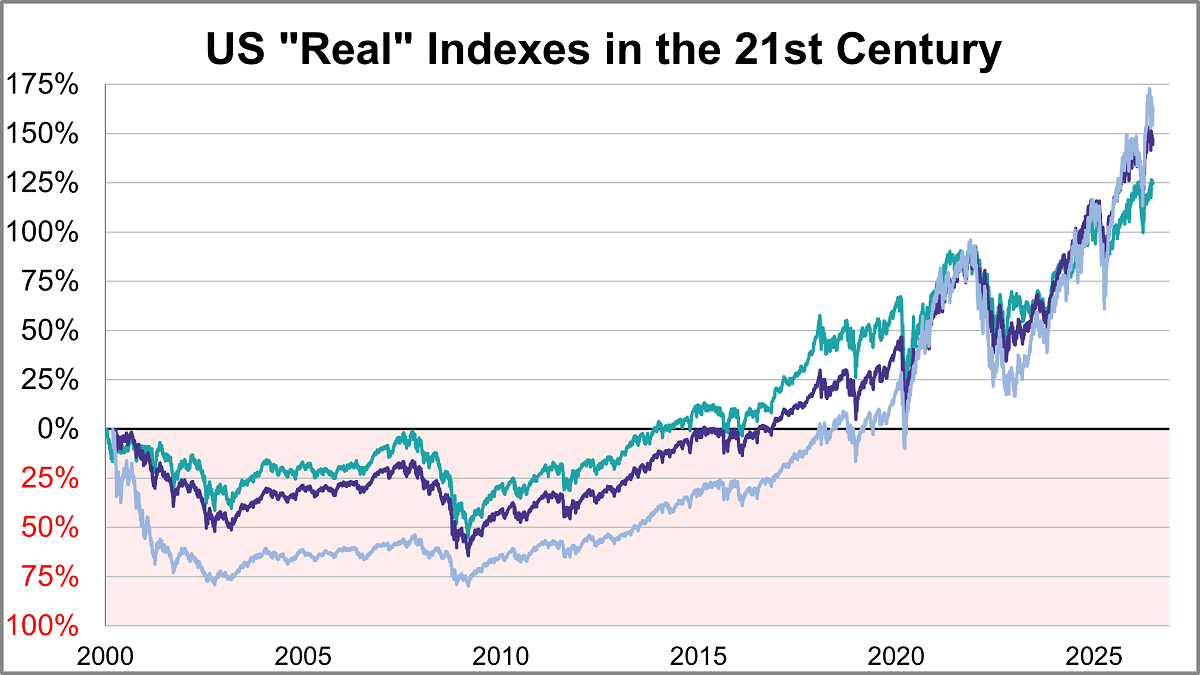
Here is a look at real (inflation-adjusted) charts of the S&P 500, Dow 30, and Nasdaq composite since their 2000 highs. We've updated this through the June 2026 close.
More…
Secular Bull and Bear Market Trends: June 2026
by Jennifer Nash, 7/8/26
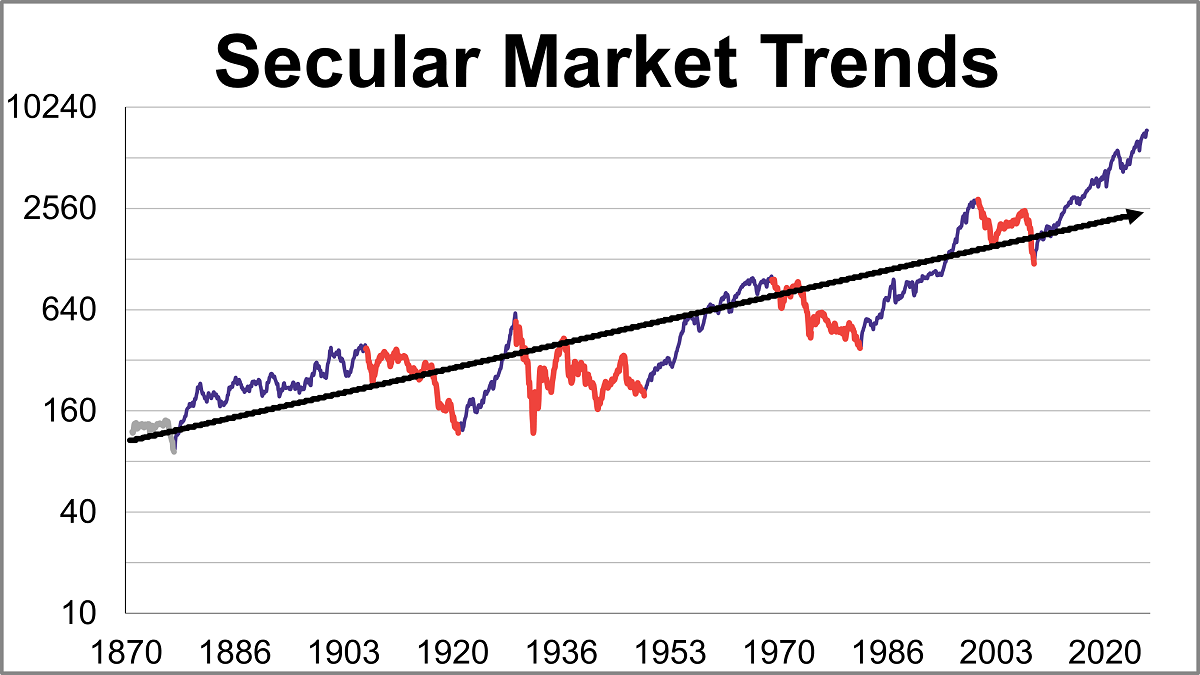
The S&P 500 real monthly averages of daily closes reached a its all-time high in May 2026. Let's examine the past to broaden our understanding of the range of historical bull and bear market trends in market performance.
More…
Buffett Valuation Indicator: June 2026
by Jennifer Nash, 7/8/26
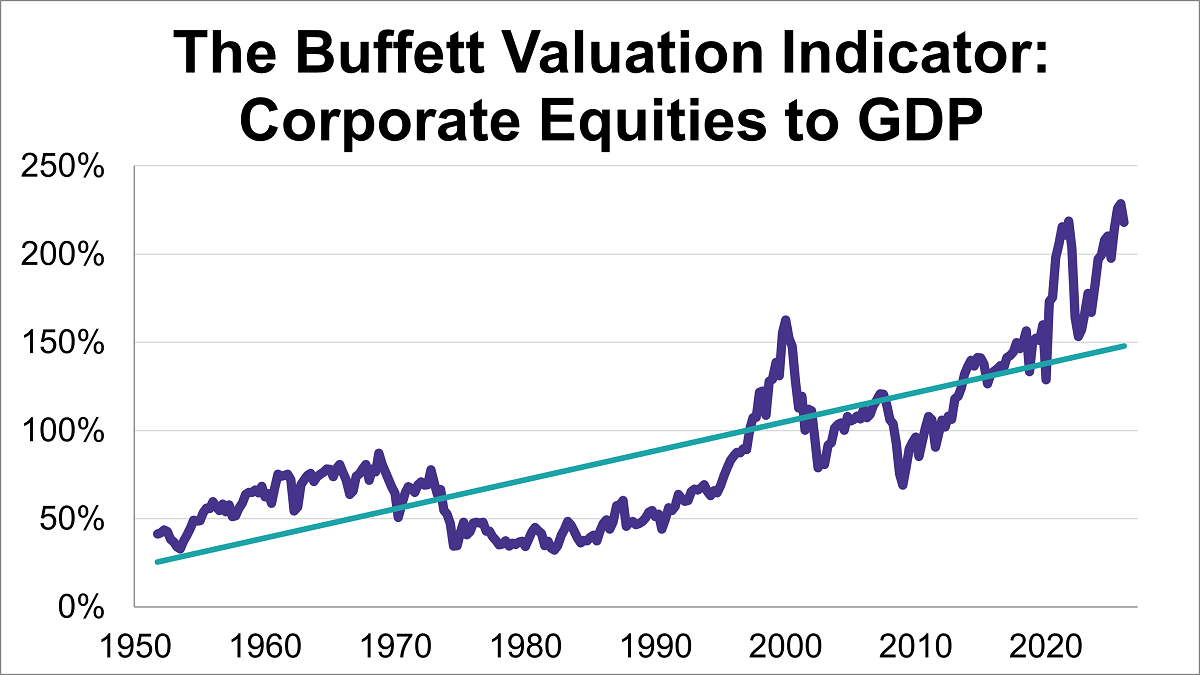
Following the Q1 GDP third estimate, the 'Buffett Indicator'—the ratio of corporate equities to GDP—now stands at 218.1%. This marks the fourth-highest reading in history.
More…
Short-Term Energy Outlook: July 2026
by Jennifer Nash, 7/7/26
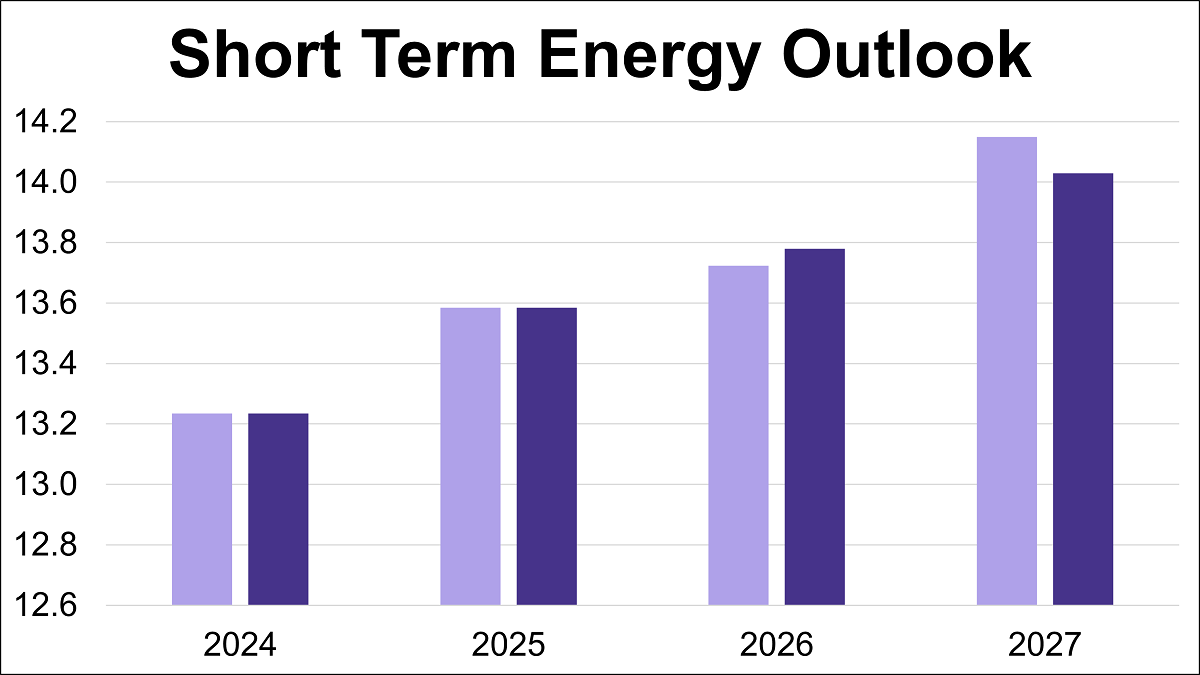
The U.S. Energy Information Administration (EIA) has released its latest Short-Term Energy Outlook (STEO), providing forecasts for energy markets. This article presents the annual production outlooks for crude oil, natural gas, and natural gas liquids (NGLs), comparing the July 2026 projections against the previous month's estimates.
More…
Market Valuation, Inflation and Treasury Yields: June 2026
by Jennifer Nash, 7/7/26
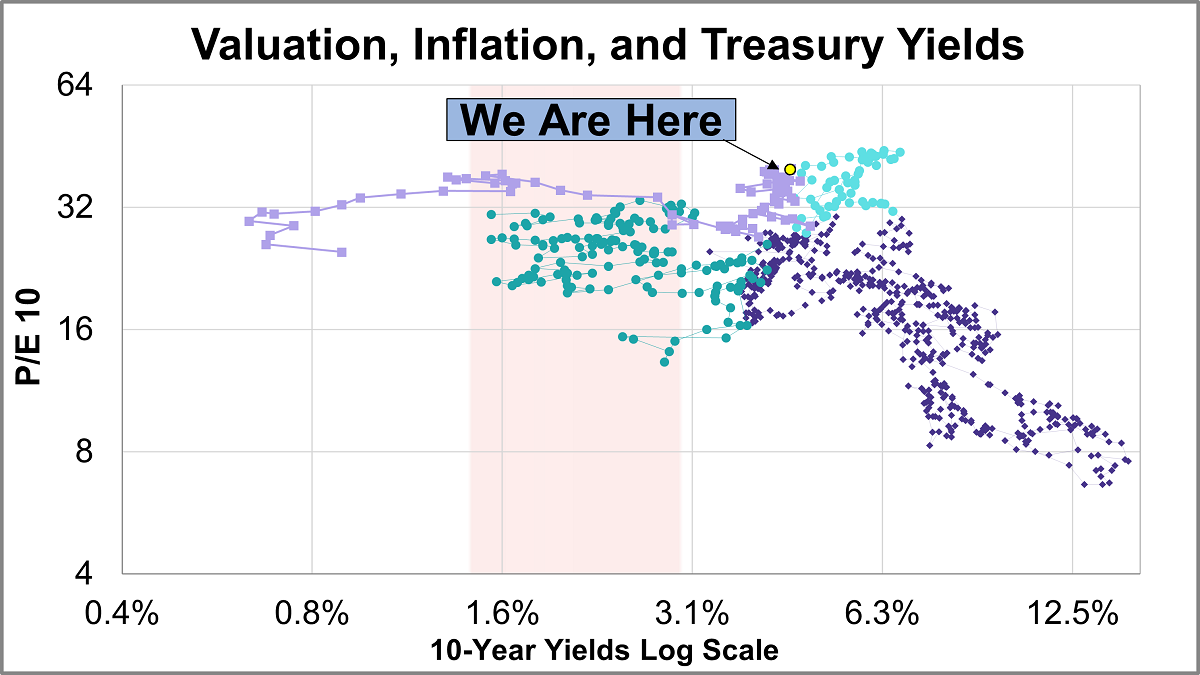
Our monthly market valuation updates have long had the same conclusion: US stock indexes are significantly overvalued, which suggests cautious expectations for investment returns. This analysis focuses on the P/E10 ratio, key indicator of market valuation, and its correlation with inflation and the 10-year Treasury yield.
More…
P/E10 and Market Valuation: June 2026
by Jennifer Nash, 7/7/26
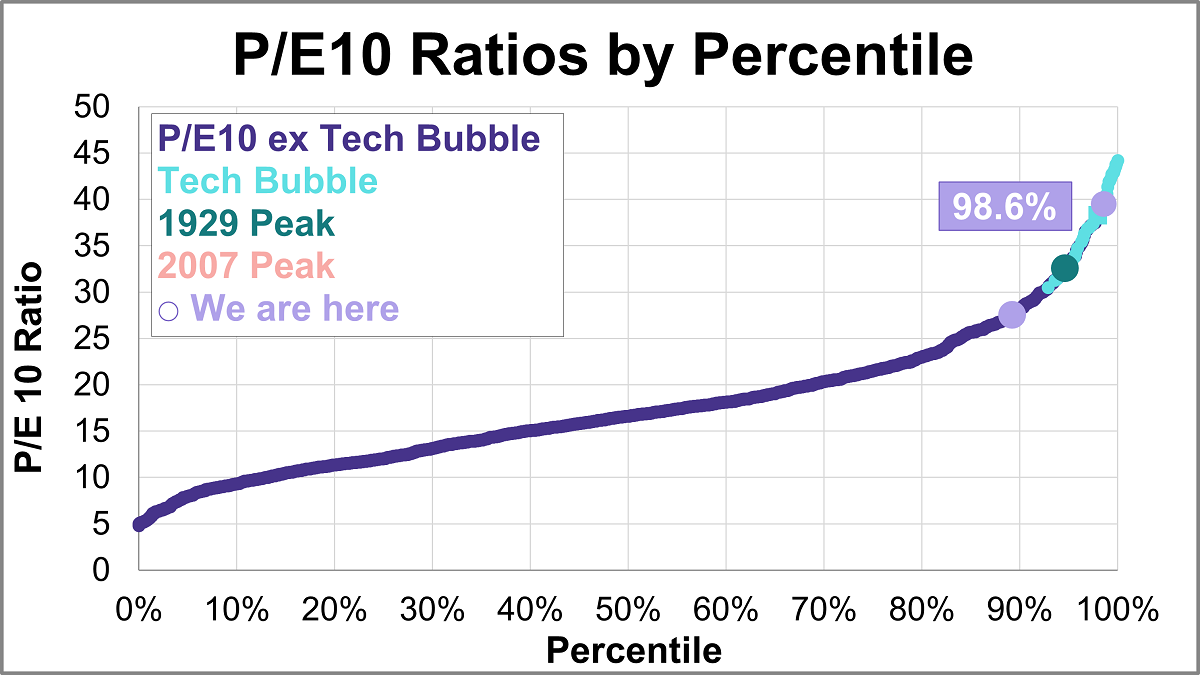
Here is the latest update of a popular market valuation method, Price-to-Earnings (P/E) ratio, using the most recent Standard & Poor's "as reported" earnings and earnings estimates, and the index monthly average of daily closes for the past month. The latest trailing twelve months (TTM) P/E ratio is 25.3 and the latest P/E10 ratio is 39.5.
More…
Trade Deficit Expands Over 40% in May
by Jennifer Nash, 7/7/26
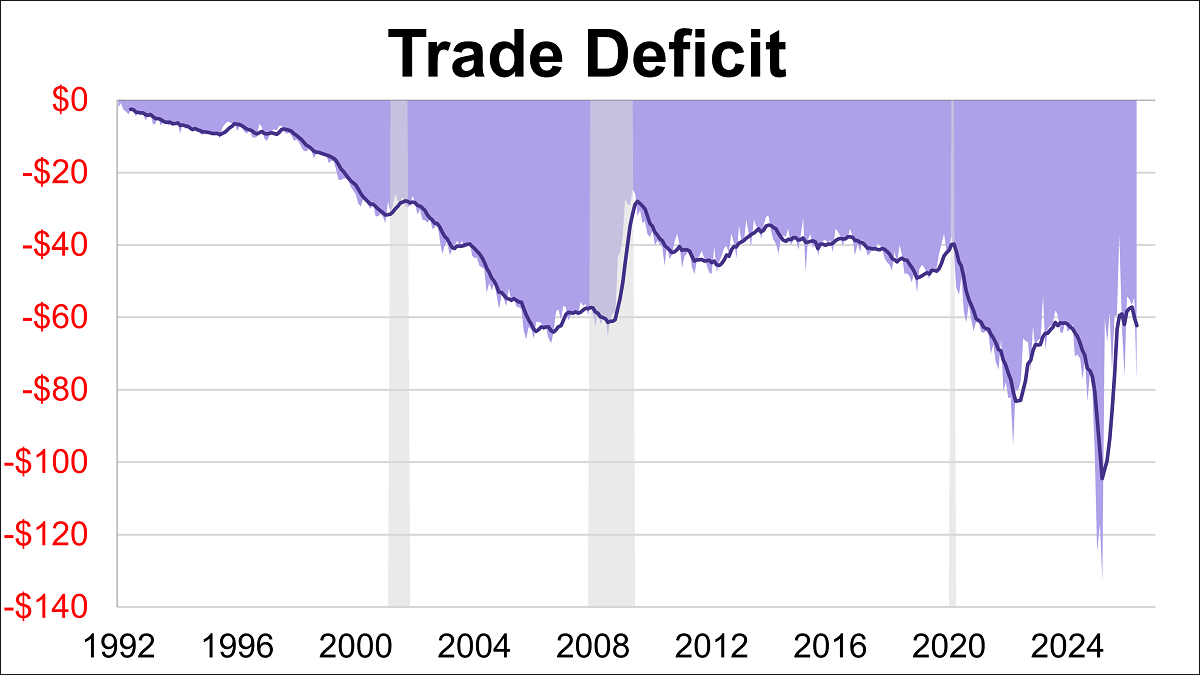
The U.S. trade deficit expanded over 40% in May to $77.59B, its widest gap since March 2025. The latest reading missed the forecast of -$78.30B.
More…
S&P Global Services PMI: Growth Reaches 4-Month High
by Jennifer Nash, 7/6/26
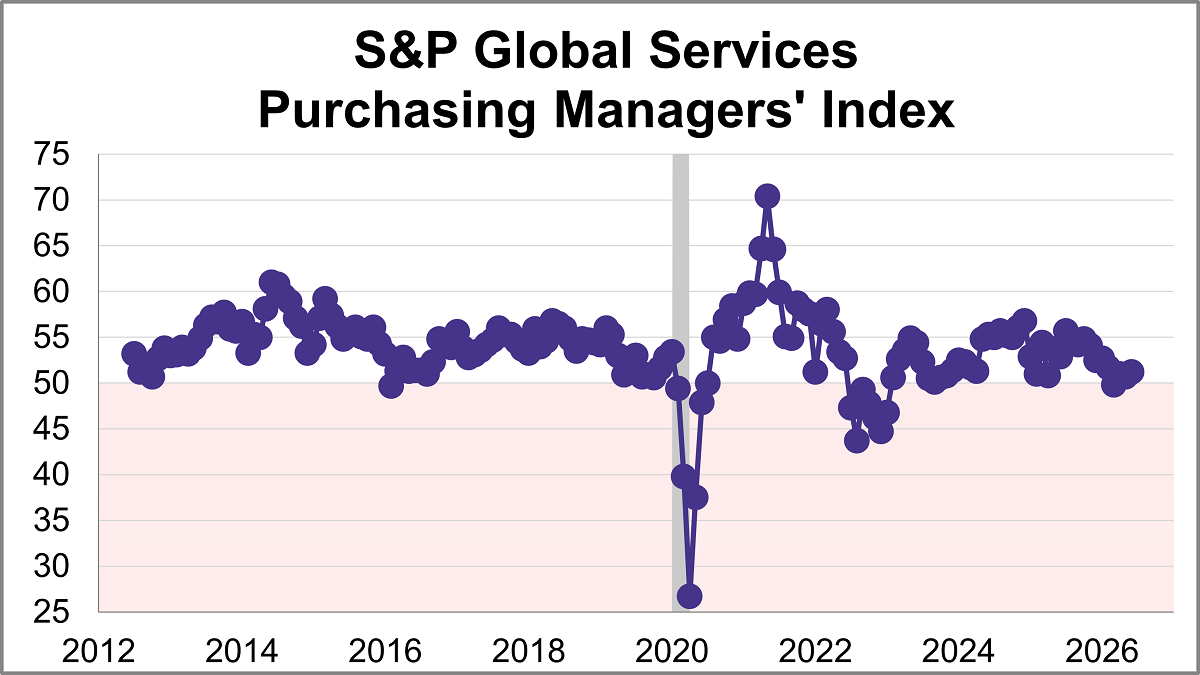
The June U.S. Services Purchasing Managers' Index (PMI) from S&P Global rose 0.5 points to 51.2, indicating a modest rise in service sector activity. The latest reading was just below the forecast of 51.3 and marked the strongest expansion in four months.
More…
ISM Services PMI: Continued Expansion in June
by Jennifer Nash, 7/6/26
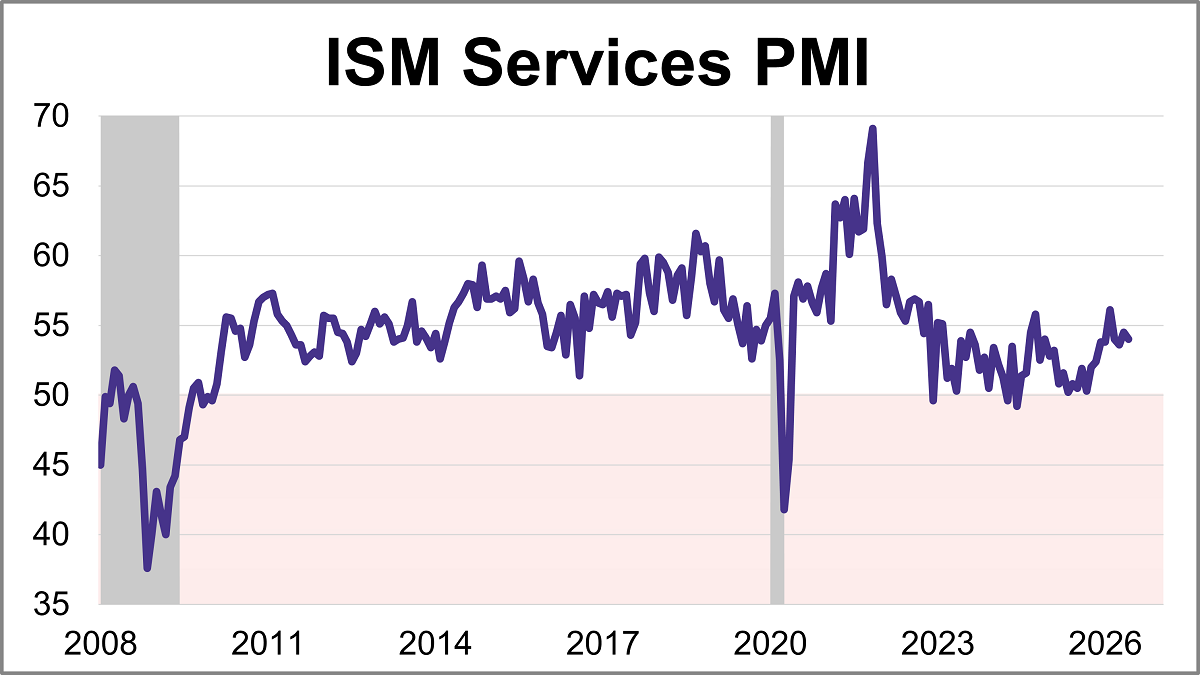
The Institute for Supply Management (ISM) released its June Services Purchasing Managers' Index (PMI), with the headline composite index at 54.0. This was slightly lower than the forecast of 54.2 but keeps the index in expansion territory for a 24th consecutive month.
More…
America's Driving Habits: May 2026
by Jennifer Nash, 7/2/26
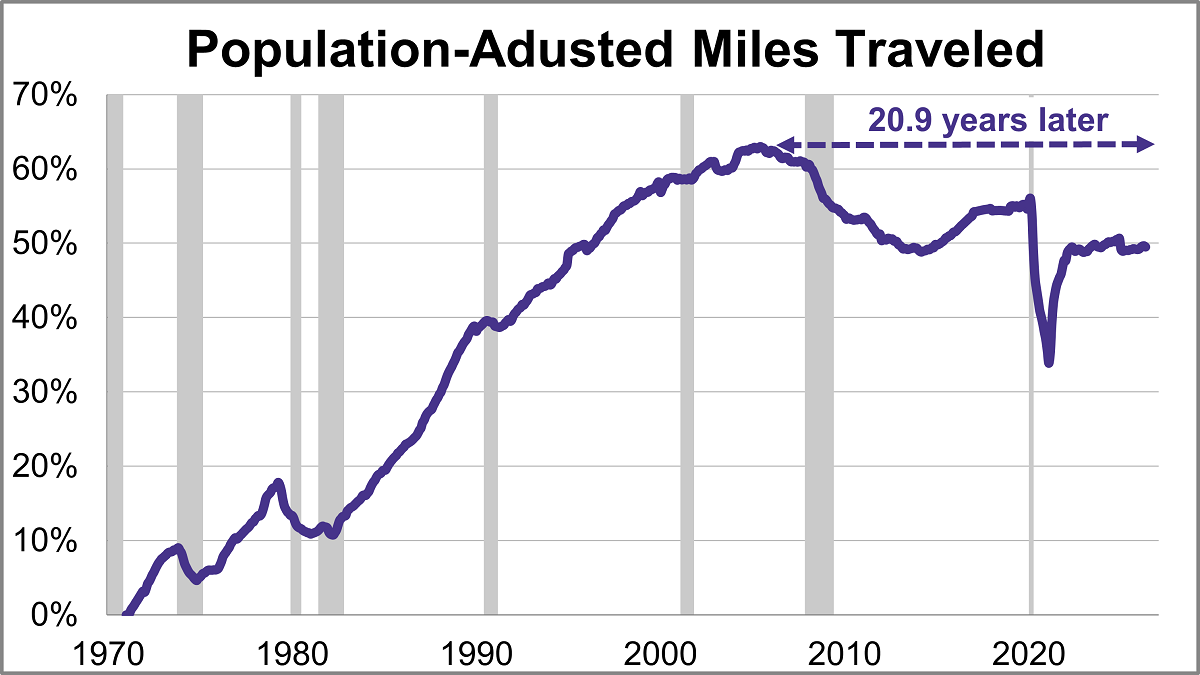
Travel on all roads and streets decreased in May. The 12-month moving average was down 0.06% month-over-month but was up 0.93% year-over-year. However, if we factor in population growth, the 12-month MA of the civilian population-adjusted data (age 16-and-over) was down 0.10% month-over-month and up 0.32% year-over-year.
More…
Vehicle Sales Reach 9-Month High in June
by Jennifer Nash, 7/2/26
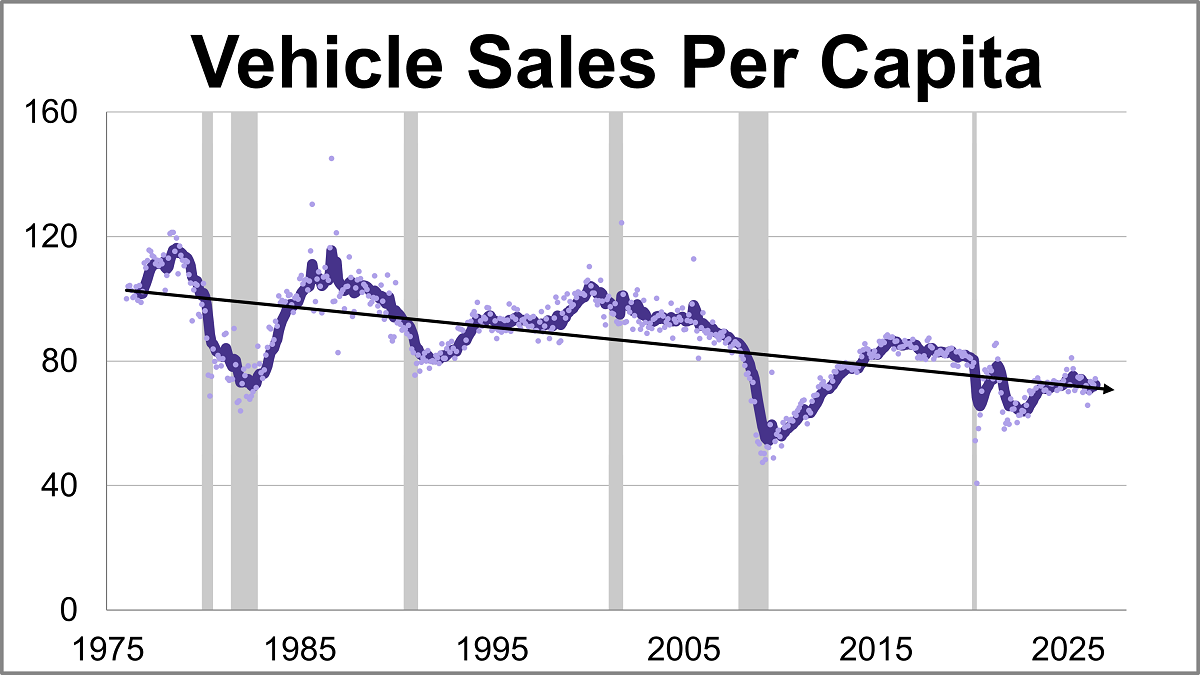
Vehicle sales rose to their highest level in nine months in June, coming in at a seasonally adjusted annual rate of 16.523 million units. This represents a 2.8% increase from the previous month and a 4.4% rise from one year ago.
More…
10-Year Treasury Yield Long-Term Perspective: June 2026
by Jennifer Nash, 7/1/26
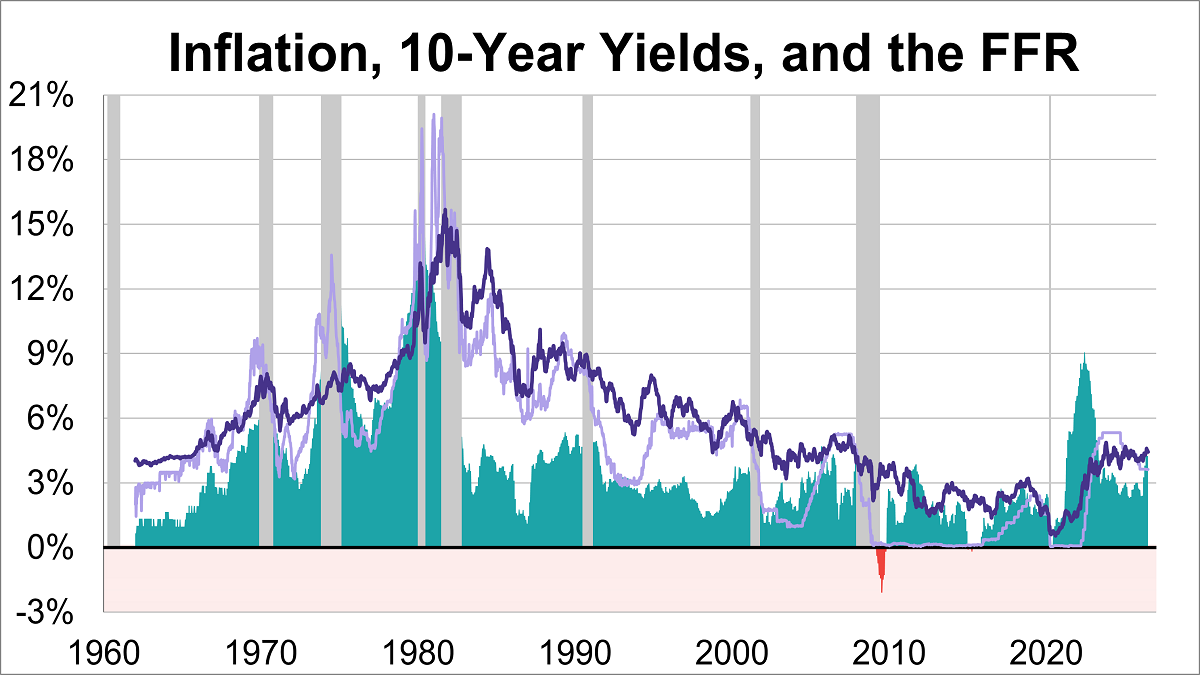
The 10-year Treasury yield has experienced dramatic fluctuations, ranging from a peak of 15.68% in October 1981, during the height of the Volcker era, to a historic low of 0.55% in August 2020, amidst the economic uncertainty of the pandemic. At the end of June 2026, the weekly average stood at 4.44%.
More…
ISM Manufacturing PMI: Slightly Slower Expansion in June
by Jennifer Nash, 7/1/26
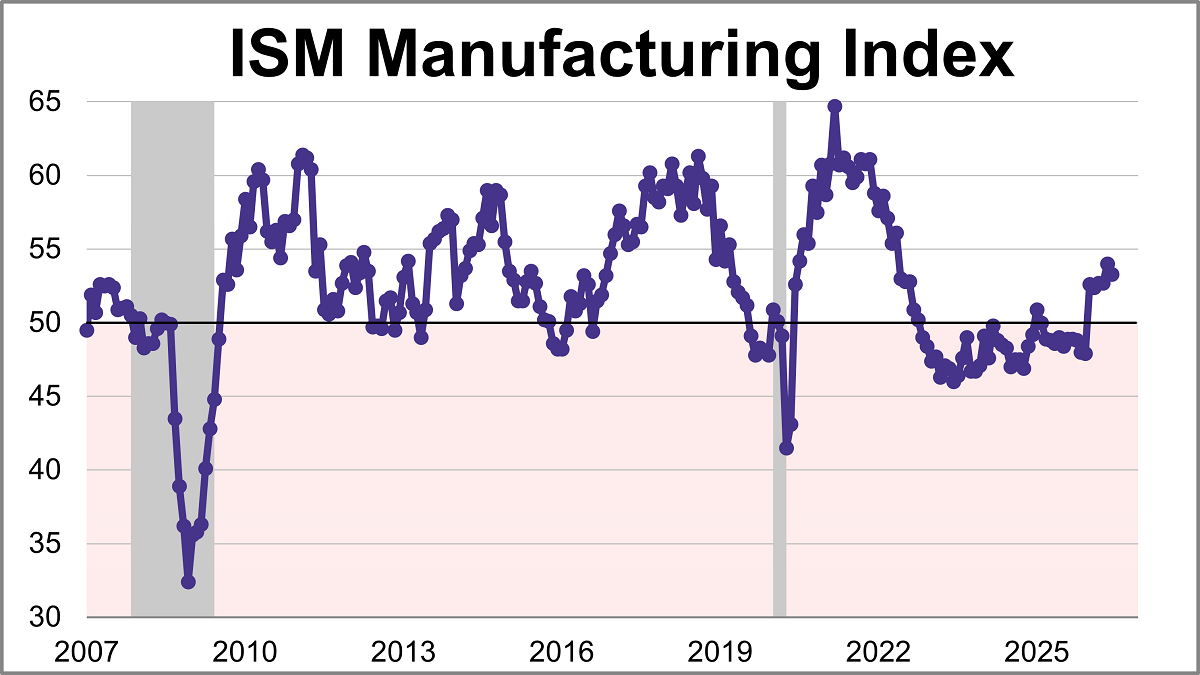
The Institute for Supply Management (ISM) manufacturing purchasing managers index (PMI) came in at 53.3 in June, down from 54.0 in May, marking slightly slower growth. The latest reading was just below the 53.8 forecast and is the index's sixth straight month in expansion territory.
More…
S&P Global US Manufacturing PMI™: Growth Slips to 3-Month Low Despite Expansion
by Jennifer Nash, 7/1/26
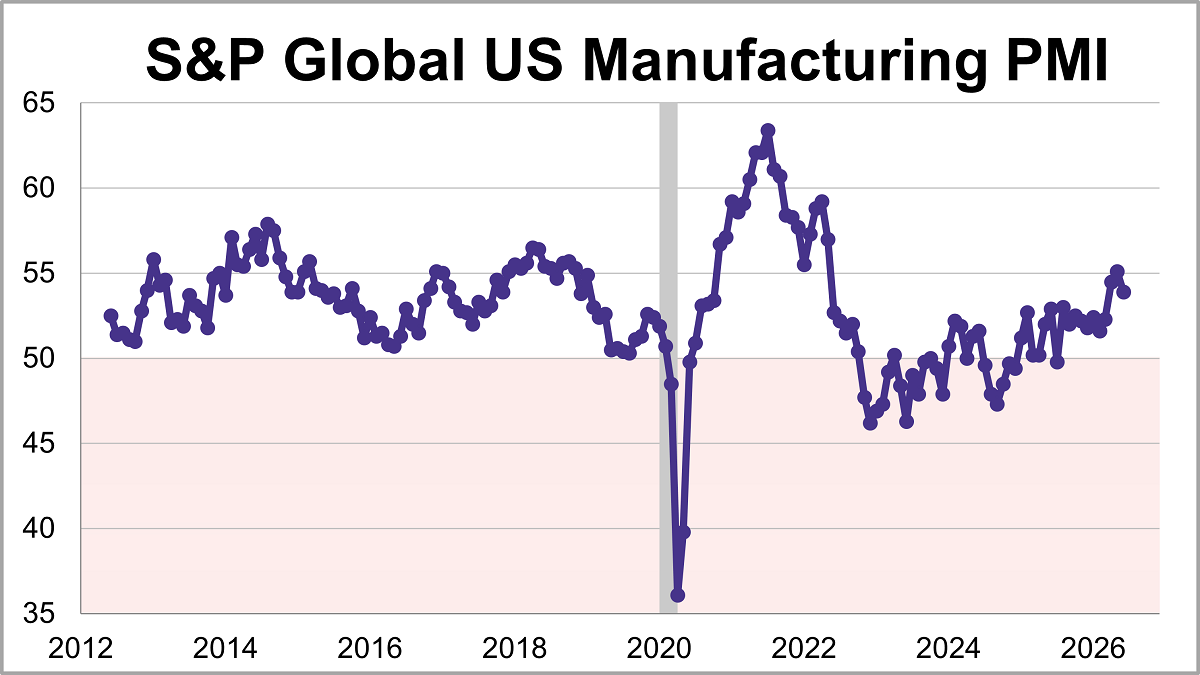
U.S. manufacturing expanded for an eleventh straight month in June but the growth eased to its lowest level in three months. The S&P Global PMI fell 1.2 points to 53.9 last month, falling short of the 55.7 forecast.
More…
ADP National Employment Report: 98K Private Jobs Added in June
by Jennifer Nash, 7/1/26
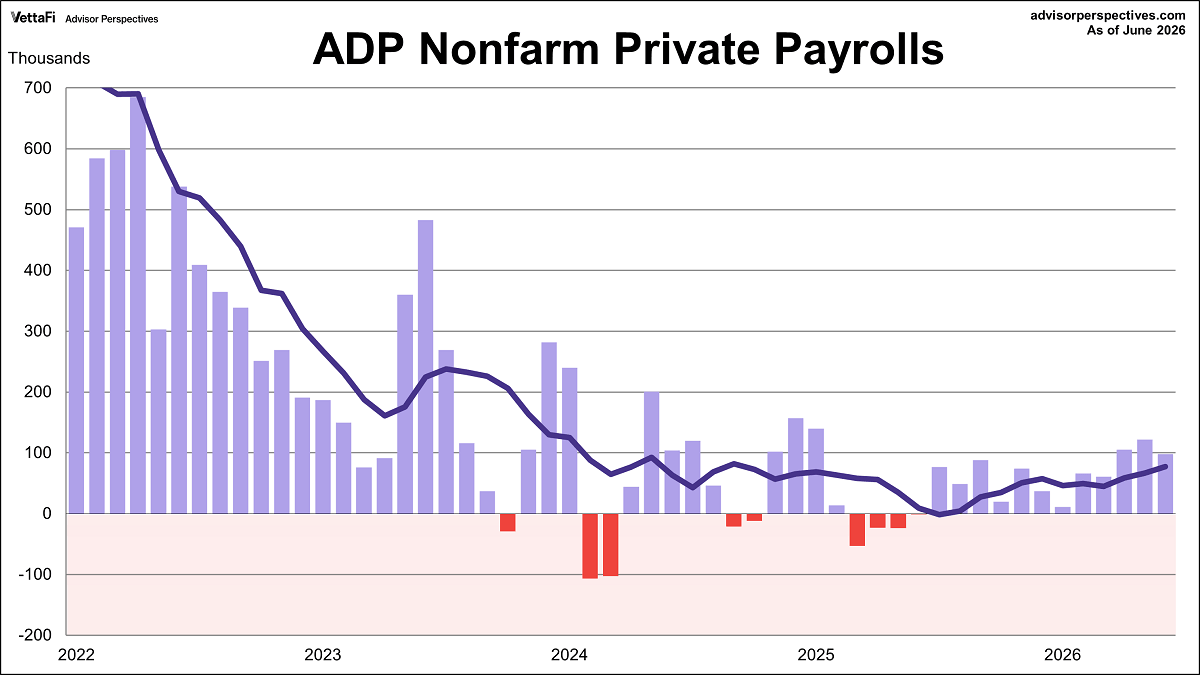
The ADP employment report revealed that 98,000 nonfarm private jobs were added in June, the twelfth straight month of growth. However, the latest figure was below the projected 118,000 addition.
More…
Two Measures of Consumer Attitudes: June 2026
by Jennifer Nash, 6/30/26
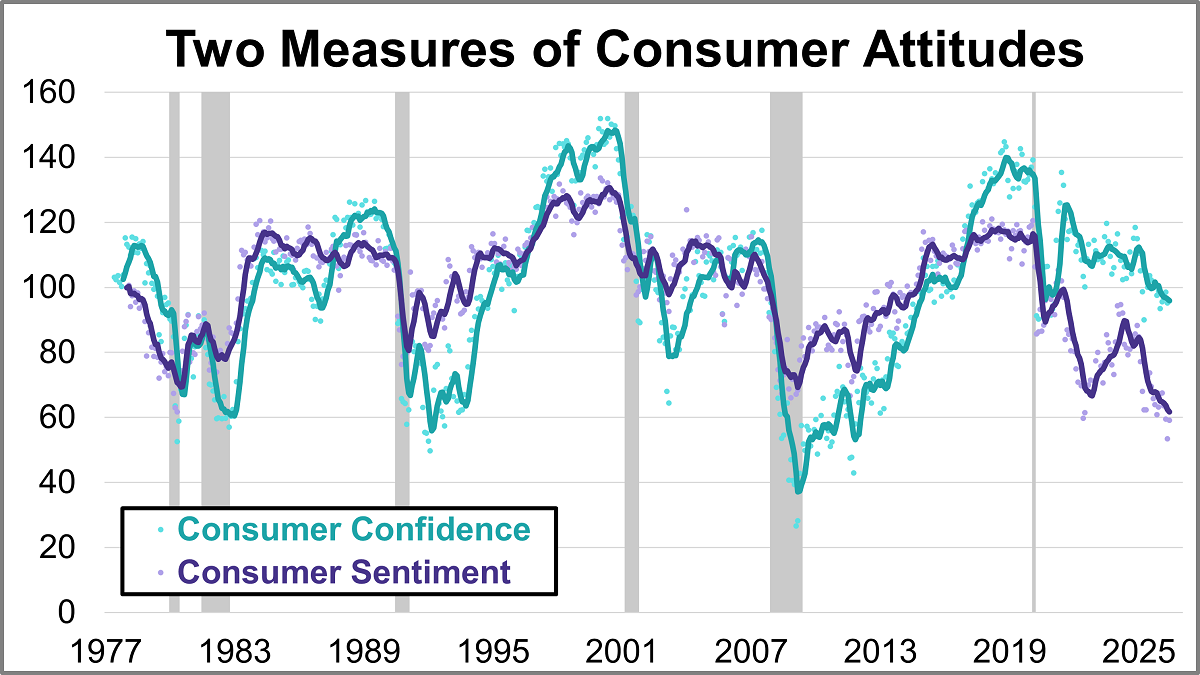
What are consumers thinking about the economy? Their collective mood offers crucial clues for businesses, investors, and policymakers alike. In June, the two leading benchmarks, the University of Michigan’s Consumer Sentiment Index (MCSI) and the Conference Board’s Consumer Confidence Index (CCI), offered similar views with both showing slight improvement despite ongoing inflation concerns.
More…
Chicago PMI Cools in June but Maintains Expansion
by Jennifer Nash, 6/30/26
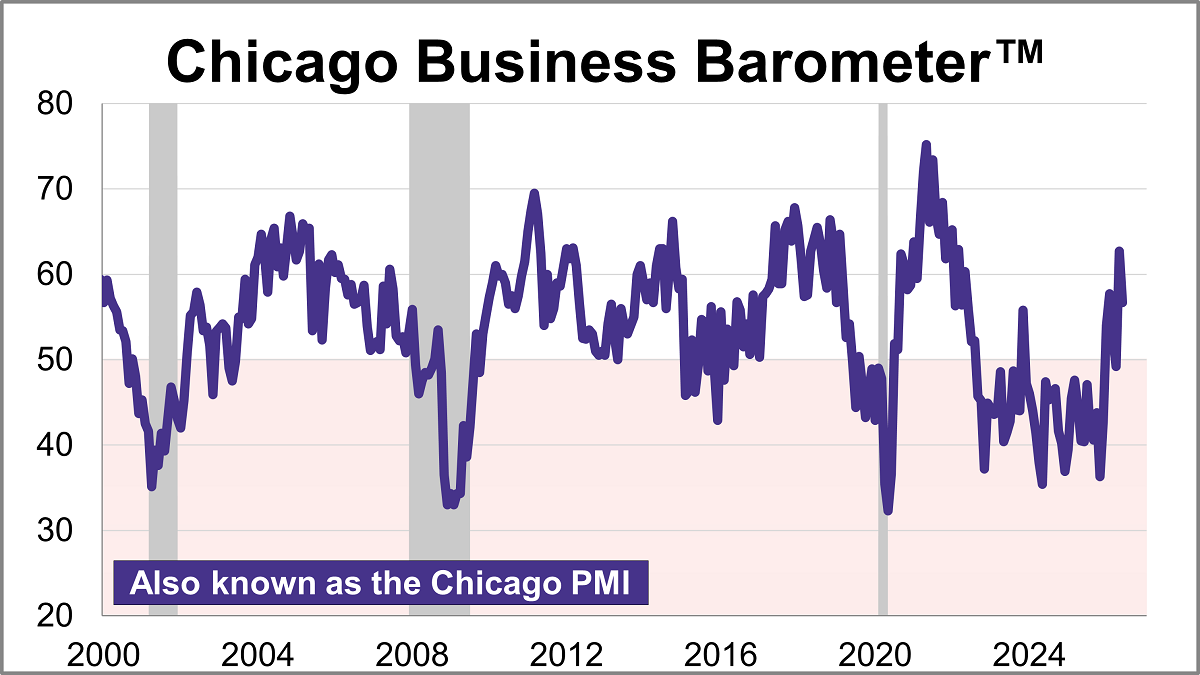
The Chicago Purchasing Managers’ Index cooled 6.0 points in June to 56.7, signaling an expansion in regional business activity for a second straight month. The latest reading was higher than the projected 55.7.
More…
Job Openings Reach 2-Year High in May
by Jennifer Nash, 6/30/26
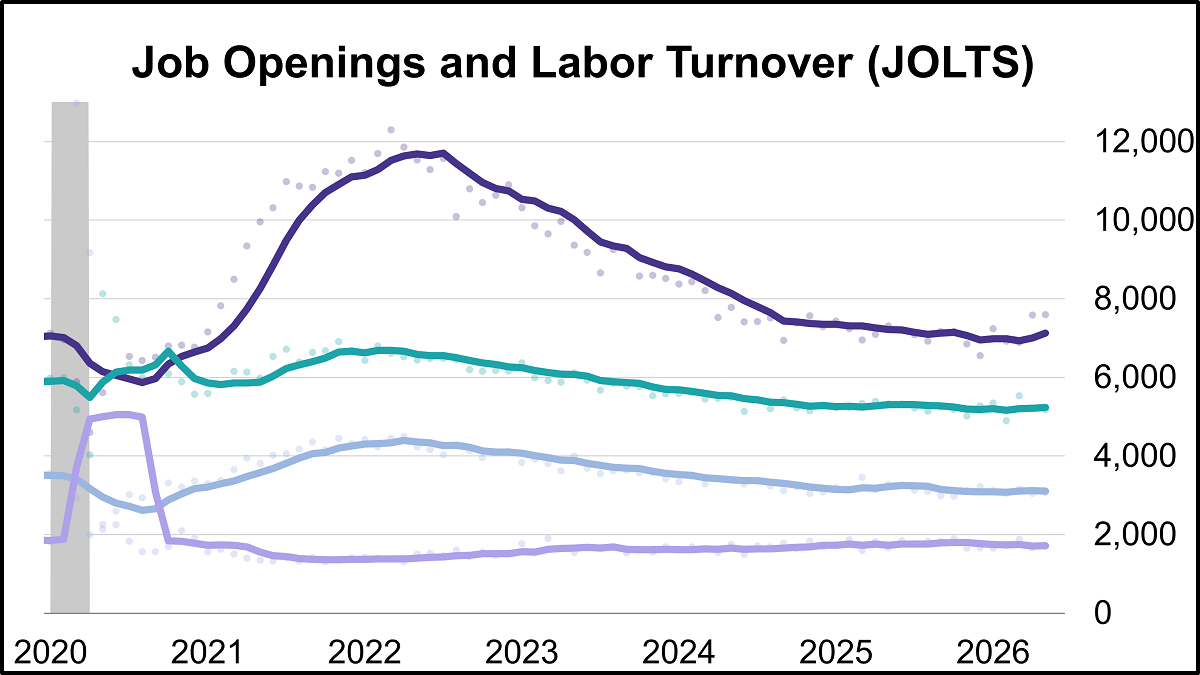
Job openings reached their highest level in two years in May, hitting 7.594 million vacancies according to the latest Job Openings and Labor Turnover Survey (JOLTS). The latest reading was higher than the projected 7.280 million openings.
More…
Real Disposable Income Per Capita Up 0.2% in May
by Jennifer Nash, 6/25/26
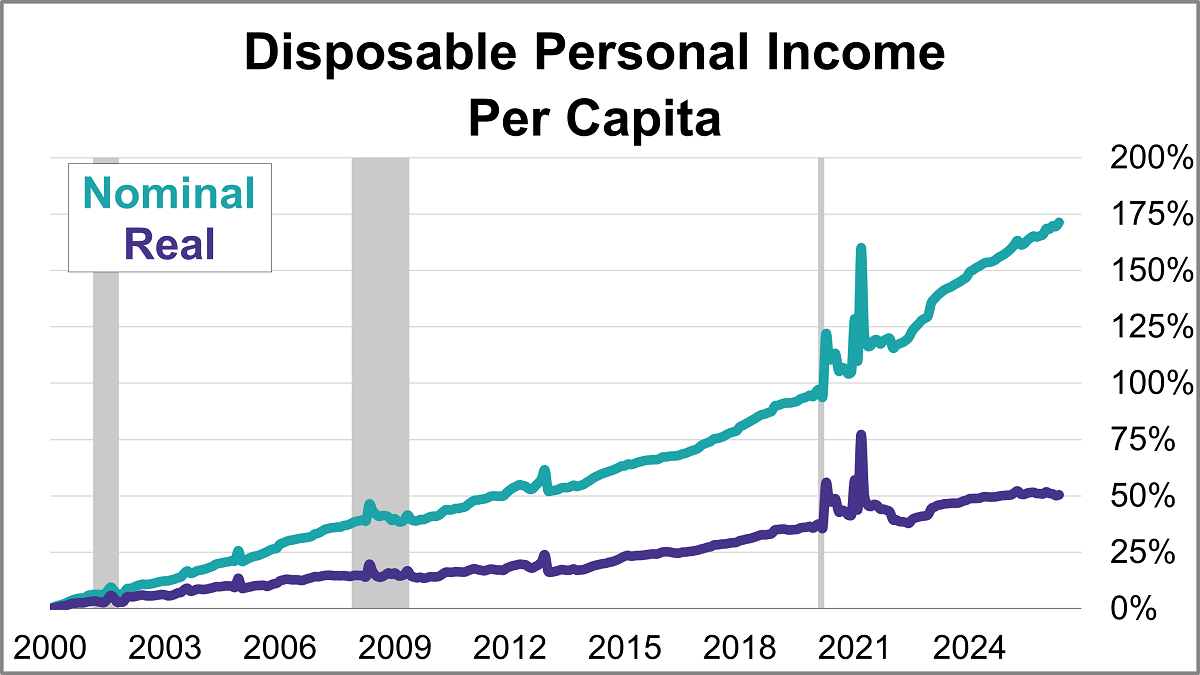
With the release of May's report on personal incomes and outlays, we can now take a closer look at "real" disposable personal income per capita. To two decimal places, disposable income per capita was up up 0.68% month-over-month. But when adjusted for inflation, real disposable income per capita was up 0.23%.
More…
An Inside Look at the Q1 2026 GDP Third Estimate
by Jennifer Nash, 6/25/26
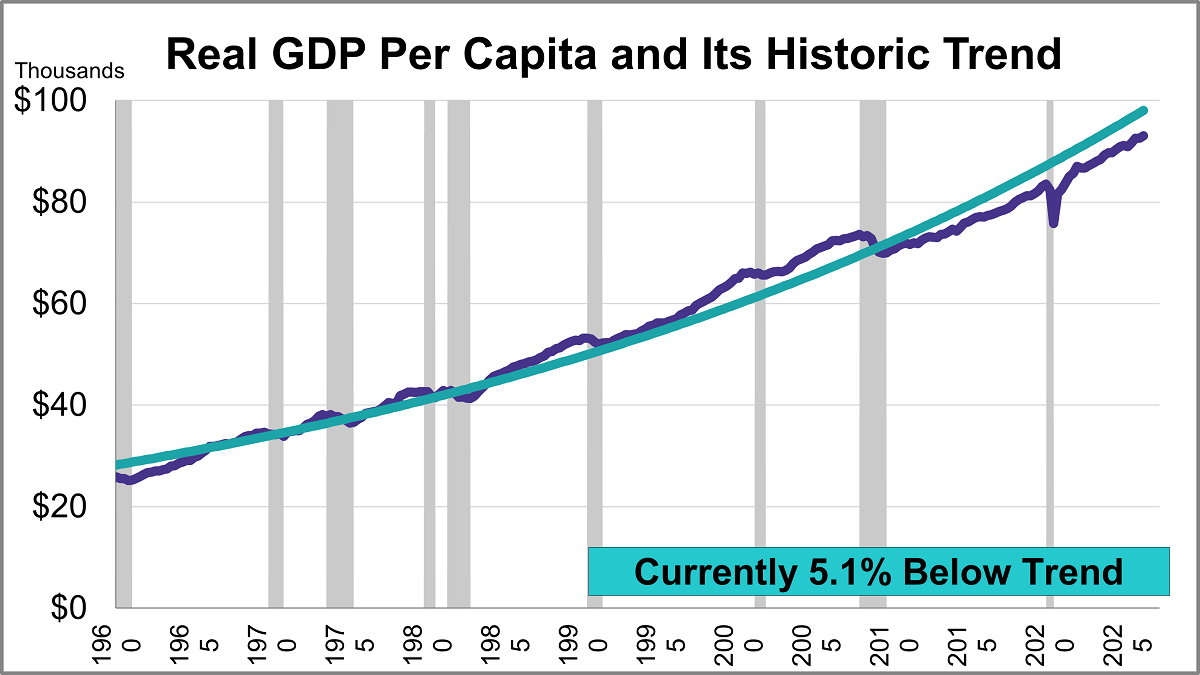
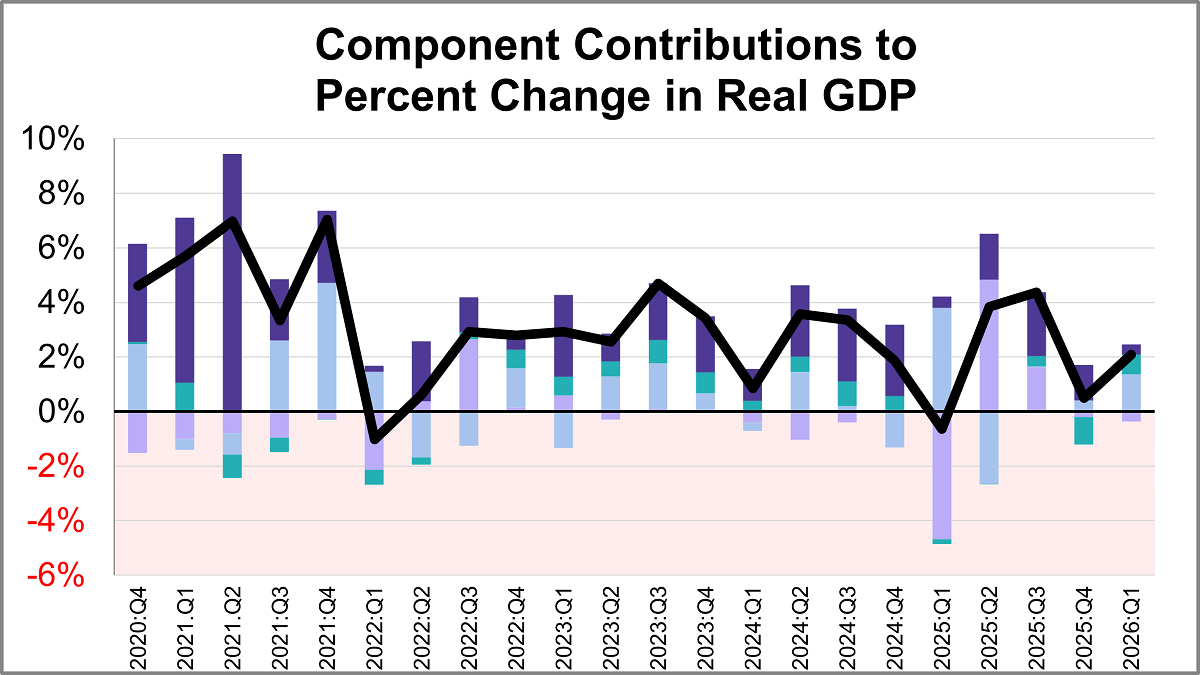
Real gross domestic product (GDP) is comprised of four major subcomponents. In the Q1 2026 GDP third estimate, three of the four components made positive contributions.
More…
The Total Return Roller Coaster: May 2026
by Jennifer Nash, 6/4/26
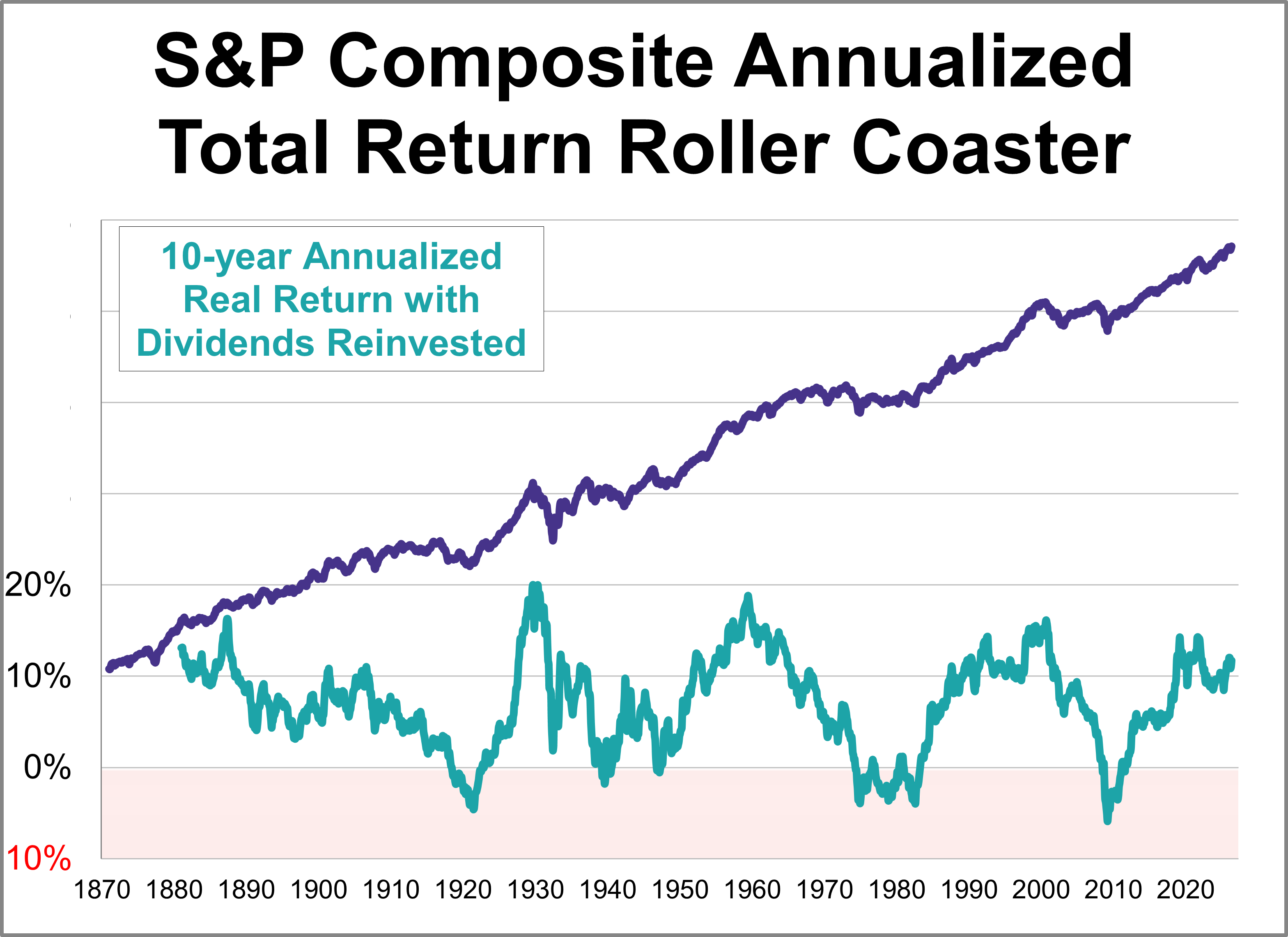
Here's an interesting set of charts that will especially resonate with those of us who follow economic and market cycles. Imagine that five years ago you invested $10,000 in the S&P 500. How much would it be worth today, with dividends reinvested but adjusted for inflation?
More…
Richmond Manufacturing Index Reaches Near 5-Year High
by Jennifer Nash, 5/27/26
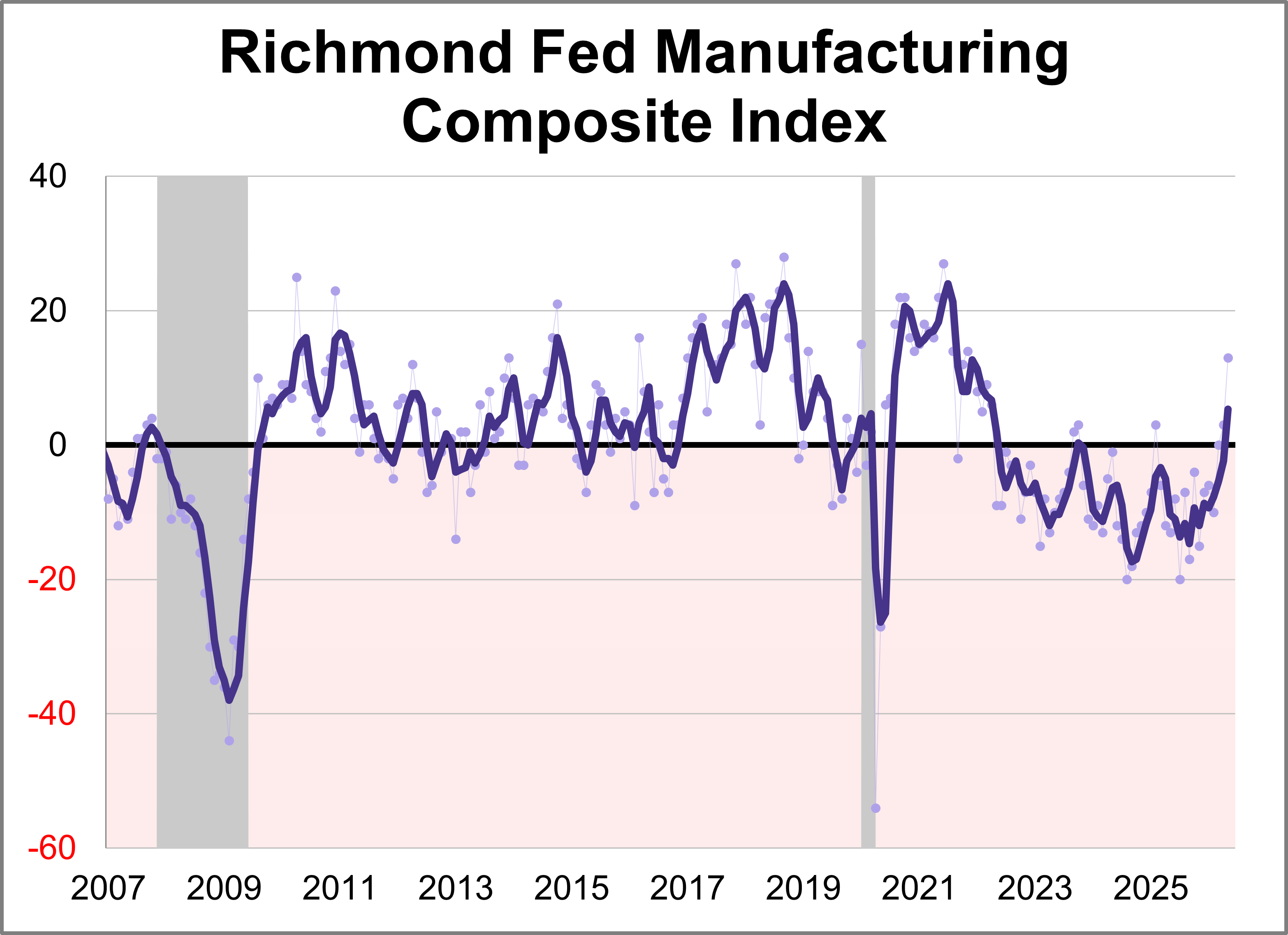
Fifth district manufacturing activity increased in May according to the most recent survey from the Federal Reserve Bank of Richmond. The composite manufacturing index rose ten points points to 13, marking the highest level in nearly five years. This month's reading was above the forecast of 4.
More…
Dallas Fed Manufacturing: Slower Growth in May
by Jennifer Nash, 5/26/26
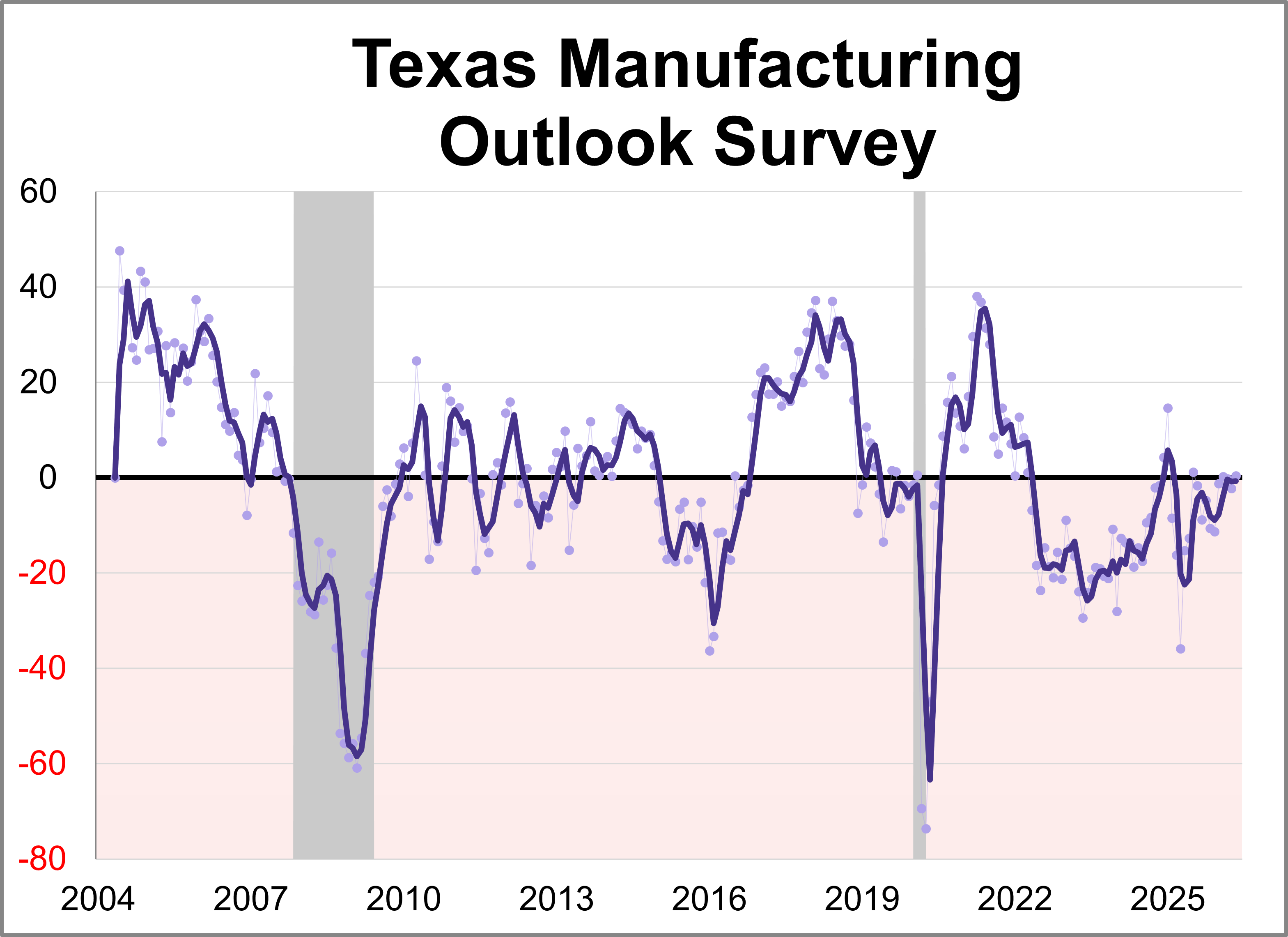
The Dallas Fed released its Texas Manufacturing Outlook Survey (TMOS) for May. The general business activity index rose 2.7 points to 0.4, indicating slower growth of manufacturing activity and stable business conditions perceptions.
More…
Kansas City Fed Manufacturing Index: Activity Continued to Increase in May
by Jennifer Nash, 5/21/26
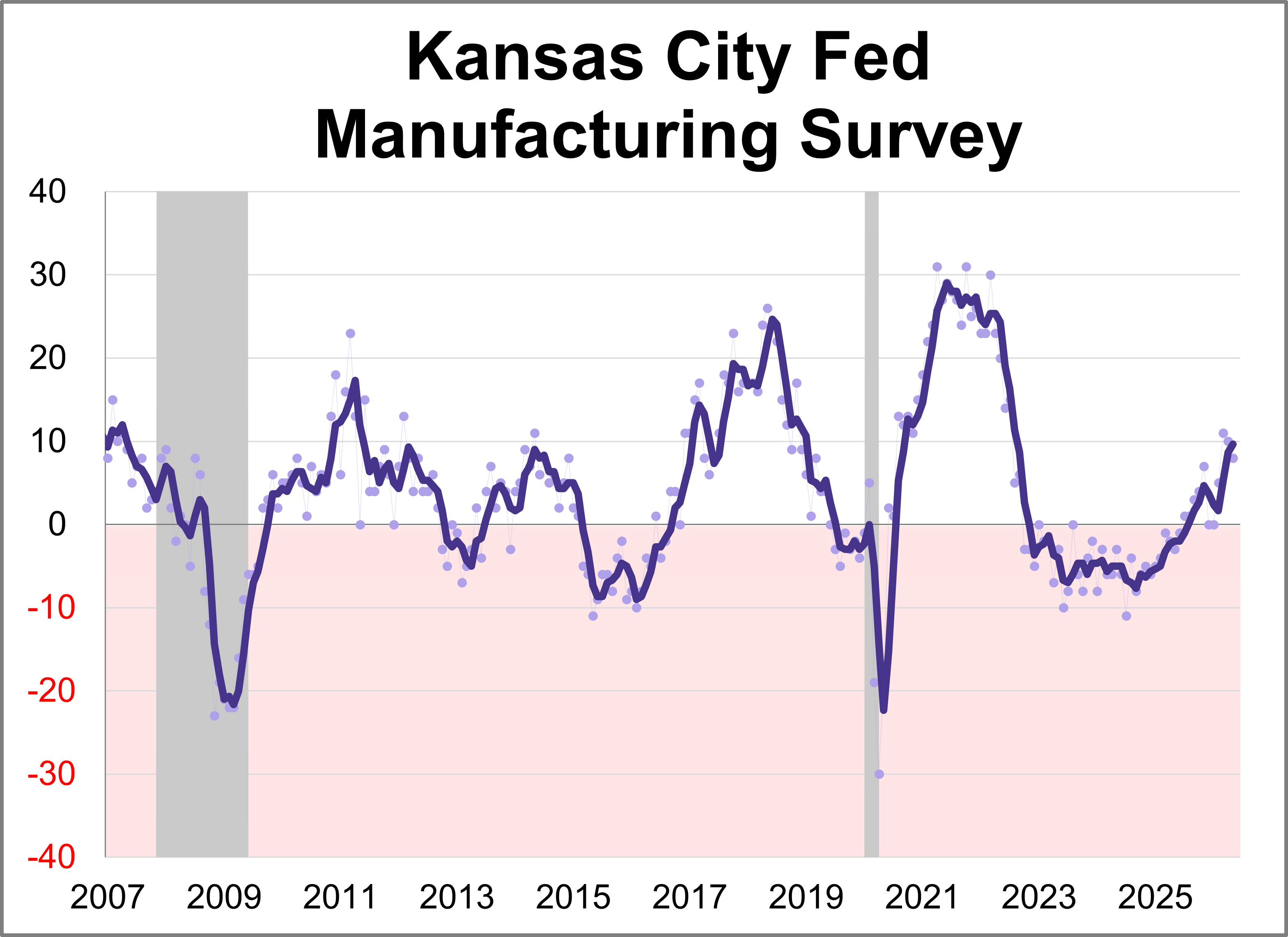
The Kansas City Fed Manufacturing Survey revealed regional activity continued to increase in May. The composite index came in at 8 this month, down slightly from 10 in April but still indicating continued expansion.
More…
Philadelphia Fed Manufacturing Index: Lowest Level of 2026
by Jennifer Nash, 5/21/26
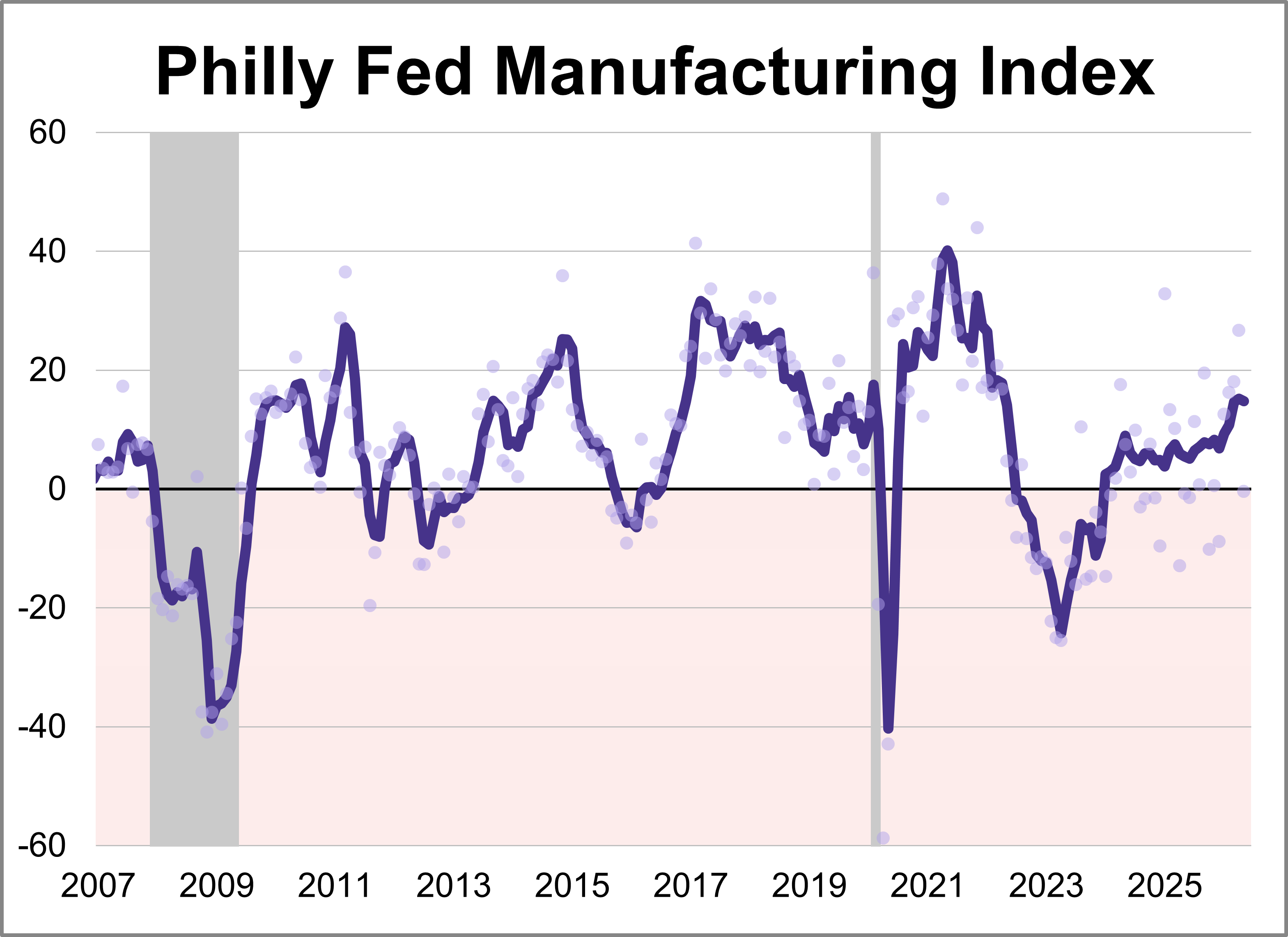
The latest Philadelphia Fed manufacturing index showed activity weakened in May, with the index sinking 27.1 points to -0.4. The latest reading marked the lowest level for the index this year and was worse than the forecast of 17.6.
More…
Gas Prices Cross the $4 Mark in Nearly Every State
by Jennifer Nash, 5/19/26
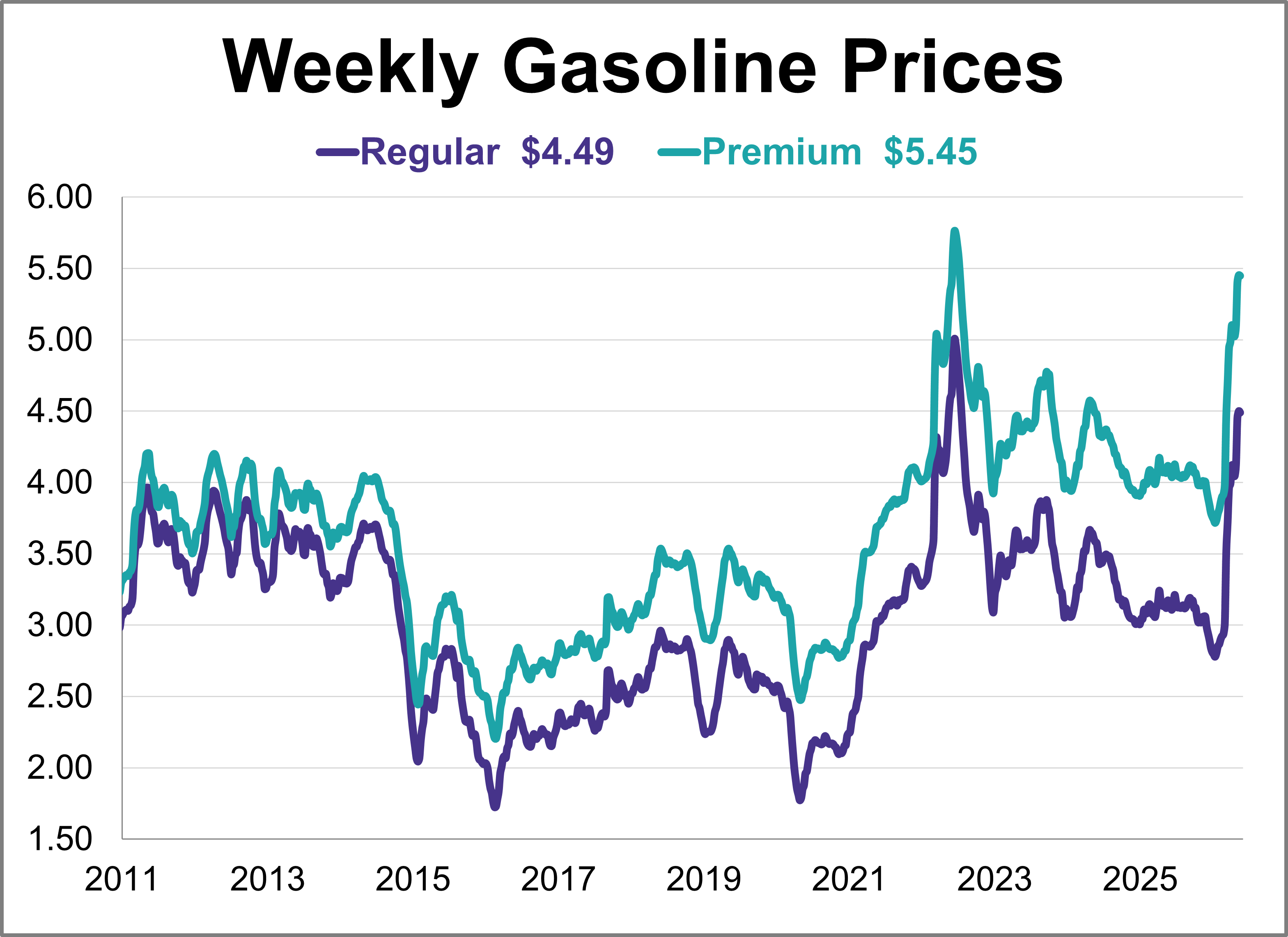
Gas prices were relatively flat this week, remaining at their highest level in nearly four years. As of May 18th, weekly prices were down 1 cent for regular and were unchanged for premium.
More…
Empire State Manufacturing Survey: Highest Level in Four Years
by Jennifer Nash, 5/15/26
Manufacturing activity grew strongly in New York State, according to the Empire State Manufacturing May survey. The diffusion index for General Business Conditions rose 8.6 points to 19.6, its highest level in over four years.
More…
Household Debt Rises to $18.79 Trillion in Q1 2026
by Jennifer Nash, 5/12/26
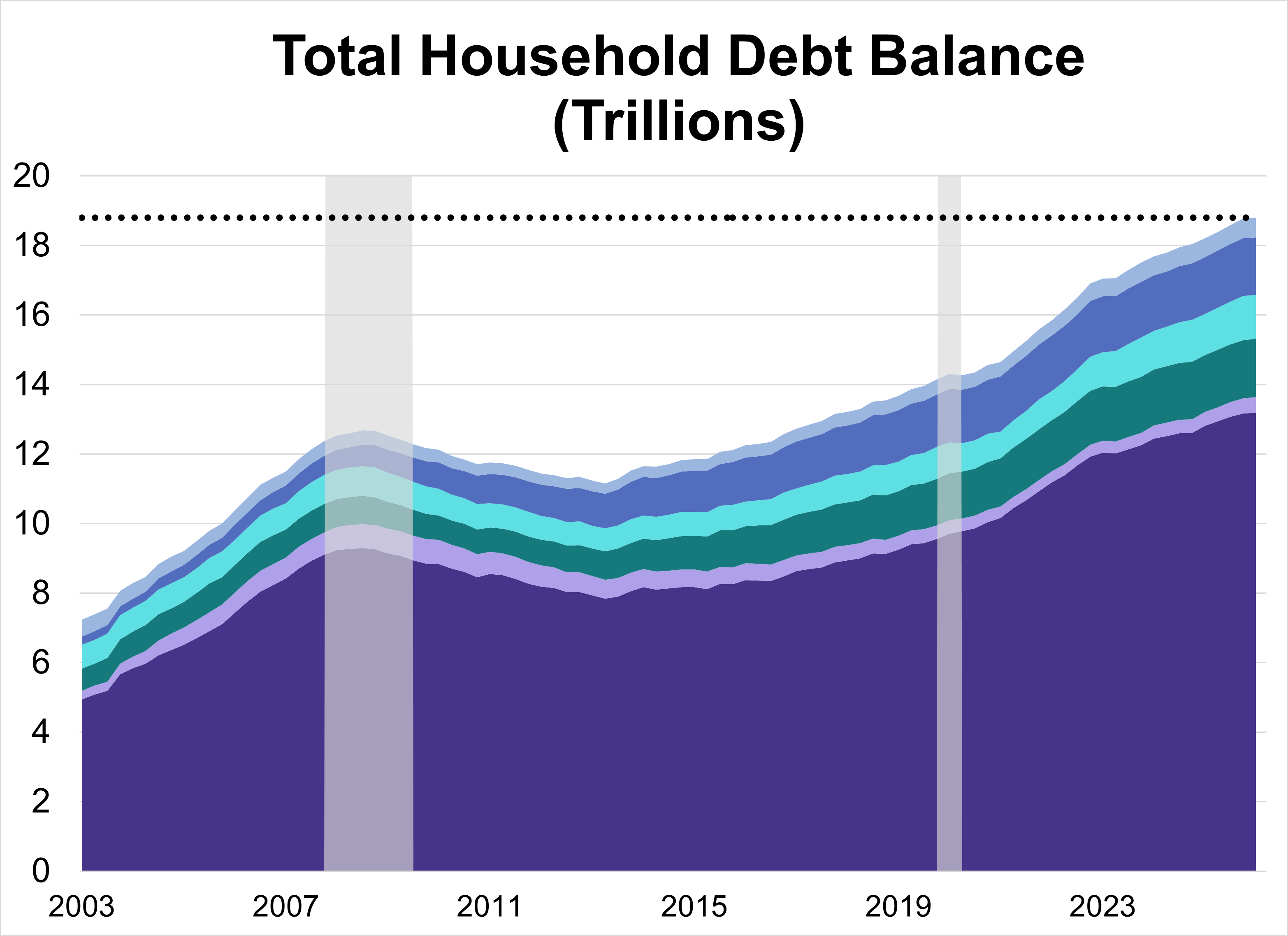
Total U.S. household debt climbed to a record $18.79 trillion in Q1 2026, a modest 0.1% ($18 billion) increase from the previous quarter. The overall rise was driven by increases across a handful of categories, specifically mortgage and auto loan balances.
More…
Richmond Manufacturing Index Reaches 20-Month High
by Jennifer Nash, 4/28/26
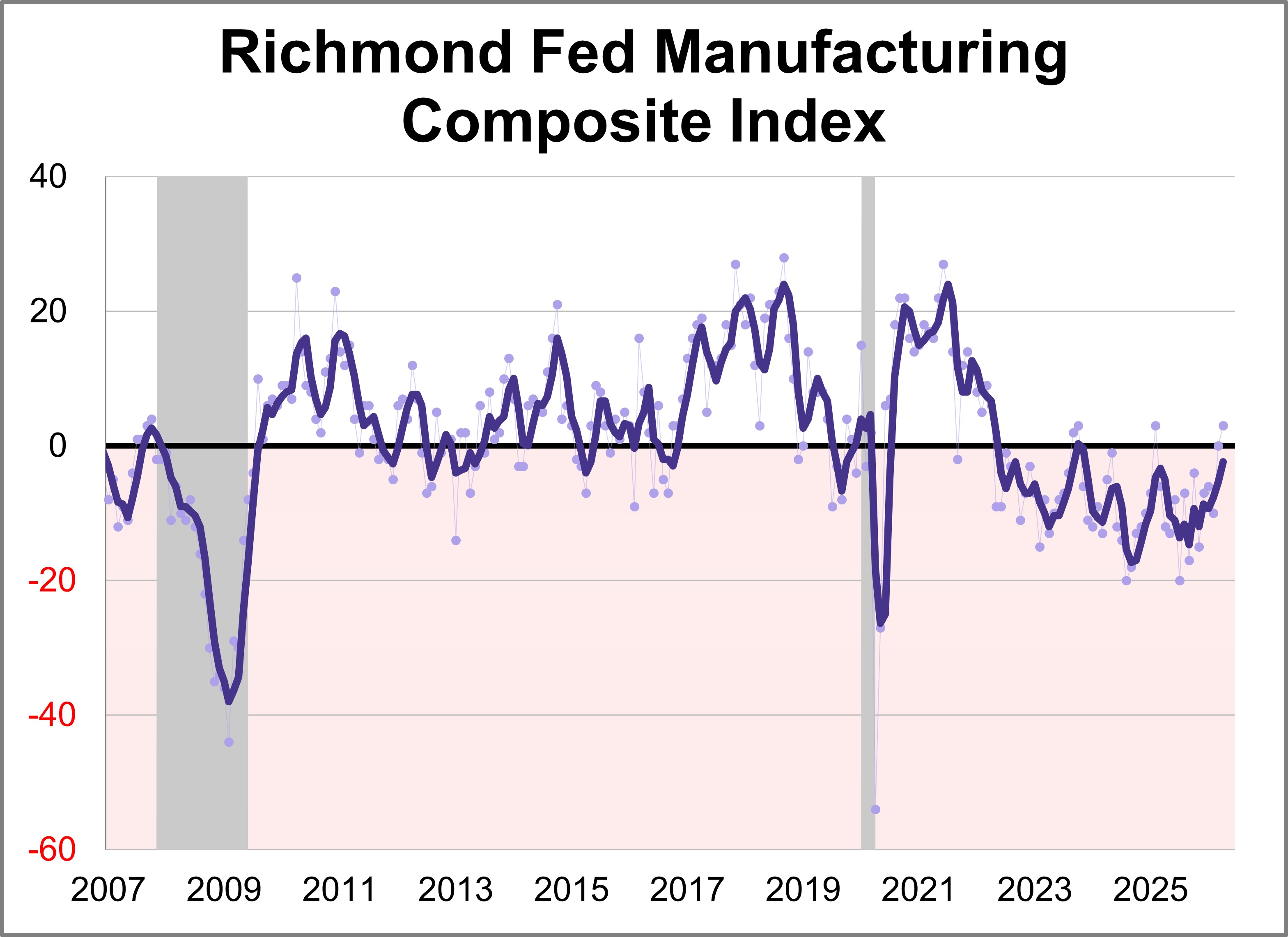
Fifth district manufacturing activity increased in April according to the most recent survey from the Federal Reserve Bank of Richmond. The composite manufacturing index rose three points points to 3, marking the highest level for the index in 20 months. This month's reading was above the forecast of 2.
More…
Chart-ing the Economy: Week of April 6-10th, 2026

by Jennifer Nash, 4/17/26
While recent market performance reflects optimism over potential geopolitical de-escalation, underlying economic data reveals a complex landscape of intensifying price pressures and cooling growth. This article examines the major economic news from the week of April 6-10th, 2026.
More…
The Four Bad Bears: A Century of Market Recovery
by Jennifer Nash, 4/9/26
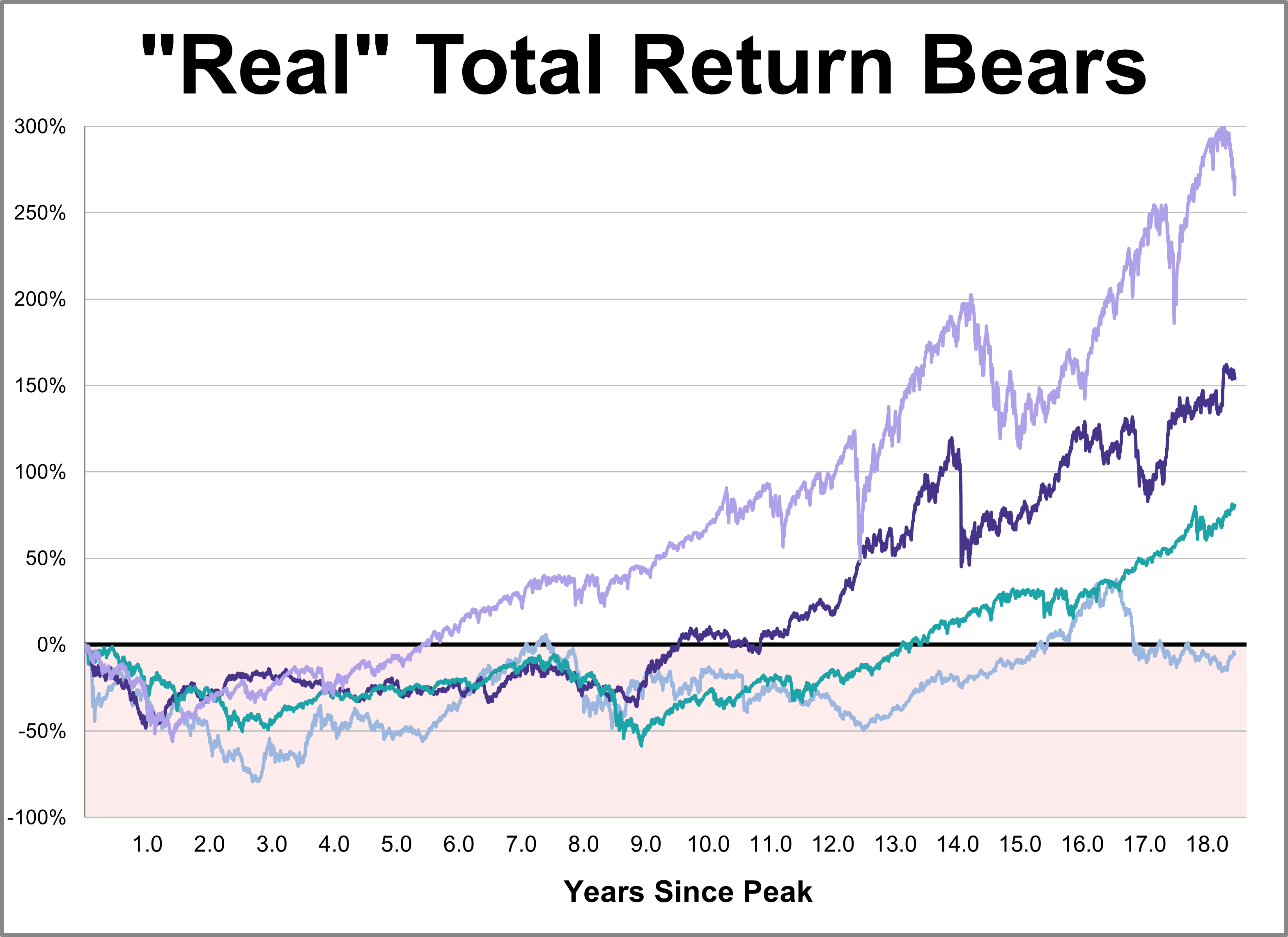
While every market downturn is unique, history offers a crucial lens for understanding recovery. This chart series provides a comprehensive overlay of the Four Bad Bears in U.S. history since the 1929 peak, comparing their recovery paths through the S&P 500's close on March 31, 2026.
More…
The Fed's Financial Accounts: What Are Uncle Sam's Largest Assets?
by Jennifer Nash, 3/23/26
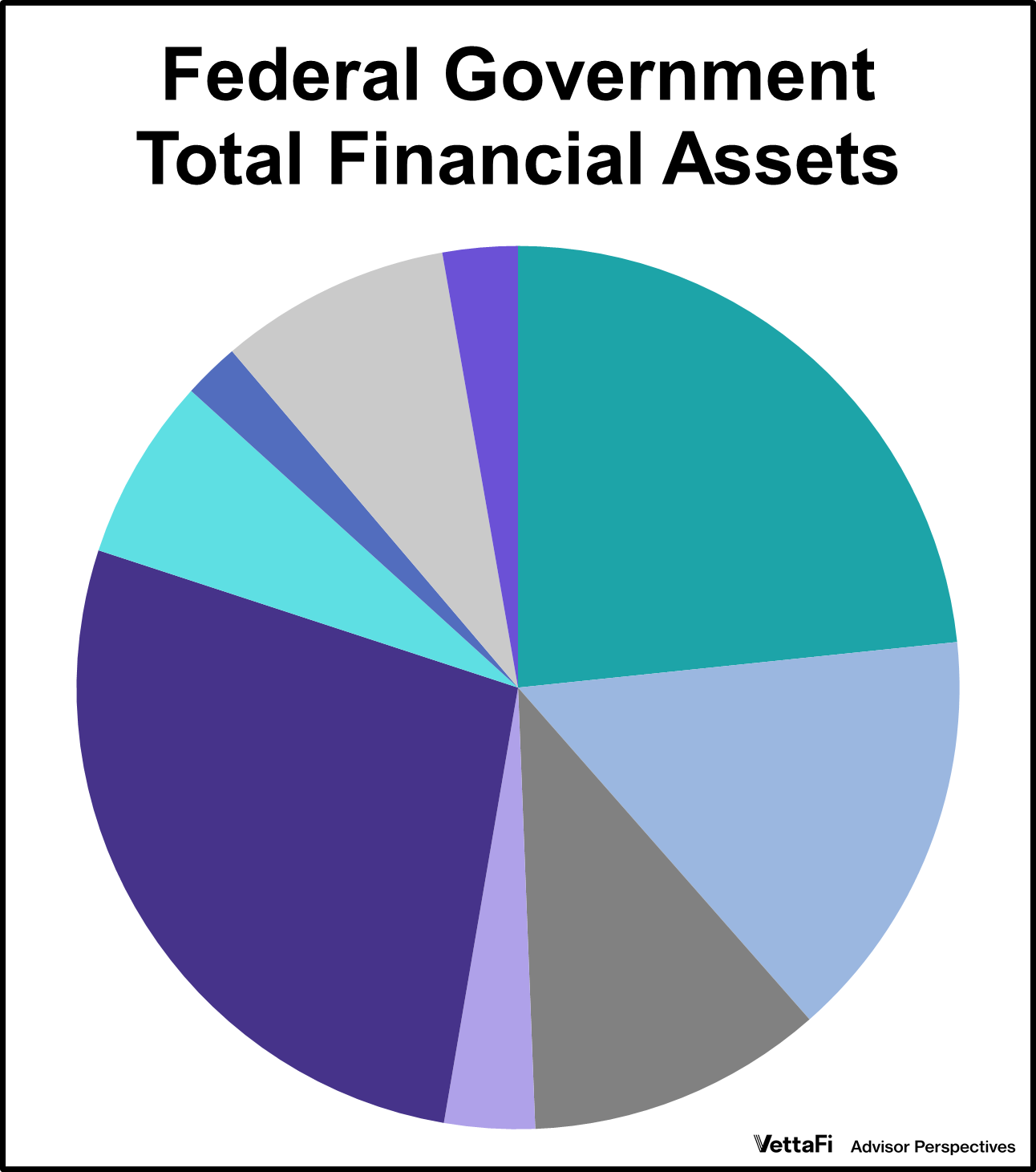
When we think of the U.S. government's finances, we often focus on the massive debt. But what about the assets? What does Uncle Sam actually own, and which asset is the largest?
More…
Household Net Worth Q4 2025: The "Real" Story
by Jennifer Nash, 3/23/26
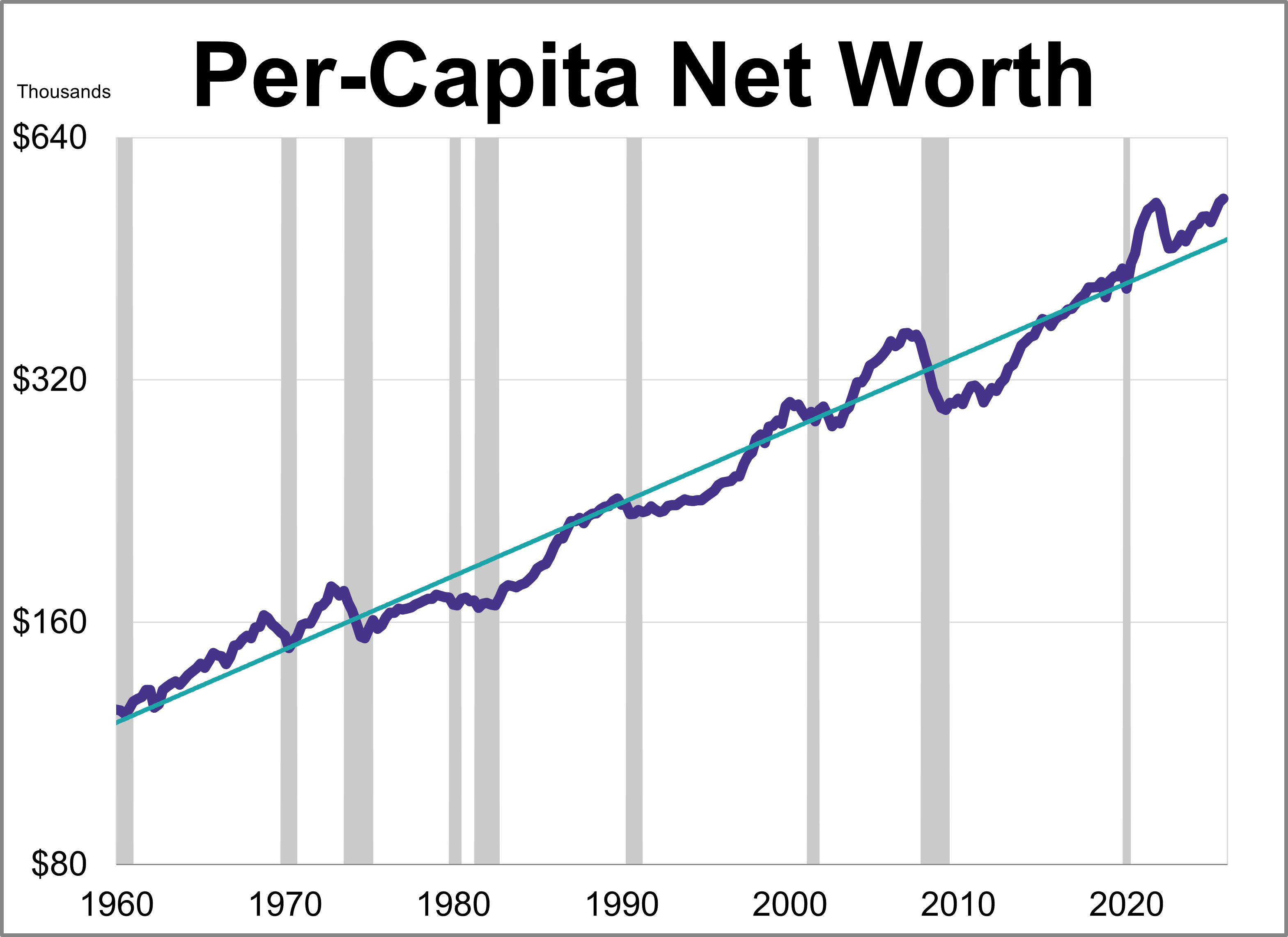
How much wealthier are Americans since the Great Recession? While a look at the headlines shows a staggering 211% increase in household net worth since 2009, adjusting for inflation tells a much different story.
More…
March Madness: The 2026 AP Charts Bracket
by Jennifer Nash, 3/16/26
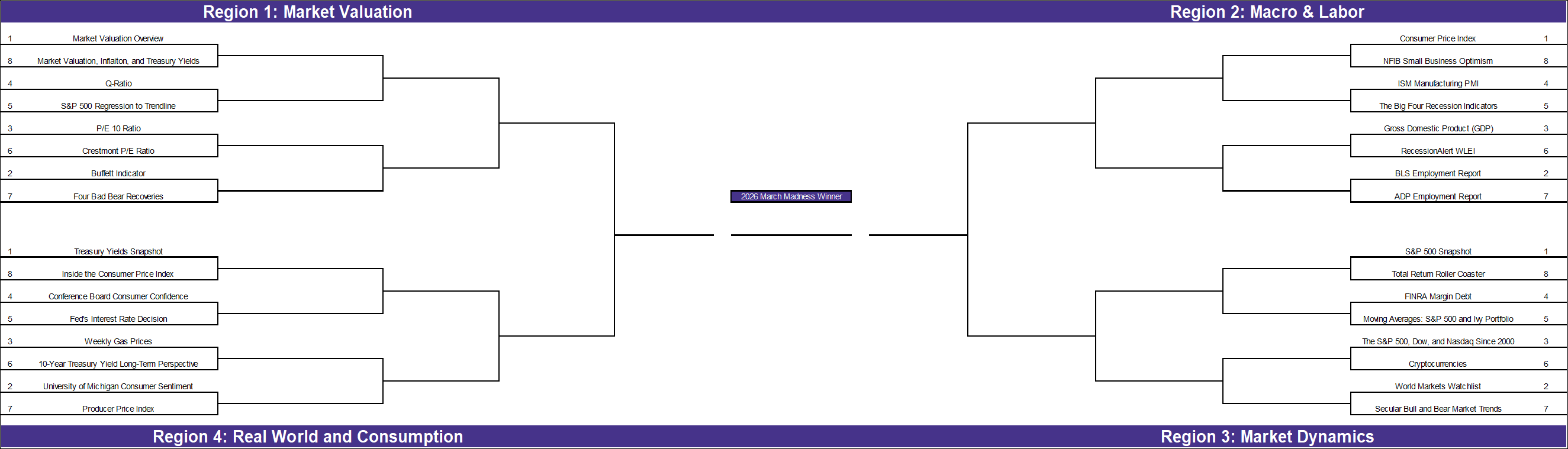
With the NCAA tournament beginning in just a few days, we’ve applied the bracket format to our own research. While economic theory often dictates what should be most important to investors, our reader engagement reveals which topics truly commanded investor attention over the past year.
More…
Olympic Arbitrage: Normalizing Success at the 2026 Winter Olympics
by Jennifer Nash, 3/5/26
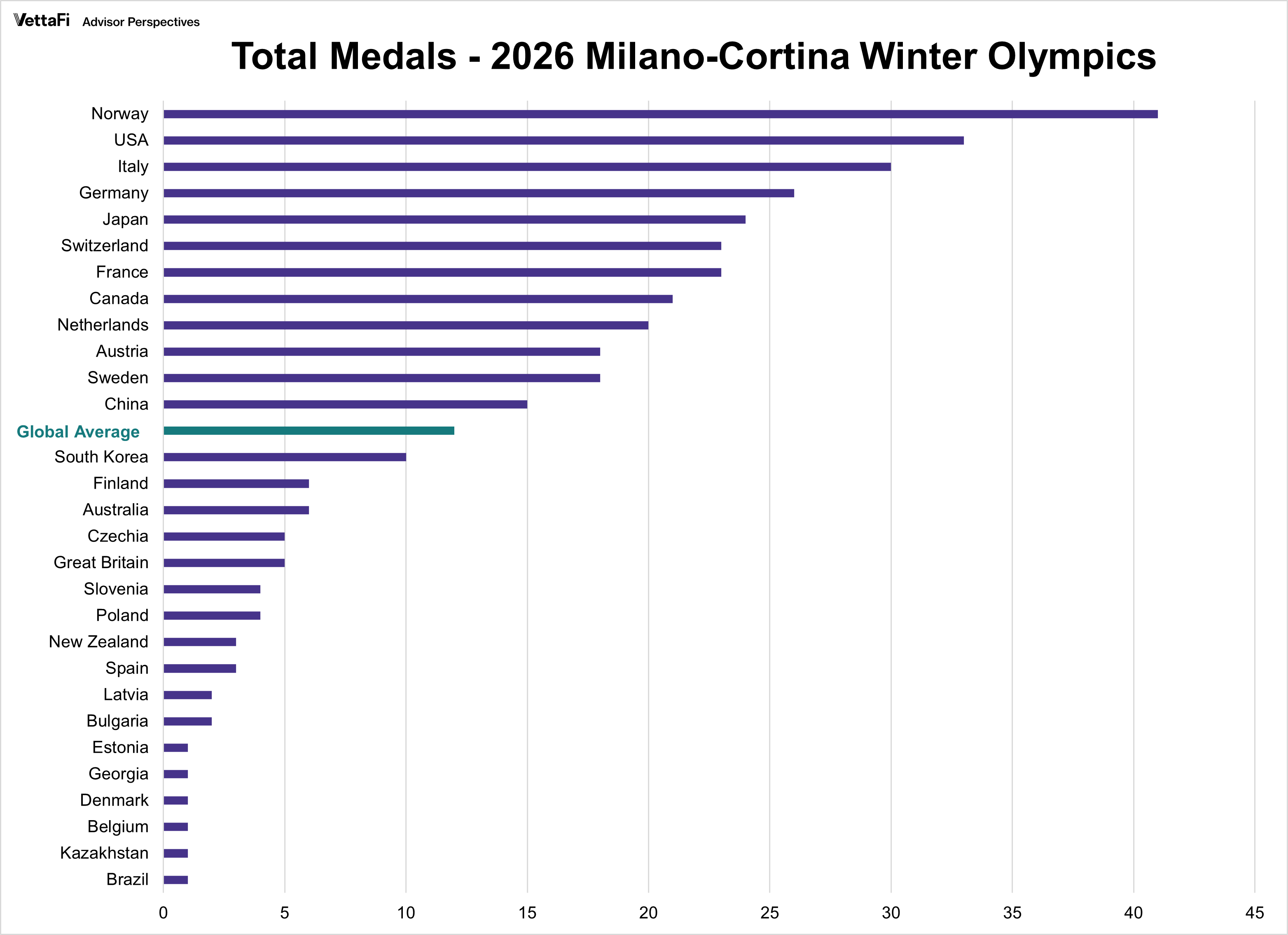
The Milano-Cortina 2026 Winter Games concluded with a familiar hierarchy at the top of the medal table. But in the world of economic indicators, we rarely look at totals without normalizing for scale. The 2026 Winter Games are no different.
More…
Top 10 Charts of 2025

by Jennifer Nash, 1/8/26
Now that 2025 has come to an end, let’s take a look at the top 10 most-read charts of the year.
More…
RecessionAlert Weekly Leading Economic Index
by Jennifer Nash, 12/29/25
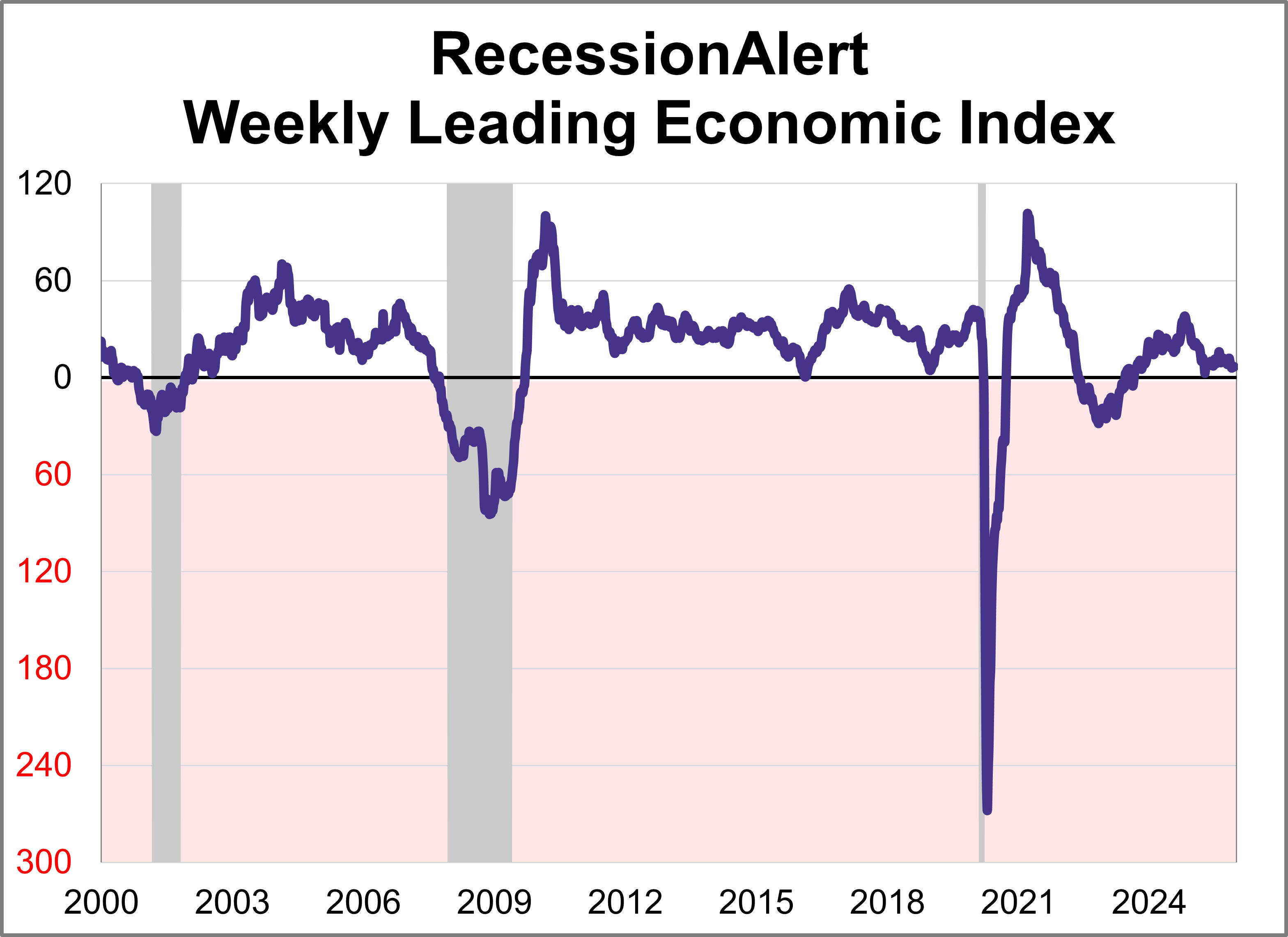
The weekly leading economic index (WLEI) is a composite for the U.S economy that draws from over 20 time-series and groups them into the following six broad categories which are then used to construct an equally weighted average. As of December 12th, the index was at 6.71 with 3 of the 6 components in expansion territory.
More…
U.S. Workforce Recovery Analysis: November 2025
by Jennifer Nash, 12/23/25
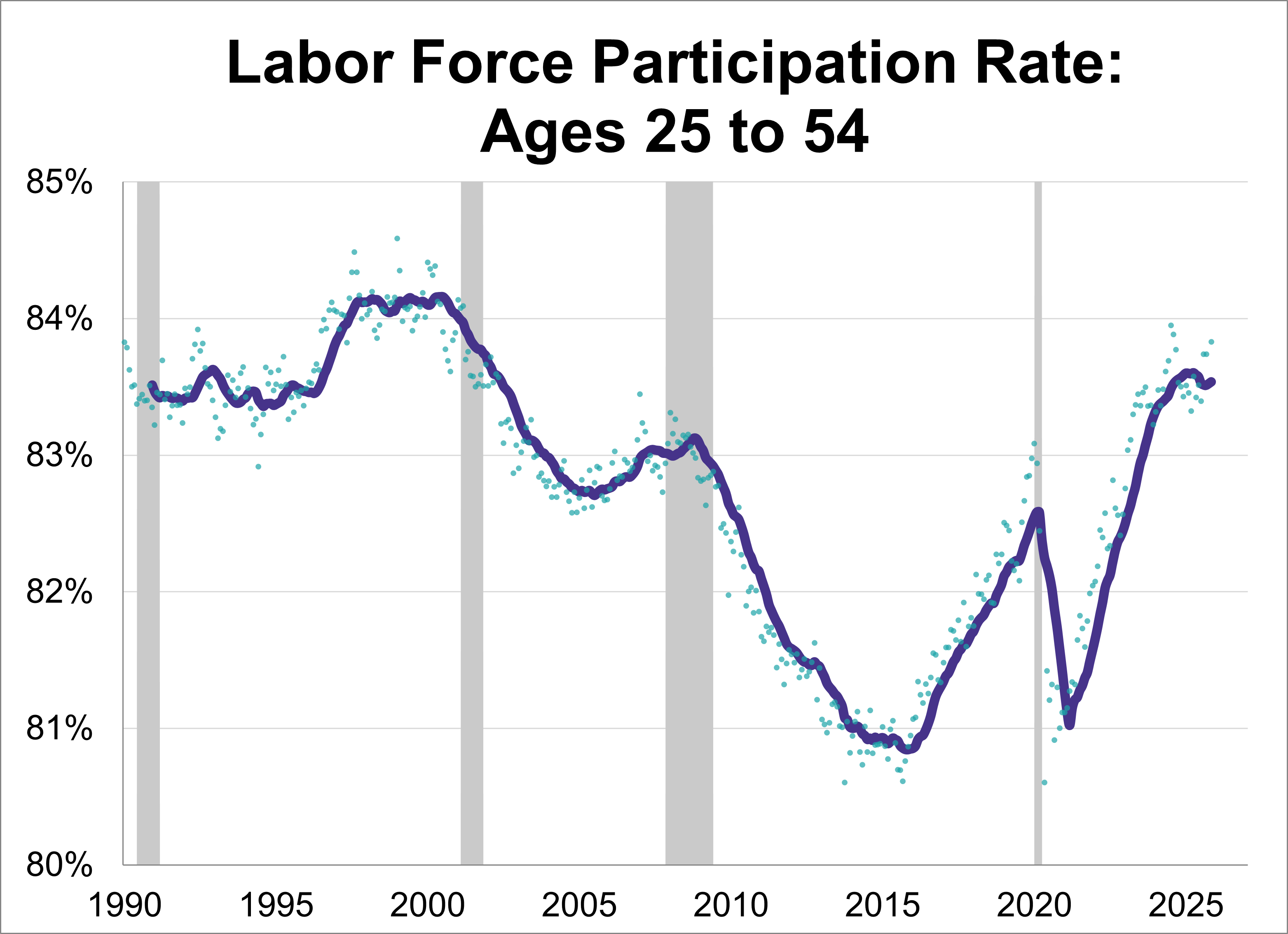
Our monthly workforce recovery analysis has been updated to include the latest employment report for November. The unemployment rate inched up to 4.6%, its highest level since 2021. Additionally, the number of new non-farm jobs (a relatively volatile number subject to extensive revisions) came in at 64,000.
More…
Baby Boomer Employment Through the Decades: September 2025
by Jennifer Nash, 11/26/25
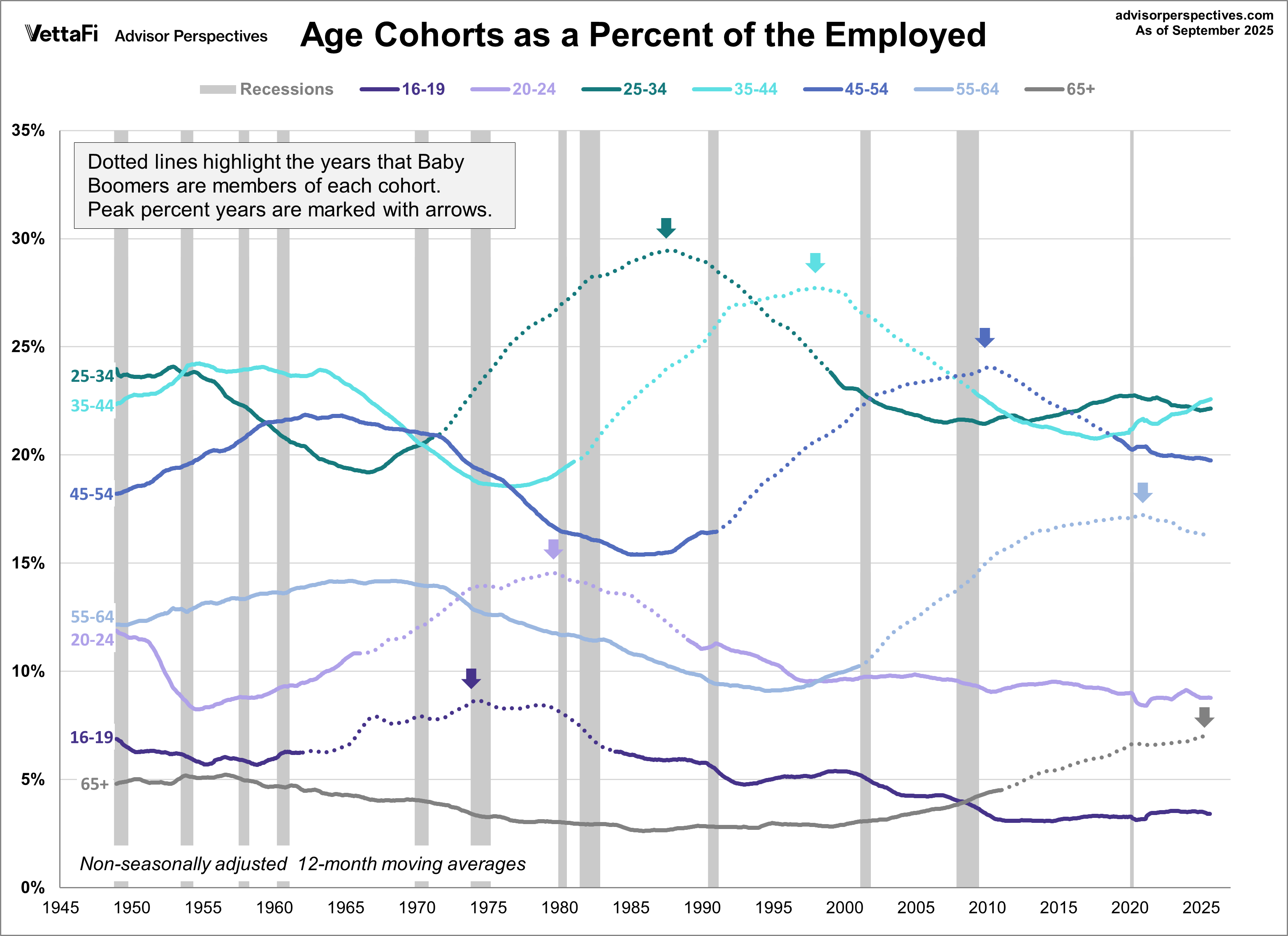
The 20th century Baby Boom was one of the most powerful demographic events in the history of the United States. We've created a series of charts to show seven age cohorts of the employed population from 1948 to the present.
More…
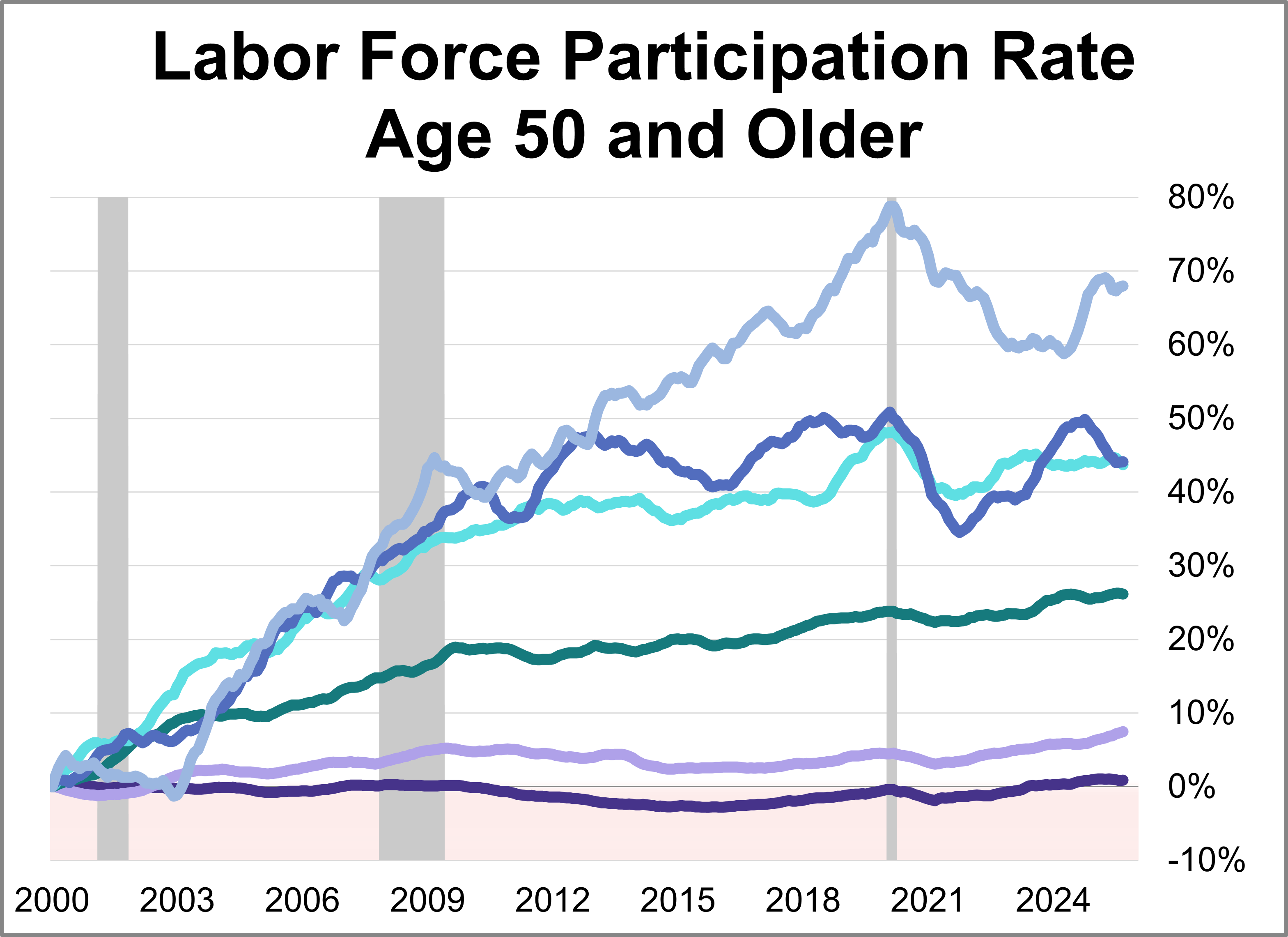
Employment Trends for the 50+ Workforce: September 2025
by Jennifer Nash, 11/26/25
Today, one in three of the 65-69 cohort, one in five of the 70-74 cohort, and one in ten of the 75+ cohort are in the labor force.
More…
Long-Term Employment Trends by Age and Gender: September 2025
by Jennifer Nash, 11/26/25
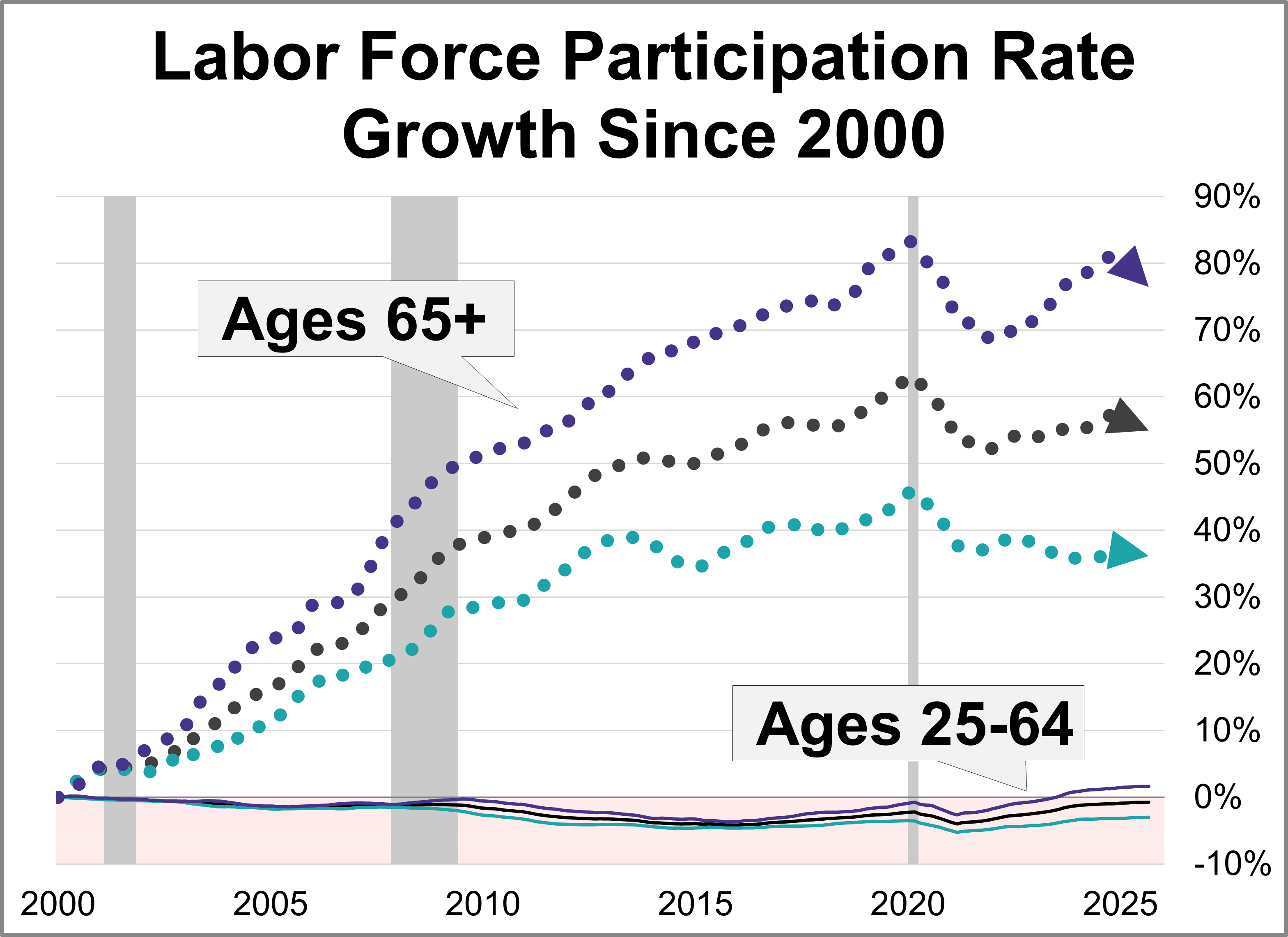
The labor force participation rate (LFPR) is a simple computation: You take the civilian labor force (people aged 16 and over employed or seeking employment) and divide it by the civilian non-institutional population (those 16 and over not in the military and or committed to an institution). As of September, the labor force participation rate is at 62.4%, up from 62.3% the previous month.
More…
Chart-ing the Economy: Week of November 3rd - 7th

by Jennifer Nash, 11/13/25
Last week’s economic data sent mixed signals. Consumer sentiment plummeted to a near-record low on economic anxiety, and the manufacturing sector continued its long contraction.
More…
Chart-ing the Economy: Week of October 13th - 18th

by Jennifer Nash, 10/23/25
Secondary economic indicators have taken on heightened importance amid the ongoing government shutdown. Read through a handful of these secondary reports from the week of October 13th-18th.
More…
Household Incomes: The Decline of the "Middle Class" 2024 Update
by Jennifer Nash, 9/19/25
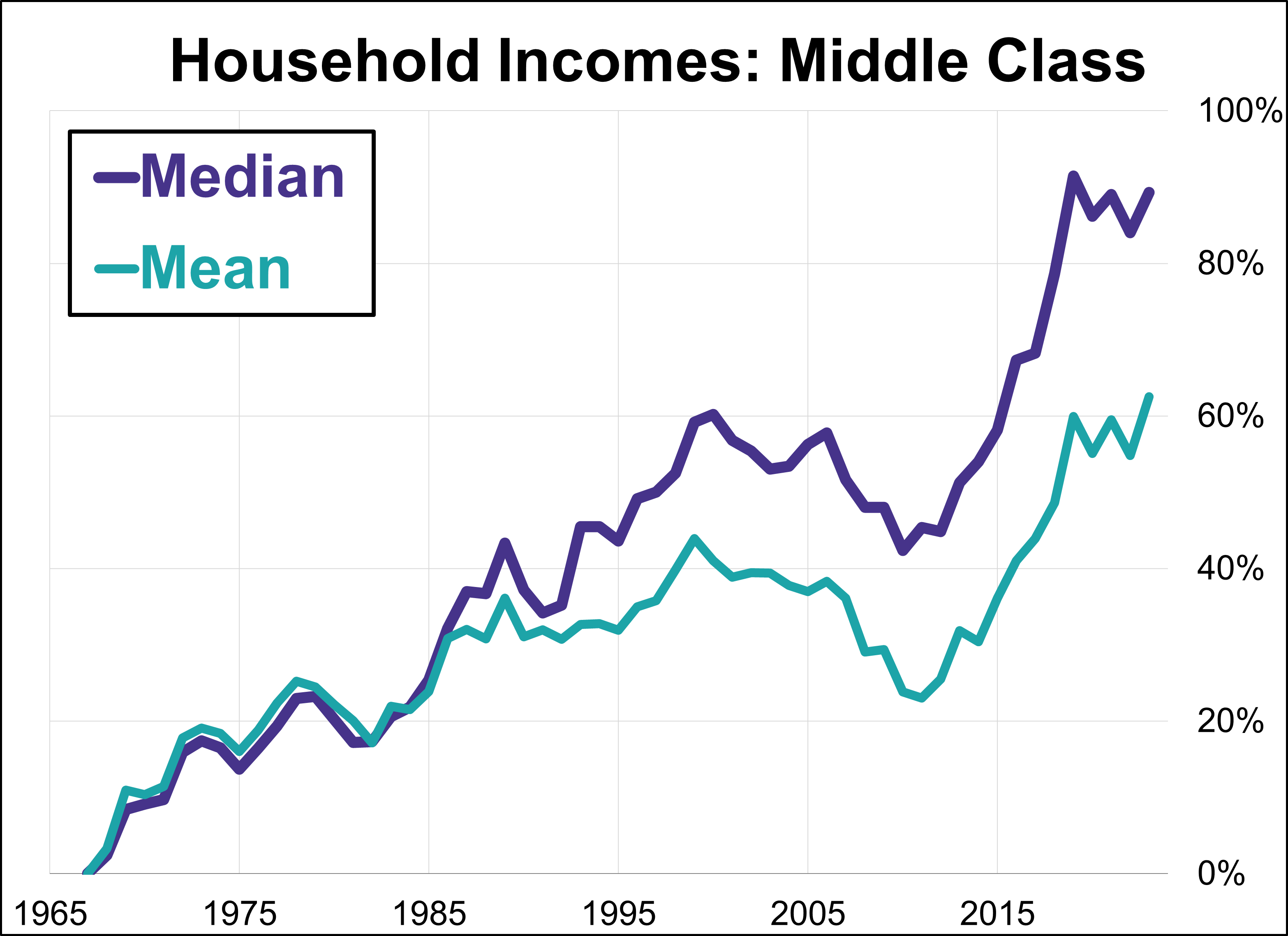
The median household is the statistical center of the Middle Class. Let's take a closer look at the Census Bureau's latest annual household income data with a focus on middle class income. In this update, we'll focus on the growing gap between the median (middle) and mean (average) household incomes across the complete time frame of the Census Bureau's annual reporting from 1867 to 2024.
More…
Household Incomes 2024: The Value of Higher Education
by Jennifer Nash, 9/19/25
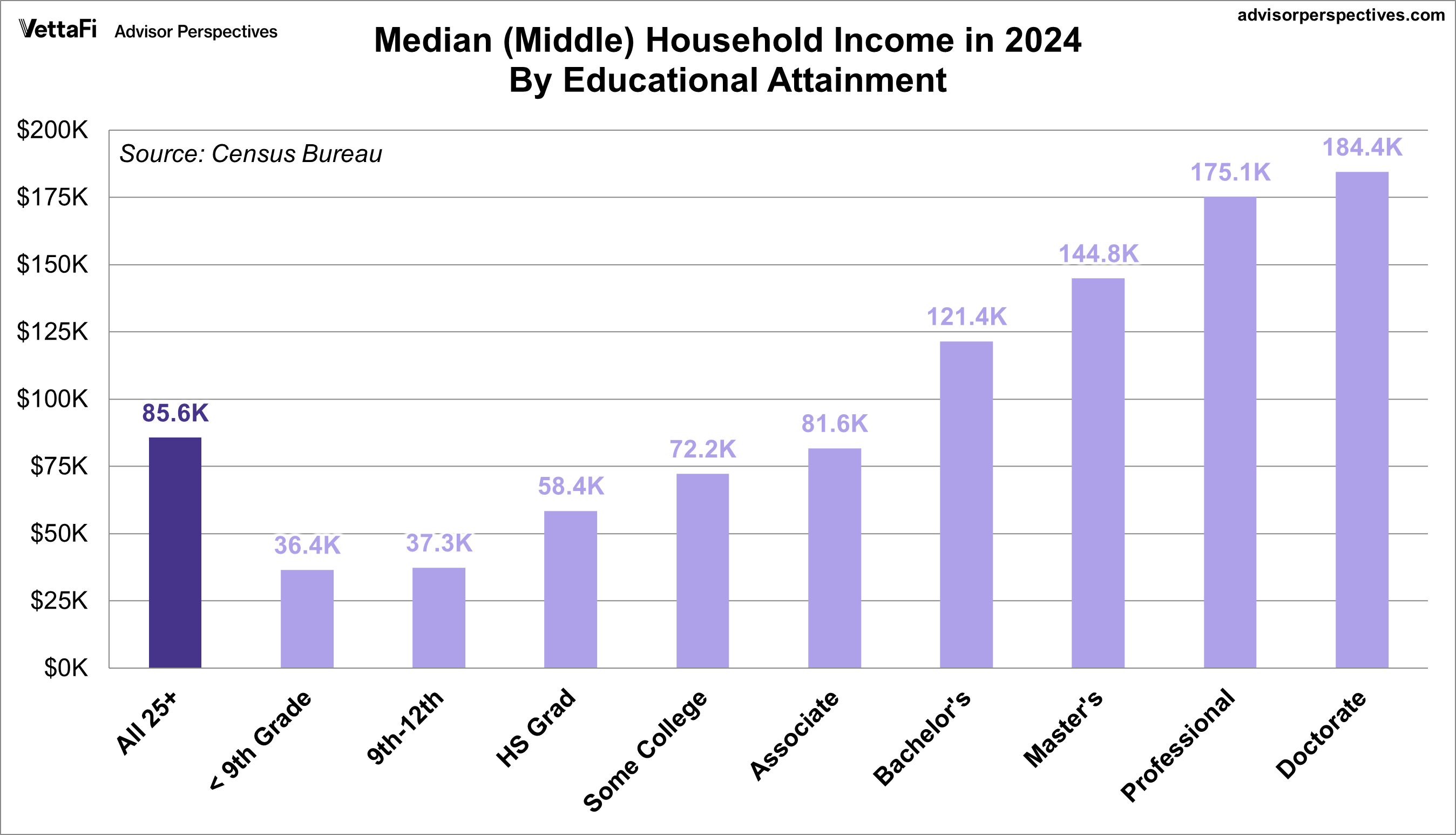
What is the relationship between education and household income? The Census Bureau’s 2024 annual survey data provides valuable insights into this question. The median household income for individuals aged 25 and older was $85,580, but how does this figure vary based on educational attainment?
More…
Chart-ing the Economy: Week of September 8th - 12th

by Jennifer Nash, 9/17/25
Last week's economic data presented a challenging picture for the U.S. economy with key inflation reports delivering conflicting signals and a timely labor market indicator added to the narrative of a softening labor market. Read through the major economic news from the week of September 8th - 12th.
More…
Median Household Income by State: 2024 Update
by Jennifer Nash, 9/17/25
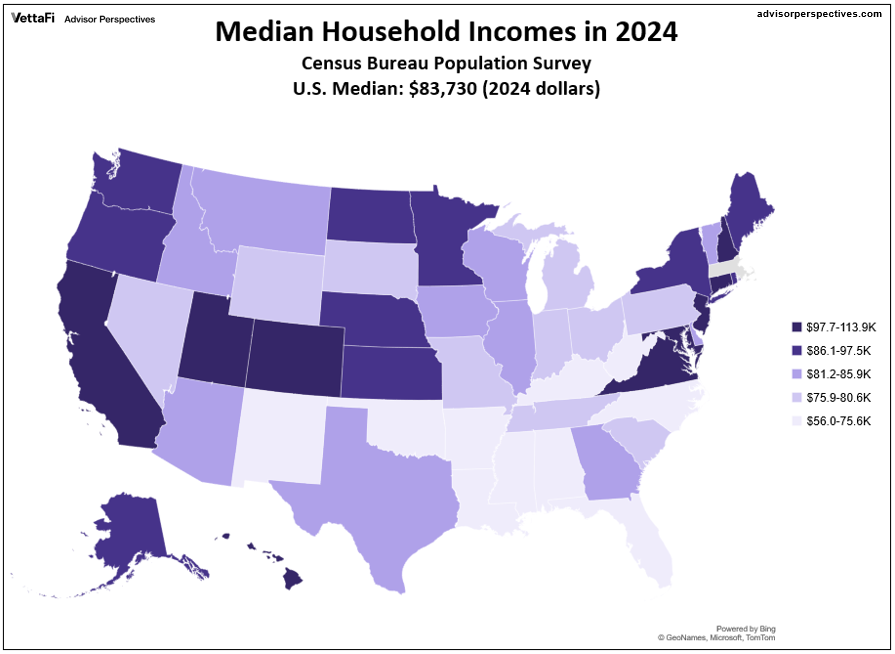
The median US income in 2024 was $83,730, up from $22,420 in 1984 — a 274% rise over the 40-year time frame. However, if we adjust for inflation chained in 2024 dollars, the 1984 median is $60.420 and the increase drops to 39%.
More…
Median Household Incomes by Age Bracket: 1967-2024
by Jennifer Nash, 9/17/25
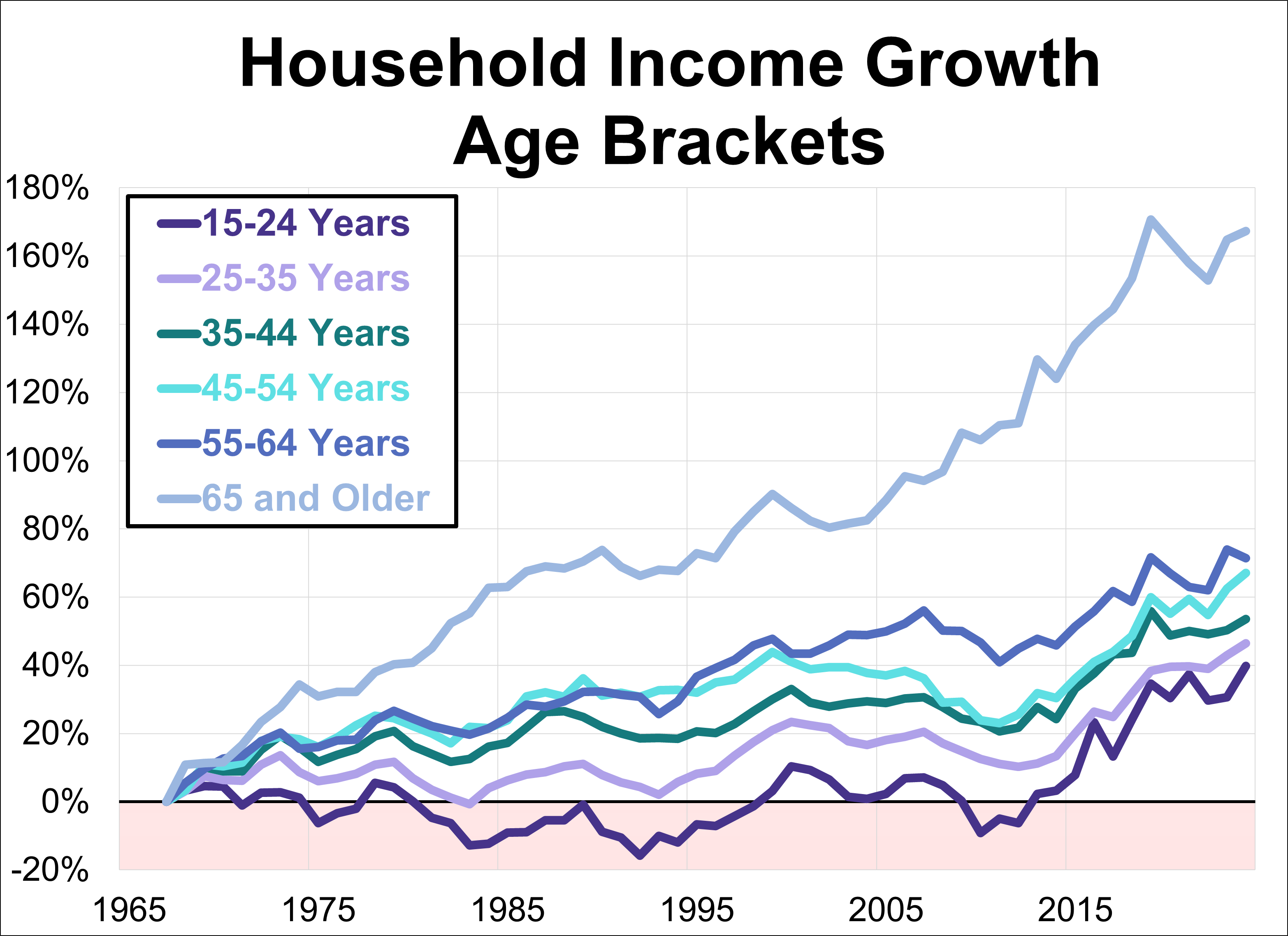
Our commentary on household income distribution offers some fascinating insights into average U.S. household incomes, but misses the implications of age for income. In this update, we examine household income with a focus on age bracket.
More…
U.S. Household Incomes Over 50+ Years: The Great Divide
by Jennifer Nash, 9/17/25
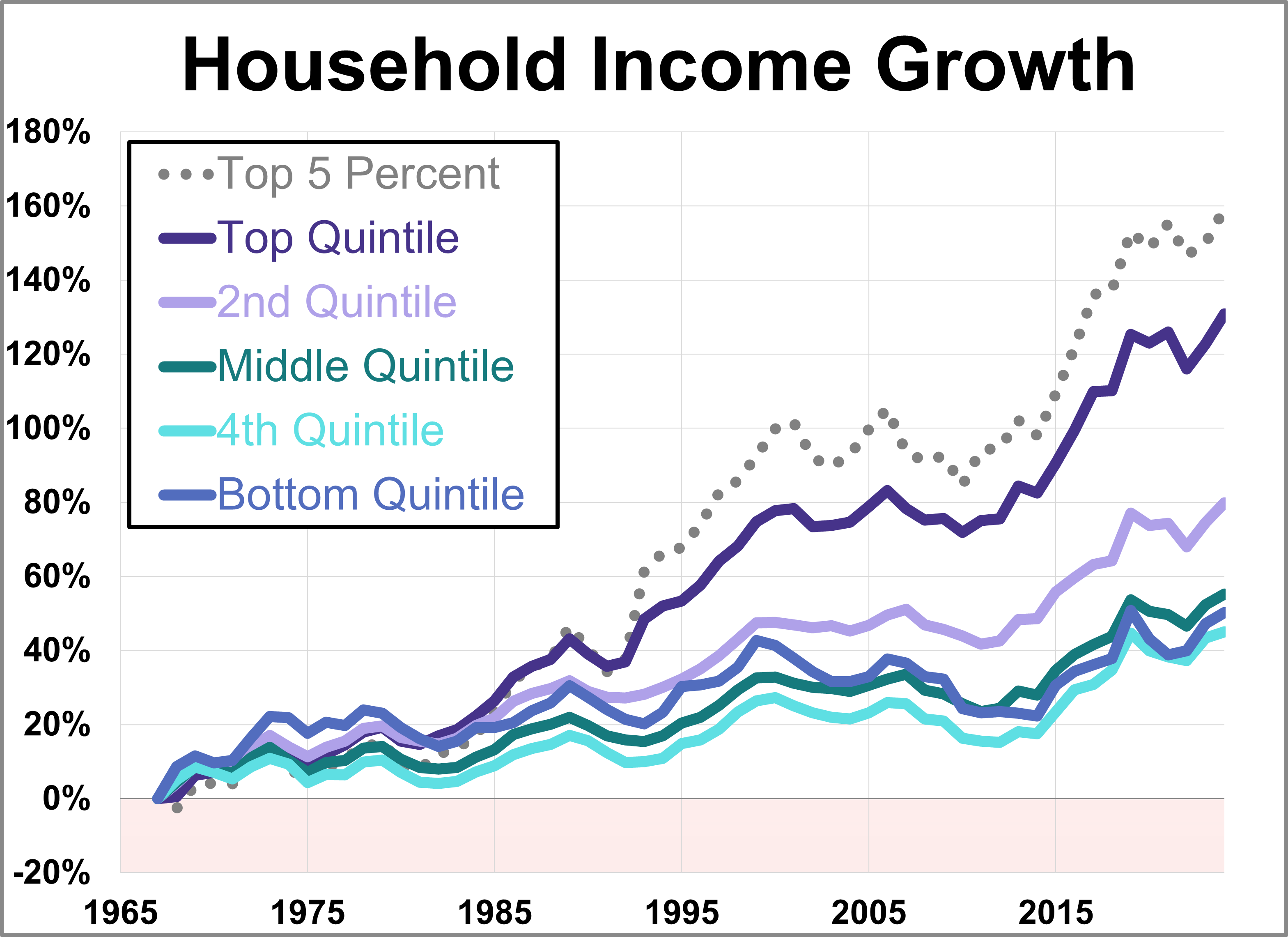
The Census Bureau recently released its annual report on household income data for 2024. The mean (average) household income for the middle quintile rose 4.5% to $84,390. Let's take a closer look at the quintile averages, which date back to 1967, along with the statistics for the top 5%.
More…
Chart-ing the Economy: Week of September 2nd - 5th

by Jennifer Nash, 9/10/25
The U.S. labor market continued to show signs of cooling, with all major labor indicators pointing to a softening trend and a weak hiring environment. Read through the major economic news from the week of September 2nd - 5th.
More…
Chart-ing the Economy: Week of August 18th - 22nd

by Jennifer Nash, 8/27/25
Last week was dominated by a major event in the financial world, the Jackson Hole symposium, and the subsequent reaction from the markets. Read through the major economic news form the week of August 18th - 22nd.
More…
Chart-ing the Economy: Week of August 11th - 15th

by Jennifer Nash, 8/20/25
Last week, the S&P 500 had a rally that took it to three straight record highs but the momentum cooled as economic data painted a complex picture. Read through the major economic news from the week of August 11th-15th.
More…
Chart-ing the Economy: Week of July 28th - August 1st

by Jennifer Nash, 8/6/25
Read through the major economic news from the week of July 28th-August 1st.
More…
Top 10 Charts of 2025: Midyear Review

by Jennifer Nash, 7/23/25
Now that we're more than halfway through 2025, let's take a look at the top 10 most-read charts so far for the year.
More…
Emerging Markets Watchlist: April 11, 2025

by Jennifer Nash, 4/14/25
Four of the nine indexes on our emerging markets watch list have posted gains through April 11, 2025. Chile's IPSA is in the top spot with a year to date gain of 11.2%. Brazil's IBOVESPA is in second with a year to date gain of 6.3% while Mexico's BMV IPC is in third with a year to date gain of 3.5%.
More…
Unemployment Claims Down 21K, Lower Than Expected

by Jennifer Nash, 3/6/25
In the week ending March 1st, initial jobless claims were at a seasonally adjusted level of 221,000. This represents a decrease of 21,000 from the previous week's figure. The latest reading was lower than the 234,000 forecast.
More…
Median Household Purchasing Power for the 50 States and DC: 2023 Update

by Jennifer Nash, 1/16/25
Earlier this week we posted an update on the median household income for the 50 states and DC which includes annual data from 1984 to 2023. Let's now look at the actual purchasing power of those median incomes. For this adjustment, we're using the "C2ER Cost of Living Index" produced by C2ER, the Council for Community and Economic Research.
More…
Unemployment Claims Drop to 11-Month Low

by Jennifer Nash, 1/9/25
In the week ending January 4th, initial jobless claims fell to their lowest level since February 2024. Initial jobless claims were at a seasonally adjusted level of 201,000, a decrease of 10,000 from the previous week's figure. The latest reading was better than the 214,000 forecast.
More…
CB Leading Economic Index: Small Rise in November

by Jennifer Nash, 12/19/24
The Conference Board Leading Economic Index (LEI) increased slightly in November. The index rose 0.3% from the previous month to 99.7 after eight consecutive monthly declines.
More…
Top 10 AP Charts of 2023

by Jennifer Nash, 12/29/23
As 2023 comes to an end, let’s revisit the top 10 most-read AP charts of the year.
More…
Holiday Greetings and Temporary Hiatus

by , 12/16/23
AP Charts and Analysis will be offline this week due to the holidays. We will resume publishing economic and market analysis and publish missed news on 12/26.
More…
Underlying Inflation Gauge Falls for 15th Straight Month

by Jennifer Nash, 10/12/23
The latest Underlying Inflation Gauge full data set for September is 2.9%, down 0.1% from last month, while the prices-only measure is 2.2%, down 0.2% from last month. Current Headline CPI is now 3.7% and Core CPI is 4.2%.
More…
Regional Fed Manufacturing Overview: September 2023
by Jennifer Nash, 9/28/23
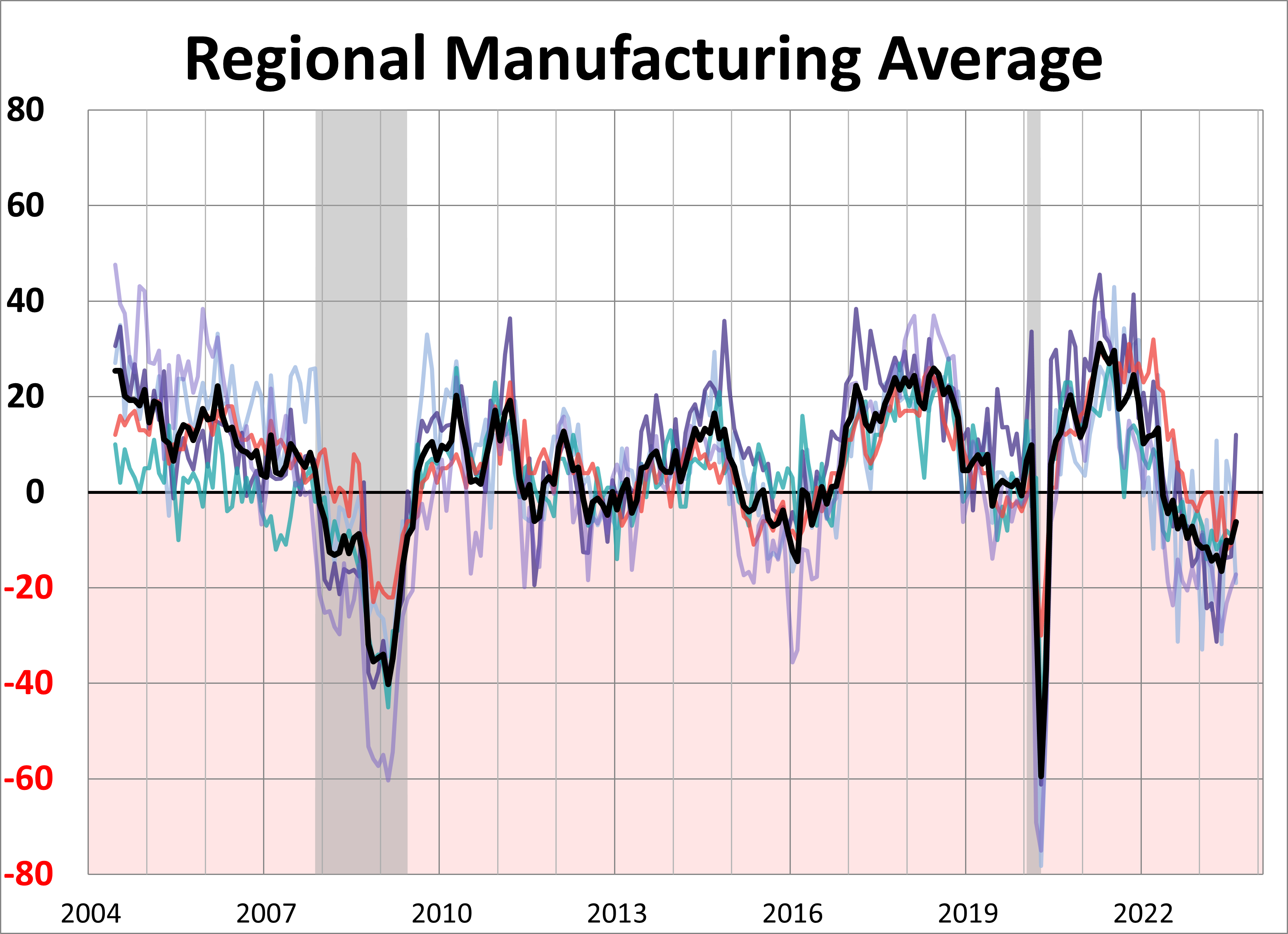
Five out of the 12 Federal Reserve Regional Districts currently publish monthly data on regional manufacturing: Dallas, Kansas City, New York, Richmond, and Philadelphia. The September average of the five districts is -6.5, down from the previous month.
More…
The Philly Fed ADS Business Conditions Index

by Jennifer Nash, 9/28/23
We've updated our periodic look at the Philly Fed ADS Index which includes real GDP (Q2 2023 third estimate) and initial jobless claims through 9/23.
More…
The "Real" Goods on the August Durable Goods Data

by Jennifer Nash, 9/27/23
The Census Bureau has posted its advance report on new orders for durable goods for August. This series dates from 1992 and is not adjusted for either population growth or inflation. Let's review durable goods data with those two adjustments.
More…
Breaking Down the Components of the Chicago Fed National Activity Index

by Jennifer Nash, 9/25/23
The Chicago Fed's National Activity Index is based on 85 economic indicators drawn from four broad categories of data. Two of the four broad categories of indicators used to construct the index decreased from July. All four categories made negative contributions in August.
More…
A Long-Term Look: Residential Building Permits and Housing Starts

by Jennifer Nash, 9/19/23
The U.S. Census Bureau and the Department of Housing and Urban Development published their August findings for new residential housing starts and building permits. Over the long haul, the two series offer a compelling study of trends in residential real estate. Here is an overlay of the two series since the 1959 inception of the starts and permits data, which was tracked beginning a year later.
More…

Top 10 AP Charts of 2022

by Jill Mislinski, 12/23/22
Here's the top 10 most popular AP Charts of 2022.
More…
ECRI Weekly Leading Index Update

by Jill Mislinski, 9/30/22
Today's release of the publicly available data from ECRI puts the WLI at 145.6, up from the previous week's figure. The WLIg is at -10.3, up from last week and the WLI YoY is at -4.92%, down slightly from last week.
More…
Gasoline Volume Sales Down 8.9% YoY

by Jill Mislinski, 1/21/22
The Department of Energy's Energy Information Administration (EIA) monthly data on volume sales is several weeks old when it released. The latest numbers, through mid-November, are now available.
More…
2020 Update: Median Home Price and Salary Required in 25 Major Cities

by Jill Mislinski, 10/29/21
The team at HSH.com, features a periodic update entitled "The Salary You Must Earn to Buy a Home in the 50 Largest Metro Areas". The key question is:
"How much salary do you need to earn in order to afford the principal and interest payments on a median-priced home in your metro area?"
More…
Not Your Regularly Scheduled Programming

by Jill Mislinski, 10/24/21
Next week we are taking a hiatus from regularly scheduled updates and will be publishing a series of articles based on the Census Bureau's 2020 Income and Poverty Report. Stay Tuned!
More…
A Closer Look at Yesterday's ADP Employment Report

by Jill Mislinski, 10/7/21
In yesterday morning's ADP employment report we got the September estimate of 568K nonfarm private employment jobs gained, an increase over August's revised 340K. The popular spin on this indicator is as a preview to the monthly jobs report from the Bureau of Labor Statistics.
More…
UPDATE: COVID-19, The Markets, and The Economy

by Jill Mislinski, 6/16/21
Let's take a look at major sectors in the ETF world since February 21, 2020. All but two sectors, hotels and airlines, have recovered since then. Retail has bounced back the fastest, while hotels and airlines are still lagging. Individuals are returning to travel rapidly as more vaccines are administered.
More…
Join us tomorrow for the AP Thought Leader Summit - a FREE virtual event!
by Team, 10/5/20
Join us for a series of virtual sessions during the AP Thought Leader Summit 2020, October 6-7, 2020. This FREE event is for financial advisors to learn and earn CE credits for sessions from the industry's most influential thought leaders to help grow and manage their practice. Register here!
More…


Publishing Delay
by Jill Mislinski, 2/3/20
We are having some software issues and as a result, all economic news is delayed slightly. We will back-publish all missed updates once this is resolved. Thank you!
More…
Some Updates Delayed Indefinitely

by Jill Mislinski, 1/7/19
Due to the ongoing government shutdown, data held by the Census Bureau and the Bureau of Economic Analysis will not be published.
More…
Millennials and the Labor Force: A Look at the Trends

by Jill Mislinski, 10/10/18
Millennials make up the largest percentage of our population today, yet have seen some of the lowest labor force participation growth and highest unemployment out of all age groups since the turn of the century. This has larger implications when coupled with slow wage growth, high home prices, and mounting student debt.
More…
Trends in the Teenage Workforce Update

by Jill Mislinski, 10/10/18
In July of 2015, CNN Money featured an article with the optimistic and intriguing title "More American teens are getting jobs. That's good for everyone." After reading the article, we revised one of our monthly charts on Labor Force Participation to include the age 16-19 cohort -- one we elsewhere combine with the 20-24 year-olds. We've updated this article to include the latest employment data.
More…
Groundbreaking New Portfolio Retirement Income Guarantee
by Sponsored Content by RetireOne, 9/18/18
Cover retail mutual funds and ETFs in client IRAs, Roth IRAs, and taxable brokerage accounts to deliver reliable, sustainable income streams your clients can't outlive.
How is this even possible? Learn more
More…
Forecasting GDP: Gazing into the Crystal Ball

by Jill Mislinski, 6/27/18
The big economic number tomorrow will be the Q2 Third Estimate for GDP. The last two quarters are behind us with their real annualized rates of 2.9% in Q4 2017 and 2.3% in Q1. What do economists see in their collective crystal ball for Q2 Third Estimate? Let's take a look at the latest GDP forecasts from the latest Wall Street Journal survey of economists conducted earlier this month.
More…
Next Recession? Pundit Prognoses

by , 4/15/18
This is the second in a multi-part series where we examine pundits' opinions and predictions on the latest topics.
More…
Bitcoin Bets: Which Pundit Is Right?

by , 3/19/18
The bitcoin and cryptocurrency craze has everyone talking. Here's what some of the big names in the industry are saying.
More…
A Note on 404 Errors
by Jill Mislinski, 3/13/18
Many of our readers have been experiencing 404 errors on dshort pages. These pages have not disappeared, they are merely being edited and as a result of our current process, it shows as a broken page. Please be sure to check back within a few days to see the newest update.
We are working on a new system that will prevent these errors.
More…

The Labor Market Conditions Index Discontinued

by Jill Mislinski, 8/8/17
The LMCI is a relatively recent indicator developed by Federal Reserve economists to assess changes in the labor market conditions. As of August 3, 2017, updates of the labor market conditions index (LMCI) have been discontinuedThe LMCI is derived from a dynamic factor model that extracts the primary common variation from 19 labor market indicators.
More…
Earn $100 by Participating in an APViewpoint Focus Group

by Jill Mislinski, 5/16/17
An ETF sponsor is looking for 30 advisors to participate in an online focus group to be hosted on APViewpoint. The purpose of this focus group is to gather advisors’ observations on the ETF marketplace. Click for more info.
More…
Visit Us At Morningstar

by Jill Mislinski, 4/26/17
If you're attending this week's Morningstar Investment Conference in Chicago, come visit us at booth #360. Meet members of our team, including CEO/Editor in Chief Bob Huebscher, National Account Manager Becky Allen and dshort's Research Director Jill Mislinski.
More…
Update: A Closer Look at the Cost of Education

by Jill Mislinski, 3/21/17
Many reports on the cost of education and affordability over the last decade have focused on the rapid growth of educational debt. Here we examine student aid, costs of undergraduate education, and enrollment over time. We've used data from the College Board's annual Trends in Higher Education publications. We've updated this report with the latest data.
More…
The dshort Daily Digest is Back

by Jill Mislinski, 1/13/17
We are reintroducing the dshort Daily Digest! This daily email will include the most recent updates from dshort. Sign up now!
More…
Brace Yourself: Our Latest Look at Student Debt

by Jill Mislinski, 12/31/16
College Tuition and Fees constitute one of the biggest threats to our economic outlook. Here is a chart of data from the relevant Consumer Price Index sub-component reaching back to 1978, the earliest year Uncle Sam provides a breakout for College Tuition and Fees. As an interesting sidebar, we've thrown in the increase in the cost of purchasing a new car as well as the more substantial increase for the broader category of medical care, both of which pale in comparison.
More…
Housing Affordability in Today's Largest Cities

by Jill Mislinski, 12/21/16
We continue our real estate research with a study on metropolitan affordability in the rental and mortgage markets. Once again, we tap into Zillow Group’s wealth of data and use a data set that includes mortgage affordability, rental affordability, and price-to-income ratios for the five most populous US cities with comparison to the national median.
More…
Metropolitan Home Prices and the Zillow Home Value Index

by Jill Mislinski, 11/21/16
According to the Census Bureau, 84% of U.S. citizens live in Metropolitan Statistical Areas - defined as a region with at least one urbanized area of population 50,000 or more. Here we look at home values in the top five metro areas over a 20 year period using data from Zillow Group. We focus on Zillow Sales prices and the Zillow Home Value Index, a house price index that uses Zillow data.
More…
Snapshots of Market History: The Bear Bottoming Process

by Doug Short, 10/26/16
Note from dshort: Since the middle of the last century, there have been nine bear markets in the S&P 500 using the 20% selloff of the "bear-market" benchmark. There have been two additional corrections that came within a hair's breadth of the -20% qualification. Here are snapshots of those official bears and initial recoveries. Rather than scrolling down, you can click on a chart for an enlarged version and a slide-show of the series.
More…
Happiness Revisited: A Household Income of $75K?

by Doug Short, 10/21/16
Note from dshort: We've updated this commentary in the wake of the Census Bureau's release last month of the 2015 annual household income data from the Current Population Survey.
One of our favorite discussions on APViewpoint, which addressed "The Sad State of Happiness", included an indirect reference to a popular 2010 academic study by psychologist Daniel Kahneman and economist Angus Deaton. Their topic was the correlation between annual household income and day-to-day contentment. They analyzed more than 450,000 total responses to a Gallup weekly survey of households across the 50 states and DC. The survey was conducted in 2009.
More…
The Financial Plight of White Working Class Males

by Doug Short, 10/5/16
With the US presidential election about five weeks away, the popular press has feasted on the campaign events and survey results, with the primary focus on the Trump spectacle. The fundamental question remains: How did The Don succeed in winning the Republican Party nomination in the first place? And how could he remain in contention in the wake of his bizarre campaign rhetoric? A provocative new report from Sentier Research gives us insight into what might be the key factor in the Trump phenomenon: A secular decline in the financial well-being of white working class males and what we can infer as the resulting anger directed at the political powers that be.
More…
Validating the S&P Composite Stock Price Index

by Doug Short, 9/1/16
Visitors to Advisor Perspectives will recognize the S&P Composite Stock Price Index as a regular feature in our long-term charts of market and economic happenings. We're referring to the data series made popular in recent years by Yale Professor Robert Shiller, not to be confused with the S&P Composite 1500, an index that combines the S&P 500, the S&P Mid Cap 400, and the S&P Small Cap 600. Here's a an overlay of the Dow and the S&P Composite from May of 1896, the month the Dow Jones Industrial Average index of 12 stocks was established.
More…
Medals, GDP, and the 2016 Rio Olympics

by Jill Mislinski, 8/15/16
With the 2016 Rio Olympics in the news and on many minds, we decided to investigate whether particular indicators were a predictor of performance.
More…
Best Stock Market Indicator Update

by Jill Mislinski, 7/22/16
According to this system, the market is now tradable and a signal to enter and continue all long trading. The OEXA200R is at 84% and all three secondary indicators are positive.
More…
49 Years of Income and Home Values

by Jill Mislinski, 5/25/16
Often conversations about home buying end up in discussions on the high cost of homes today and their affordability – or lack thereof. We decided to take a look at the long-term trends in home prices in comparison to income and found that incomes have been stagnant since the early 1970s, while home prices have risen dramatically in comparison.
More…
Equity Valuations, Recessions and Stock Market Declines

by Doug Short, 4/12/16
Note: In response to an email, I've updated the data in this article through the March month-end numbers and at the launch of the Q1 2016 earnings season.
Last year I had a fascinating conversation with Neile Wolfe, of Wells Fargo Advisors, LLC. Based on the underlying data in the adjacent chart, Neile made some cogent observations about the historical relationships between equity valuations, recessions and market prices:
More…
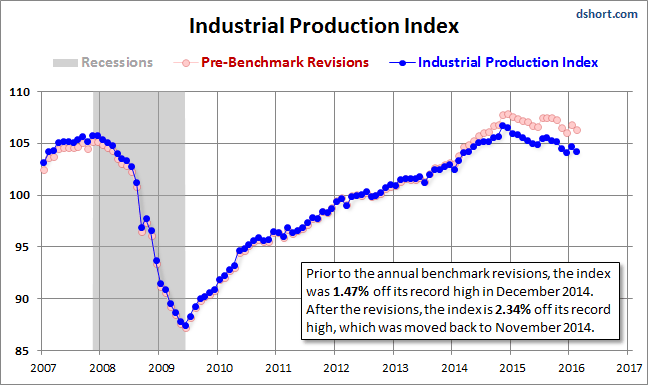
Industrial Production: Those Ugly Annual Benchmark Revisions and the Heightened Risk of Recession
by Doug Short, 4/4/16
The big economic news on Friday was the Department of Labor's Employment Report for March. The mainstream press focused on two numbers: the 215K new jobs and the 5% unemployment rate. Over the next few days we'll dig in a bit deeper to look at some of the underlying employment demographics, which in many ways give a greater understanding of employment conditions. But the much more significant economic news on Friday was the Federal Reserve's noon release of the disturbingly negative annual benchmark revisions to Industrial Production.
More…
Median Household Income Growth: Deflating the American Dream

by Doug Short, 9/23/15
What is the single best indicator of the American Dream? Many would point to household income growth. The Census Bureau has now published some selected annual household income data in a new report: "Income and Poverty in the United States: 2014". Last year the median (middle) household income was $53,657 — a 0.13% year-over-year increase that shrinks to -1.48% when adjusted for inflation. Let's put the new release into a larger historical context.
More…
Median Household Income Growth: Deflating the American Dream

by Doug Short, 9/16/14
What is the single best indicator of the American Dream? Many would point to household income growth. The Census Bureau has now published some selected annual household income data in a new report: Income and Poverty in the United States: 2013. Last year the median (middle) household income was $51,939 -- a 1.8% year-over-year increase that shrinks to 0.3% when adjusted for inflation. Let's put the new release into a larger historical context.
More…
P/E: So Many Choices: Part 2
by Ed Easterling, 4/27/11
This is the second installment of a two-part article on P/E ratios by Ed Easterling. Ed's books, Unexpected Returns and Probable Outcomes, have our unqualified endorsement for anyone trying to understand the complex and often puzzling relationship between the economy and the market.
More…
P/E: So Many Choices: Part 1
by Ed Easterling, 4/26/11
We're delighted to welcome Ed Easterling with this first installment of a two-part article on P/E ratios. Ed's books, Unexpected Returns and Probable Outcomes, have our unqualified endorsement for anyone trying to understand the complex and often puzzling relationship between the economy and the market.
More…
Sponsored Content
Editorial Calendar
View Full Calendar Eastern Time Zone
+ Add the editorial calendar to your Google Calendar.
Upcoming Virtual Events View All