Advisor Perspectives welcomes guest contributions. The views presented here do not necessarily represent those of Advisor Perspectives.
It is the fifth anniversary of the onset of the greatest banking and financial crisis of our lifetimes. In September 2008, vast chasms opened in the global financial system, exposing imbalances so large they threatened to bring down the world's economies. For a few months, during which time seemed to stand still, we came perilously close to such a collapse. Markets seized up, and banks and households around the world hoarded cash.
Five years later, one would like to think that the fundamental conditions that led us to the precipice in 2008 have been corrected. One might presume that the individuals and companies who gamed a largely unsupervised bazaar of counterparty debt and derivatives for their own benefits have been charged and convicted.
One would be wrong on both counts.
As I wrote one year ago, the world’s central banks rescued an imploding global economy. And in the intervening years, we have made some progress toward reducing the dangerously excessive leverage in our financial systems. The cost of this rescue has been borne largely by taxpayers and savers worldwide through the mechanism termed financial repression.
But the financial crisis did much to damage the credibility of the once-vaunted American financial marketplace. Were I the "brand manager" for Team Financial Markets USA, I would have made it my number one priority to restore that trust once the immediate crisis had passed. Congressional inquiry and criminal and civil prosecutions would have played a prominent role, if only (as tough-on-crime advocates are fond of saying) as an example to others that would discourage similar behavior in the future.
Yet none of these responses have occurred. Even modest attempts to re-regulate a recklessly deregulated banking and finance industry have been met with ferocious, and abundantly funded, opposition by lobbyists and other industry flacks.
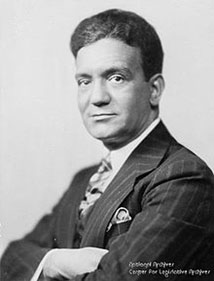
The Great Depression had its Pecora Commission, deemed at the time a "witch hunt" in the same tones used to decry today's Volcker Rule. Yet attorney Ferdinand Pecora's theatrical trial tactics unleashed a groundswell of public support for Congressional action. This led to historic consumer and investor protection laws such as Glass Steagall, which mandated the separation of commercial and investment banking, and the Securities and Exchange Act of 1934, which created the Securities and Exchange Commission.
Congress overturned Glass Steagall in 1999, and today's SEC is understaffed and underfunded due to the deregulatory zeal that reigned in the 1990s and 2000s. Market efficiency was and remains the rallying cry, all else be damned. I am still waiting for some indication that the finance industry and Congress are committed to restoring the qualities of fairness, transparency and rule of law that once made our capital marketplace the greatest in the world.
Martin Weil, CFP® is an investment advisor and principal of Sonoma, CA-based MW Investment Strategy, a fee-only Registered Investment Advisor. You can follow Martin Weil (@mwinvest) on Twitter at www.twitter.com/mwinvest.